
Blog
Vintage vs Modern Ethnic Wear: How to Blend Heirloom Pieces with Contemporary Fashion

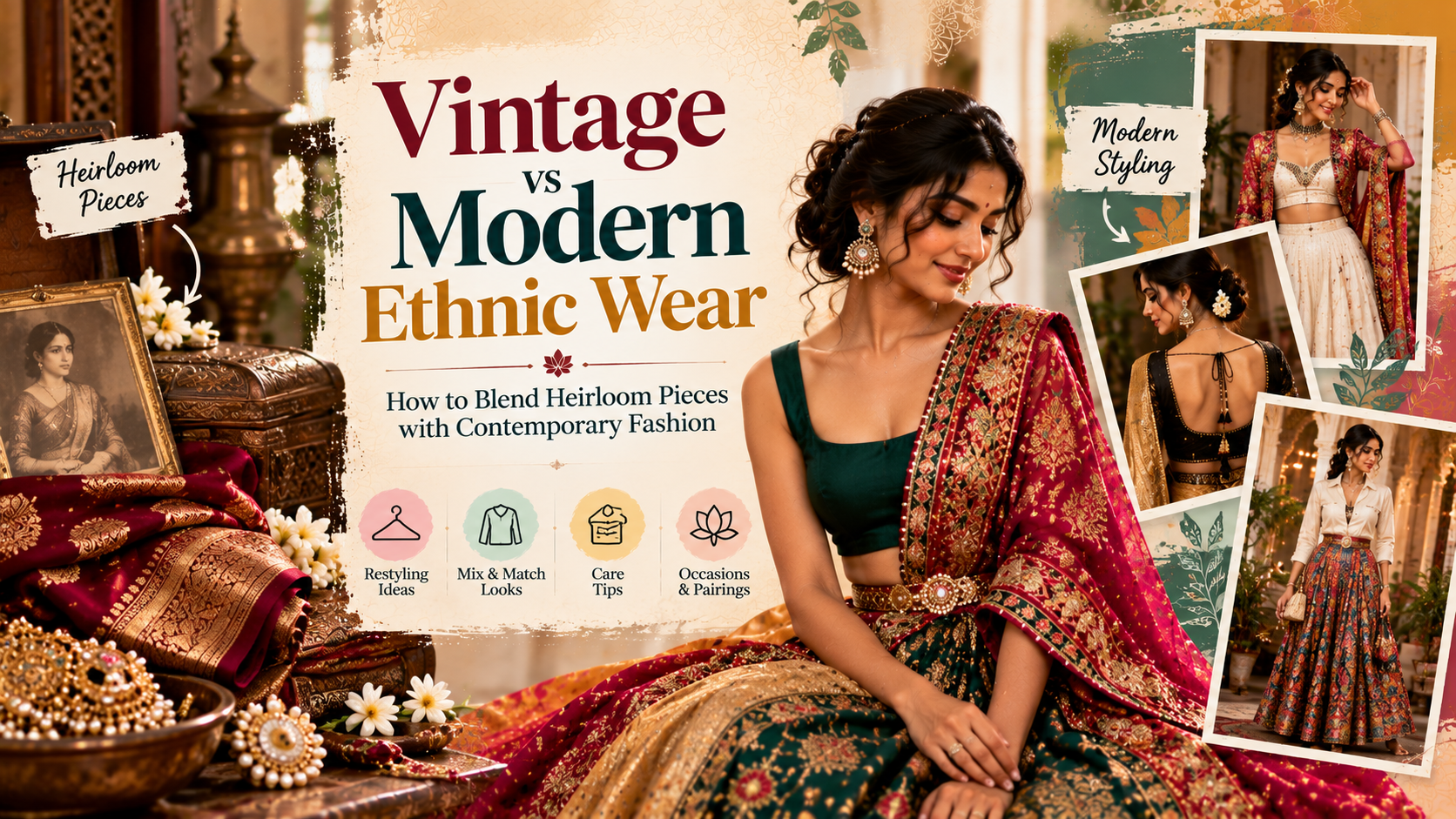
Many Indian wardrobes hold at least one garment with a story: a grandmother’s silk saree, a mother’s wedding dupatta, an embroidered lehenga skirt worn once and folded away for years. These pieces carry memories and often fine craftsmanship, but they can also feel hard to wear today. The blouse no longer fits, the styling looks dated, or the fabric seems too precious to risk.
Vintage ethnic wear styling is about giving these pieces a second life without losing what makes them special. Pairing an old saree with a modern blouse, wearing an embroidered dupatta over a simple kurta or turning a lehenga skirt into an Indo-Western look can make heirlooms part of your festive wardrobe again. This guide covers how to assess older garments, how to style them with contemporary pieces, how to care for delicate textiles and how to wear regional crafts with respect. For more festive looks, see our Navratri Outfit Ideas 2026 guide.
What counts as vintage or heirloom ethnic wear?
There is no single definition. People use these words loosely, and the garments they describe vary enormously.
- Heirloom usually means a garment passed down within a family, whatever its age or value.
- Vintage is often used for garments from earlier decades, though different sellers and collectors draw the line in different places.
- Older festive clothing may simply be pieces you bought a few years ago and no longer wear.
These garments differ widely in age, material, condition and origin. An old saree might be handwoven silk with real zari, a powerloom fabric, a synthetic blend or a mix of these. An embroidered dupatta might be hand-done, machine-made or a combination. Unless you have reliable information, such as family records, a receipt, or an assessment from a textile specialist, it is best not to assume that an older garment is handmade, made with precious metals or from a particular region. Family stories are valuable, but details can change over generations.
None of this affects whether a piece is worth wearing. A garment’s value to you comes from its look, its condition and its meaning, not only from its provenance.
Traditional sarees: styling older sarees with contemporary blouses and accessories
Older sarees are often the easiest heirlooms to restyle, because a saree does not need to fit. Only the blouse and petticoat do.
Pair with a new blouse
A new blouse can change the whole feel of an older saree.
- Solid contrast blouse: a plain blouse in a colour from the saree’s border looks clean and modern.
- Contemporary cuts: boat necks, high necks, collar necklines, puff sleeves and sleeveless designs give a classic saree a current look.
- Unexpected fabrics: a velvet, organza or brocade blouse adds texture to a soft silk or cotton saree.
- Shirt or crop top: some people pair sarees with a fitted shirt or crop top for a relaxed, Indo-Western look. This works best with lighter sarees and less formal occasions.
Our Navratri Blouse Design Ideas guide has more necklines and sleeve styles to try.
Try a different drape
A pre-stitched saree is not necessary, but changing the drape helps. A neat, pinned pallu looks more contemporary than a loose one. A belt over the pleats looks modern and keeps the drape secure for dancing.
Update the accessories
- A slim belt or a kamarbandh over the drape.
- Minimal modern earrings with a heavily bordered saree.
- A structured clutch instead of a traditional potli.
- Block heels, embellished flats or even clean white sneakers for informal events.
Outfit example: an older maroon silk saree with a gold border, a plain mustard silk blouse with a boat neck, a slim gold belt at the waist, small gold hoops and tan flats.
For newer saree options to sit alongside your heirlooms, see the Best Sarees to Wear for Navratri 2026.
Reusing traditional lehenga skirts, dupattas and embroidered pieces
Lehenga skirts
A lehenga skirt from an older set does not have to be worn with its original blouse.
- With a crop top: a plain or embroidered crop top in a complementary colour gives a younger, contemporary look.
- With a shirt: a crisp white or silk shirt, tied or tucked in, makes an Indo-Western outfit.
- With a jacket or cape: a long jacket or cape over a fitted top adds structure.
- As a chaniya choli: a flared older skirt paired with a mirror-work blouse and bandhani dupatta works for Garba. Our Chaniya Choli Styling Guide has more pairings.
Dupattas
Dupattas are among the most versatile heirloom pieces.
- Drape an embroidered dupatta over a plain kurta set.
- Wear it as a cape over a lehenga or a simple dress.
- Use it as a stole with a solid saree.
- Pair a heavy dupatta with a minimal outfit so it becomes the centrepiece.
Embroidered fragments
If a garment has a damaged section but beautiful embroidery elsewhere, a tailor or textile specialist may be able to use the good parts as borders, yokes, jacket panels or blouse sleeves. Consider this carefully, since cutting is permanent.
Pairing traditional textiles with contemporary kurtas, jackets and separates
Blending traditional textiles and modern outfits works well when one piece leads and the other supports.
- Heirloom dupatta with a modern kurta: a plain cotton or linen kurta lets an old embroidered or zari dupatta stand out.
- Old saree as a jacket: some sarees can be made into a long jacket or shrug to wear over a solid kurta or dress. Only do this with sarees you are willing to cut.
- Traditional shawls: an older woven shawl over a contemporary outfit suits cooler evenings.
- Separates: a brocade skirt with a simple top, or palazzos with a vintage-style embroidered jacket, mix eras in an easy way.
- Neutral base: ivory, black, beige or a single solid colour helps an heirloom piece stand out without clashing.
Outfit example: a plain ivory linen kurta and straight pants, worn with an older heavily embroidered pink dupatta draped over both shoulders, pearl studs and kolhapuris.
Mixing traditional jewellery with modern accessories
Jewellery is another place where old and new blend well.
- One heirloom piece, rest modern: a traditional necklace with minimal modern earrings, or heirloom jhumkas with a simple chain.
- Modern piece with a traditional outfit: sleek gold hoops or a contemporary cuff can freshen a classic saree.
- Mix metals deliberately: combining gold and oxidised silver can work if it looks intentional, for example by repeating each metal at least twice.
- Be careful with fragile pieces: older jewellery may have loose stones or weak clasps. Have it checked by a jeweller before wearing it to a crowded event or Garba.
- Keep scale in mind: a heavy necklace and a heavy dupatta can compete. Let one be the focal point.
Balancing old and new
Colours
Older garments may have colours that have softened or shifted over time. Choose new pieces that complement the current colour, not the original one. Neutral or solid companions usually work best.
Prints
If the heirloom piece is printed or patterned, keep the new pieces plain or very subtly patterned. If you want to mix prints, choose one large and one small pattern with a shared colour.
Textures
Pair heavy with light: an old brocade skirt with a soft cotton top, or a crisp new blouse with a soft, worn silk saree.
Silhouettes
Contemporary silhouettes, such as cropped tops, structured jackets, straight pants and capes, give a traditional textile a modern frame. Keep the heirloom in its traditional form and change the companion pieces, or the reverse, rather than changing everything.
Styling heirloom garments for different occasions
Navratri and Garba: choose sturdy heirloom pieces for dancing, since vigorous movement strains delicate fabrics. A traditional skirt with a modern crop top and a secure dupatta drape works well. Keep fragile items for seated occasions.
Weddings: heirloom sarees and lehengas are a meaningful choice for weddings. A new blouse, updated jewellery and a well-planned drape keep the look current.
Puja: a traditional saree or dupatta with a simple, comfortable blouse suits the setting. Choose pieces that can handle sitting on the floor.
Family functions: wearing a relative’s garment at a family gathering can be a special gesture. Pair it with pieces that make it comfortable and wearable for the day.
Inspecting older garments before wearing them
Before wearing or altering an older piece, inspect it in good daylight.
- Fabric condition: hold the fabric up to the light and look for thinning, holes or brittle areas. Gently test strength in an inconspicuous spot; if fibres split easily, the garment may not suit active wear.
- Seams: check that seams are intact, especially at the waist, shoulders and underarms.
- Embroidery and embellishment: look for loose threads, lifting mirrors, missing sequins and tarnished zari.
- Stains: note any stains, discolouration or watermarks. Some may be permanent.
- Fragile areas: folds that have been creased for years can weaken. Check along old fold lines.
- Smell and pests: musty smells or signs of insects suggest the garment needs airing and possibly professional cleaning.
- Lining: older linings may have deteriorated faster than the outer fabric.
If you are unsure about a garment’s condition, especially for silk, zari or heavily embellished pieces, consult a textile-care specialist before cleaning or wearing it.
Garment care and storage
Delicate textiles need gentle handling. These are general precautions; follow specialist advice for valuable or fragile items.
- Cleaning: avoid home washing for silk, zari, heavily embroidered or very old garments unless you are confident it is safe. Professional cleaning with experience in delicate textiles is safer.
- Wrapping: wrap garments in soft cotton or muslin rather than plastic, which can trap moisture.
- Folding: refold along different lines every few months to prevent permanent creases and weakening.
- Rolling: some heavy or embroidered textiles store better rolled than folded.
- Light and moisture: keep garments away from direct sunlight and damp areas.
- Airing: air garments occasionally in shade.
- Pest prevention: keep the storage area clean and dry; check periodically for insects.
- After wearing: air the garment before storing, and deal with any stains promptly and carefully.
Alterations and restyling
Some changes are simple; others need expert judgement.
Usually suitable for a tailor:
- Stitching a new blouse to go with an older saree.
- Adjusting the waistband of a lehenga skirt.
- Adding lining or reinforcing seams.
- Finishing dupatta edges.
Consider a textile-care specialist or experienced restorer when:
- The fabric is fragile, brittle or torn.
- Embroidery or zari needs repair.
- You are considering cutting a valuable garment into something new.
- You want to remove stubborn stains from silk or embellished fabric.
Before cutting anything: decide whether you might want the garment in its original form later, or whether other family members have an interest in it. Cutting cannot be undone.
Respectfully wearing regional textile crafts
Many heirloom garments use techniques associated with specific regions and communities, such as particular weaves, embroidery styles or prints.
- Learn before you label: if you want to describe a garment as a specific craft, try to confirm it through family knowledge, documentation or a specialist rather than guessing from appearance.
- Use names accurately: avoid calling a garment by a craft name just because it looks similar.
- Respect the craft: restyle in ways that show the textile’s qualities rather than hiding or cutting through its key features unnecessarily.
- Acknowledge the makers: when you share photographs or stories, mention the craft and its origin if you know it.
- Support living traditions: if you love a craft, consider buying new pieces from artisans or credible craft organisations alongside wearing older ones.
Common styling mistakes
- Restyling everything at once. The heirloom loses its character. Fix: change one or two companion pieces and let the heirloom remain recognisable.
- Wearing fragile pieces to active events. Delicate fabric tears during Garba. Fix: save fragile items for seated occasions.
- Skipping the inspection. Weak seams give way at the event. Fix: check seams and fabric in daylight before wearing.
- Cutting too quickly. Fix: wait, consult family and a specialist, and consider non-cutting options first.
- Too many statement pieces. An heirloom saree, heavy jewellery and a busy blouse compete. Fix: choose one focal point.
- Making assumptions about origin. Fix: describe the garment by what you know, not by what it resembles.
- Storing in plastic. Fix: use cotton or muslin wraps.
Comparison table
| Garment type | Contemporary pairing | Suitable occasion | Care considerations |
| Older silk saree | Solid modern blouse, slim belt, minimal earrings | Weddings, puja, evening functions | Professional cleaning; refold regularly; check zari |
| Older cotton saree | Shirt or crop top, sneakers or flats | Daytime gatherings, informal events | Gentle cleaning; check for thinning |
| Lehenga skirt | Crop top, shirt, jacket or cape | Navratri, weddings, parties | Check waistband and seams; line if needed |
| Embroidered dupatta | Plain kurta set, solid saree, simple dress | Puja, family functions, festive evenings | Check for loose embroidery; store flat or rolled |
| Brocade or zari fabric | Simple top, straight pants, modern jacket | Weddings, formal events | Avoid moisture; wrap in muslin |
| Traditional shawl | Contemporary kurta or dress | Cooler evenings, family events | Air regularly; protect from pests |
| Heirloom jewellery | Minimal modern accessories, simple outfits | Any, depending on the piece | Check clasps and stones before wearing |
Frequently asked questions
1. How do I know if a saree is vintage or heirloom? “Heirloom” usually means passed down in a family; “vintage” usually refers to age. Without records or a specialist’s assessment, it is hard to know a garment’s exact age or origin.
2. Can I wear an old silk saree to Garba? Only if it is in good condition. Vigorous dancing strains delicate fabric, so inspect it first and consider saving fragile sarees for seated occasions.
3. How can I make an old saree look modern? Pair it with a contemporary blouse, add a belt, update the jewellery and choose a neat drape.
4. Is it okay to cut an heirloom saree into a new garment? It is your decision, but cutting is permanent. Consult family members and a textile specialist first, and consider alternatives.
5. How should I store old ethnic garments? Wrap them in soft cotton or muslin, keep them dry and away from sunlight, and refold them occasionally along different lines.
6. Can I wash old embroidered garments at home? It is safer to use professional cleaning for silk, zari and heavily embroidered or very old pieces.
7. How do I mix heirloom jewellery with modern pieces? Let one heirloom piece be the focus and keep the rest minimal, or mix metals deliberately by repeating each.
8. How do I find out which craft my heirloom garment uses? Ask family members, look for any records, and consult a textile specialist, museum or craft organisation. Avoid guessing from appearance alone.
9. What if the old blouse no longer fits? Have a new blouse stitched, either matching or in a contemporary design. The original blouse can be stored with the saree.
Conclusion
Heirloom and older festive garments deserve to be worn, not just stored. With a few contemporary pairings, they can become some of the most interesting pieces in your wardrobe.
Practical ideas to start with:
- Pair an older saree with a new, simple blouse and a slim belt.
- Wear an old lehenga skirt with a crop top or shirt for Navratri.
- Drape an heirloom dupatta over a plain kurta set.
- Combine one piece of heirloom jewellery with minimal modern accessories.
- Inspect garments in daylight before wearing them, and save fragile pieces for seated events.
- Store everything in cotton or muslin and refold regularly.
- Consult a specialist before cutting or repairing valuable textiles.
Before you shop for anything new this season, check what you already own. The best festive piece may already be folded in a trunk at home.
