
Blog
Navratri Blouse Design Ideas: Back Necklines, Sleeves and Embroidery Styles

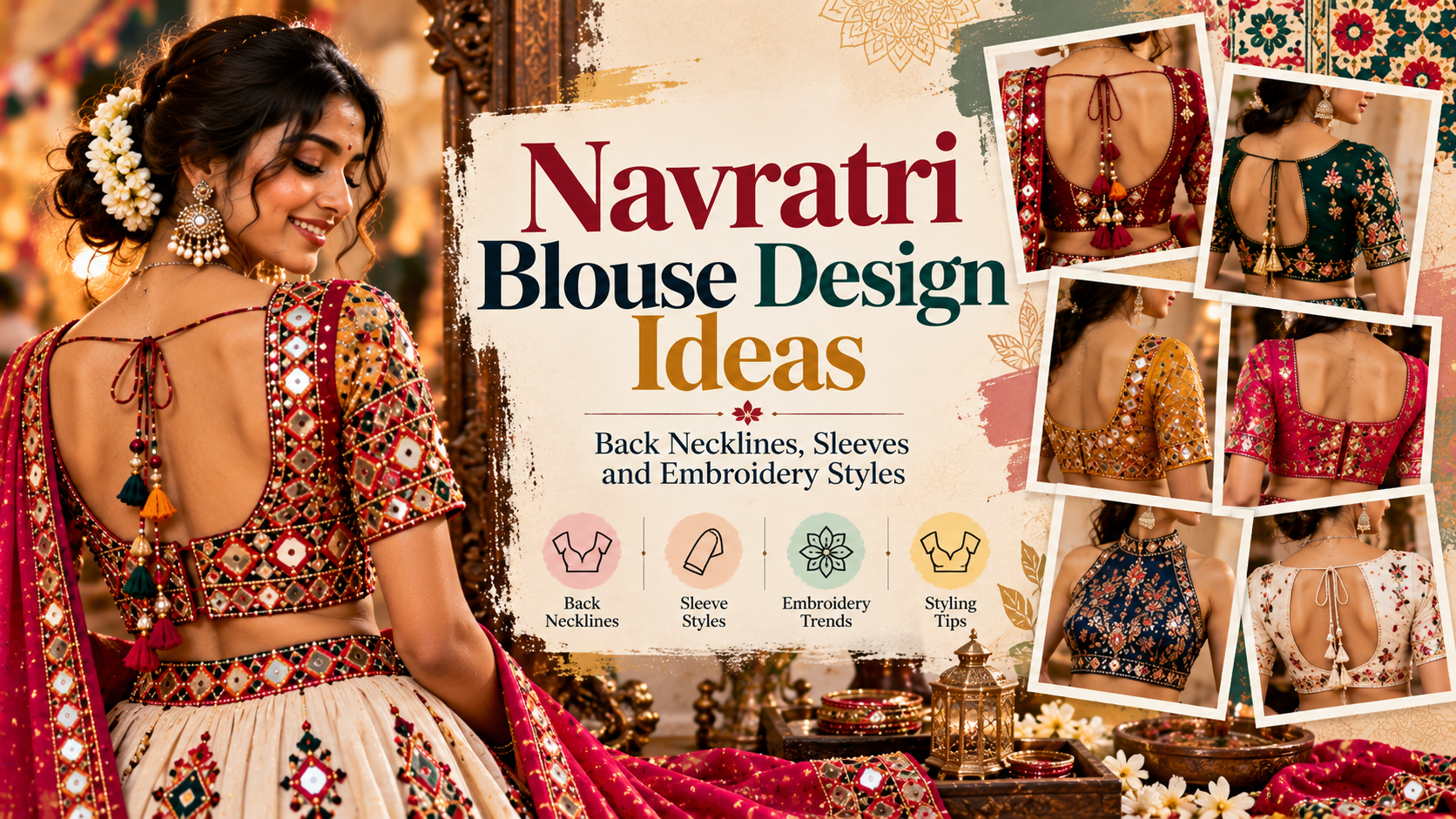
The blouse is the most fitted part of a saree, lehenga or chaniya choli, so it shapes how the whole outfit sits on you. A well-cut blouse makes a simple skirt look finished. A poorly fitted one pulls at the shoulders, rides up during Garba and spoils the line of even an expensive lehenga. The blouse also decides how versatile an outfit is: a plain ghagra can look traditional with a mirror-work blouse one night and modern with a peplum top the next.
This guide covers Navratri blouse designs across back necklines, sleeves and embroidery, with notes on how each style looks, what it pairs with, how comfortable it is for dancing and which occasions suit it. It also explains fabric choices, tailoring and how to get several outfits out of one blouse. For complete outfit planning, see our Navratri Outfit Ideas 2026 guide.
Understanding different blouse silhouettes
Before choosing a neckline or embroidery, decide on the basic shape. It affects how much skin shows at the waist, how the blouse moves and which skirts it suits.
Fitted blouses
The classic saree and lehenga blouse ends just below the bust and follows the body closely, shaped with darts. It suits almost every outfit and leaves a small gap at the midriff. Because it is close to the body, fit matters more here than with any other shape.
Cropped blouses
A cropped blouse is cut a little shorter or straighter at the hem and is often worn with high-waisted lehengas. It shows more of the waist and suits younger, playful styling for Garba nights.
Longer blouses
Longer blouses extend towards or past the waist, sometimes reaching the top of the skirt. They give more coverage, which many women prefer for puja and family events, and they suit lehengas and sharara sets.
Contemporary shapes
This group includes peplum blouses, corset-style tops, jacket blouses and asymmetric hems. They lean towards Indo-western styling and work well when you want to make a familiar skirt look new.
Navratri blouse design ideas
1. Mirror-work blouses
Visual character: small mirrors stitched into the fabric catch light from every angle, which is why a mirror work blouse looks so lively under Garba lights. Patterns range from scattered mirrors to dense borders around the neckline and sleeves.
Outfit combinations: chaniya cholis in plain cotton or bandhani, solid-colour lehengas and simple cotton sarees that need a focal point.
Comfort: mirrors add weight and stiffness. Ask for soft lining behind the mirror panels so the stitching backs do not rub, especially at the underarms.
Occasions: Garba and Dandiya nights, where the reflective detail suits the setting.
2. Embroidered blouses
Visual character: embroidered blouse designs use thread, resham, zari or beads to create florals, paisleys or geometric motifs. The embroidery can cover the whole blouse or sit only on the neckline, sleeves or back.
Outfit combinations: plain silk sarees, net lehengas and printed skirts that need a richer top.
Comfort: thread embroidery is usually lighter than mirror or metallic work. Dense embroidery makes the fabric less flexible, so make sure the fit allows room to raise your arms.
Occasions: puja, family dinners and evening functions, as well as Garba if the work is light.
3. Back-tie blouses
Visual character: the back is open or partly open and closes with fabric ties or dori, often finished with tassels or latkans. This is one of the most popular blouse back neck designs for Navratri because the tassels move as you dance.
Outfit combinations: chaniya cholis, lehengas and cotton sarees. The style suits both traditional and Indo-western outfits.
Comfort: ties let you adjust the fit, which helps on long nights. Knot them firmly and tuck long ends so they do not get tangled during Dandiya.
Occasions: Garba, Dandiya and casual festive gatherings.
4. Round-back and square-back necklines
Visual character: these are the most common traditional blouse designs. A round back is soft and classic; a square back looks a little more structured. Either can be shallow or deep, and both can be edged with piping, lace or a border.
Outfit combinations: silk and cotton sarees, lehengas, chaniya cholis. A deep square back pairs well with a heavy necklace that leaves the back as the second focal point.
Comfort: a shallow back gives more coverage and stays in place easily. A deep back may need a hook or a small tie at the top to keep the shoulders from slipping.
Occasions: suitable for nearly everything, from morning puja (shallow cut) to evening Garba (deeper cut).
5. High-neck blouses
Visual character: the neckline sits close to the base of the neck, sometimes with a band collar. It looks elegant and slightly formal.
Outfit combinations: sheer or organza sarees, lightweight lehengas and Indo-western skirts. High necks often look best with statement earrings rather than a necklace.
Comfort: a high neck covers more and can feel warm during long dancing sessions, especially in heavy fabrics. Choose cotton or a breathable blend if you plan to dance.
Occasions: puja, office celebrations and family events where you want more coverage.
6. Boat-neck blouses
Visual character: the neckline runs wide and shallow from shoulder to shoulder, at the front and often at the back. It shows the collarbones without dipping low.
Outfit combinations: silk sarees, simple lehengas and contemporary drapes. It suits women who want a clean neckline that does not compete with jewellery.
Comfort: a wide neckline can slide off the shoulder if the shoulder width is not measured accurately. Bra strap holders or a small inside loop help.
Occasions: puja and evening gatherings.
7. Sleeveless and cap-sleeve designs
Visual character: sleeveless blouses leave the arms bare and look modern. Cap sleeves cover only the top of the shoulder and are a middle ground.
Outfit combinations: lehengas, chaniya cholis and sarees, especially in heavy fabrics where sleeves would add bulk.
Comfort: these give the most freedom for arm movement, which makes them practical for Garba. A well-cut armhole matters so the blouse does not gape when you raise your arms.
Occasions: Garba and Dandiya nights and parties.
8. Elbow-length and full-sleeve designs
Visual character: elbow-length sleeves look traditional and graceful. Full sleeves give a regal, covered look and are often finished with embroidery or buttons at the cuff.
Outfit combinations: silk sarees, heavy lehengas and velvet or brocade outfits.
Comfort: long sleeves restrict arm movement more than short ones, so the sleeve must be cut with enough ease at the elbow and armhole. Full sleeves in thick fabric may feel warm for dancing.
Occasions: puja, family functions and cooler evenings.
9. Peplum-inspired blouses
Visual character: a fitted bodice flares out into a short frill or panel at the waist. It looks contemporary and adds movement.
Outfit combinations: lehenga skirts, sharara pants, dhoti pants and even palazzos. It is one of the easiest ways to give an existing lehenga an Indo-western feel; our Indo-Western Navratri Outfit Ideas guide has more combinations.
Comfort: the peplum covers the waist, so you do not need to worry about the gap between blouse and skirt. A soft fabric keeps the flare from looking boxy.
Occasions: Garba nights, parties and festive events where a modern look fits.
10. Minimalist solid-colour blouses
Visual character: a plain blouse with no embroidery, sometimes with only piping or a simple border. It lets the skirt or saree take the attention.
Outfit combinations: heavily printed or embroidered sarees, bandhani lehengas and patterned chaniya cholis.
Comfort: usually light and easy to wear, and simple to alter.
Occasions: any. A few solid blouses in black, gold, red and white can be paired with many outfits.
How to match a blouse with a saree, lehenga or chaniya choli
Saree: decide which element leads. A heavily bordered silk saree pairs best with a simpler blouse, perhaps embroidered only at the sleeves. A plain chiffon or cotton saree can take a heavily embroidered or mirror-work blouse. For saree options that work for the festival, see the Best Sarees to Wear for Navratri 2026.
Lehenga: match the weight of work. If the skirt is heavily embellished, keep the blouse lighter or pick up one embroidery element from the skirt. If the skirt is plain, the blouse can carry the detail.
Chaniya choli: traditional chaniya cholis often use a short, fitted, embroidered or mirror-work choli with a flared, colourful skirt. Blouse designs for chaniya choli usually look best with a back-tie or deep back, since the back is visible while dancing. Our Chaniya Choli Styling Guide covers jewellery and dupatta pairings too.
Choosing sleeve length and neckline
Three factors should guide the choice.
Movement. For Garba and Dandiya, you will raise your arms and spin repeatedly. Sleeveless, cap and short sleeves allow the most movement. If you prefer longer sleeves, ask the tailor for extra ease at the armhole and elbow.
Coverage. For puja or family events, a higher front neck, a shallow back and elbow-length sleeves give more coverage. You can keep more open styles for evening Garba.
Personal preference. Some women feel more comfortable with sleeves regardless of occasion, and some dislike high necks. Choose what you will be comfortable wearing for several hours, since you will not enjoy the night in a blouse you keep adjusting.
Fabric selection
Cotton: breathable and easy to wash. It suits daytime events and Garba, and it is simple to alter. It is less shiny, so it looks casual unless embroidered.
Silk blends: these have a soft sheen and hold structure well, which suits sarees and lehengas. Care requirements vary, so check whether the blend needs dry cleaning.
Velvet: rich and heavy, with a deep colour. It is usually better for cooler evenings and shorter events, as it can feel warm.
Georgette: light and fluid, with some texture. It suits peplum and draped blouses and moves easily.
Embellished materials: sequinned, brocade or pre-embroidered fabrics give a finished look without extra work. They tend to be heavier and stiffer, so lining is important.
Embroidery and detailing
Mirror work
Associated strongly with Gujarati and Rajasthani clothing, mirror work uses small mirrors held in place with thread. It is reflective and festive but adds weight. Mirrors near the underarm or inner arm can rub, so ask for them to be kept on the front, back and outer sleeves.
Thread embroidery
Thread or resham work is usually the lightest embellishment. It comes in many styles, from fine floral work to bold geometric patterns, and it is generally soft against the skin.
Gota patti
Gota patti uses strips of metallic ribbon stitched onto the fabric, often in floral or leaf shapes. It gives a golden or silver shine and is lighter than heavy zardozi, though the edges can feel stiff.
Zari
Zari is metallic thread, traditionally gold or silver, used in weaving and embroidery. Dense zari work looks rich but can be heavy and slightly scratchy. A soft cotton lining makes a noticeable difference to comfort.
General rule: the heavier the embellishment, the more important the lining and fit. Heavy work on a loose blouse sags; on a tight blouse it restricts movement.
Colour coordination
Contrast blouses: a contrasting blouse is the quickest way to refresh an outfit. A yellow lehenga with a deep green blouse, or a pink saree with an orange blouse, gives a strong festive look. Choosing a colour that already appears in the border or print keeps the contrast tied together.
Monochrome looks: blouse and skirt in the same colour, or tones of one colour, look tall and elegant. Add interest through texture, such as a matte skirt with an embroidered blouse.
Neutrals: gold, silver, black, white and beige blouses pair with many outfits. A gold blouse in particular works with most festive colours.
Festive combinations: the colours traditionally associated with each day of Navratri vary by region and year, so check the calendar you follow if you want to dress by day. Otherwise, bright combinations such as red with green, orange with pink or blue with yellow all suit the festive mood.
Blouse fitting and tailoring
A good blouse depends on accurate measurements and at least one trial.
Measurements
The tailor typically needs bust, under-bust, waist (at the blouse hem), shoulder width, armhole, sleeve length and circumference at the bicep and sleeve end, front and back neck depth, and blouse length. Taking these over the bra you plan to wear gives a more accurate fit.
Trial fittings
Ask for a trial before the final finishing. During the trial, raise your arms, sit down and twist. Check that the blouse does not ride up, that the armholes do not cut in and that the back neckline lies flat.
Closures
Front hooks are traditional and easy. Back hooks give a clean front. Zips are quicker but less adjustable. Ties and dori add style and some adjustability. For a deep back, a closure at the top helps the blouse stay on the shoulders.
Seam allowances and alteration planning
Ask the tailor to leave extra seam allowance, often around an inch at the side seams, so the blouse can be let out later. This is worth doing for any blouse you plan to wear for several years. Heavily embroidered blouses are harder to alter, so get the fit right the first time.
Timing
Tailors are busy before Navratri. Book early and allow time for a second fitting.
How to restyle one blouse with multiple ethnic outfits
Take a gold embroidered sleeveless blouse as an example:
- With a red bandhani chaniya choli for a traditional Garba night.
- With a plain black silk saree for a family dinner.
- With a printed sharara for a relaxed evening gathering.
- With a solid-colour lehenga skirt and a contrast dupatta for a party.
Neutral or metallic blouses, simple solid blouses and back-tie mirror-work blouses tend to be the most versatile. Changing the dupatta and jewellery adds further variety.
Common blouse styling mistakes and how to avoid them
- Skipping the trial fitting. Small problems become obvious only when you move. Always try the blouse on and move in it before finishing.
- Choosing a deep back without support. The blouse slips off the shoulders. Add a closure or tie at the top.
- Heavy embroidery without lining. It scratches and sags. Ask for soft cotton lining.
- Matching heavy blouse with heavy skirt. The outfit looks crowded. Let one piece lead.
- Tight armholes. You cannot raise your arms during Garba. Ask for adequate armhole ease.
- Ignoring the jewellery. A high neck with a large necklace clashes. Plan the neckline around the jewellery.
- Leaving tailoring too late. Rushed stitching often means poor fit. Book early.
Navratri blouse designs compared
| Blouse design | Compatible outfit | Styling effect | Practical considerations |
| Mirror-work | Chaniya choli, plain lehenga, cotton saree | Reflective, festive | Heavier; line it, keep mirrors off underarms |
| Embroidered | Silk saree, net lehenga, printed skirts | Rich, detailed | Dense work reduces flexibility |
| Back-tie | Chaniya choli, lehenga, cotton saree | Playful, shows the back | Adjustable; secure long ties for dancing |
| Round or square back | Sarees, lehengas, chaniya cholis | Classic, traditional | Deep cuts need a top closure |
| High-neck | Organza saree, light lehenga, Indo-western | Elegant, covered | Can feel warm in heavy fabric |
| Boat-neck | Silk saree, simple lehenga | Clean, collarbone-focused | Needs accurate shoulder measurement |
| Sleeveless or cap-sleeve | Lehenga, chaniya choli, saree | Modern, free | Armhole cut must avoid gaping |
| Elbow or full sleeve | Silk saree, heavy lehenga, velvet | Regal, traditional | Needs ease to allow movement |
| Peplum | Lehenga skirt, sharara, dhoti pants | Contemporary | Covers waist; soft fabric keeps flare neat |
| Minimalist solid | Printed sarees, bandhani lehengas | Lets the skirt lead | Most versatile and easiest to alter |
Frequently asked questions
1. Which blouse design is best for Garba? Sleeveless, cap-sleeve and back-tie blouses allow the most arm movement. A mirror-work back-tie blouse is a common choice for Garba nights.
2. What blouse back neck designs suit chaniya cholis? Back-tie with tassels, deep round and deep square backs all work well, since the back is visible while dancing.
3. Can I wear a saree blouse with a lehenga? Yes, if the colour and fabric suit the skirt. A fitted blouse in a matching or contrasting colour usually works with both.
4. How much time does a tailor need to stitch a blouse before Navratri? It varies, but tailors get busy close to the festival. Booking two to three weeks ahead leaves time for a trial and changes.
5. Is mirror work comfortable for long hours? It can be, if the blouse is lined with soft fabric and the mirrors are kept away from areas that rub, such as the underarms.
6. Which blouse colour goes with most outfits? Gold, black and white are the most versatile, and gold in particular pairs with most festive colours.
7. How do I keep a deep back blouse from slipping? Add a hook, button or tie at the top of the back, and make sure the shoulder width is measured accurately.
8. Are peplum blouses suitable for traditional events? They lean contemporary, so they suit Garba nights and parties best. For puja, a classic fitted blouse is usually more appropriate.
Conclusion
Choose your blouse according to what you will be doing. For Garba and Dandiya, go for sleeveless, cap-sleeve or back-tie designs in light, lined fabrics. For puja and family gatherings, high necks, shallow backs and elbow-length sleeves give comfortable coverage. To update an existing outfit, try a contrast blouse or a peplum top before buying anything new.
Invest in one or two versatile blouses, such as a gold embroidered blouse and a mirror-work back-tie blouse, and plan the rest of your outfits around them. Book your tailor early, insist on a trial and leave seam allowance so the blouse can be adjusted for future festivals.
