
Blog
Navratri Outfit Ideas 2026: Traditional Sarees, Suits and Festive Looks for the Whole Family

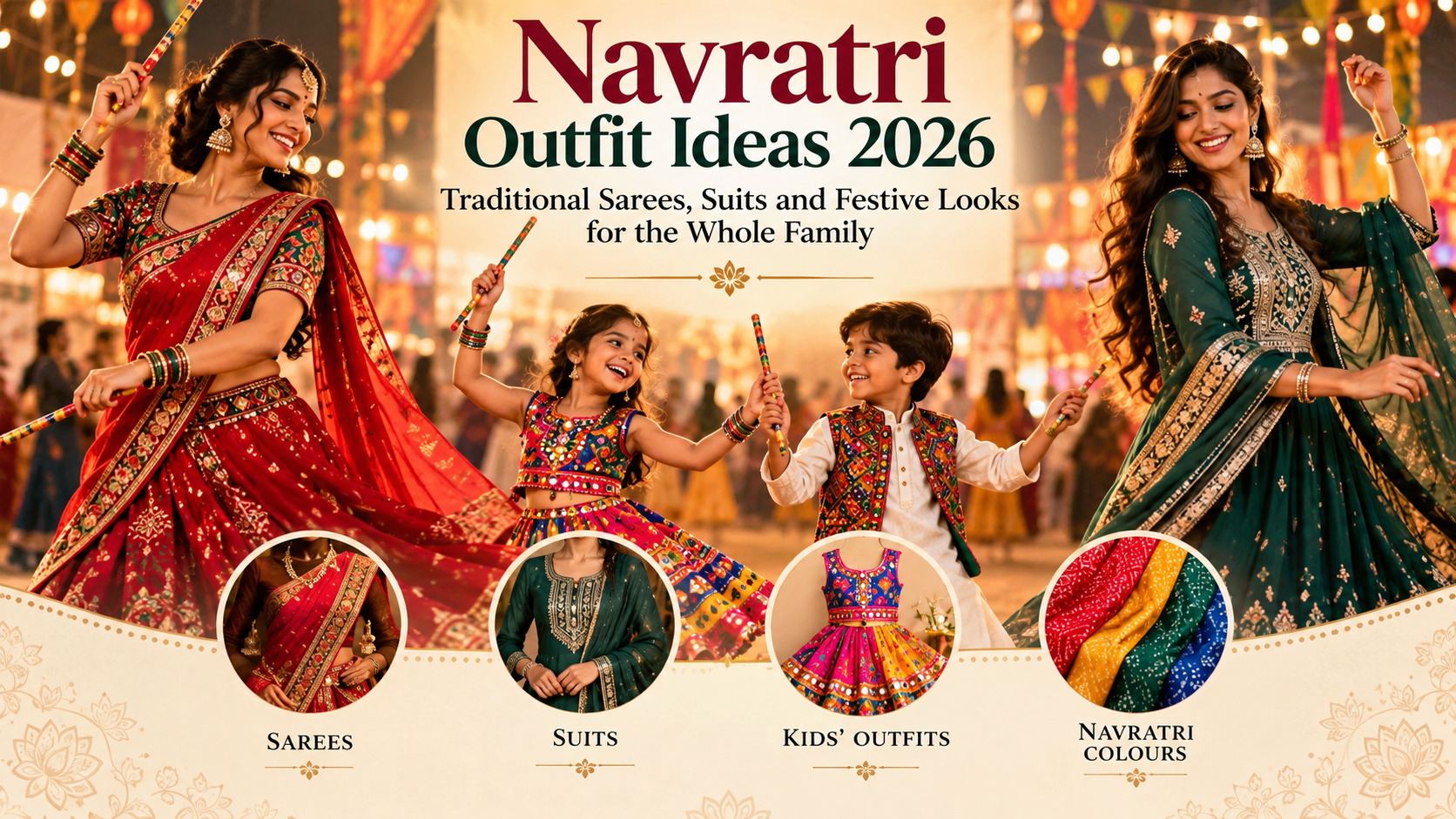
Navratri asks a lot of a wardrobe. You may need something simple and modest for morning puja, something that can survive three hours of Garba and something that looks good in photographs at a family gathering, sometimes all in the same day. Add children, relatives and a nine-night calendar, and the question “what do I wear?” gets bigger than it sounds.
This guide collects Navratri outfit ideas that work in practice. It covers sarees, ethnic suits, sharara sets, lehenga-style chaniya cholis, kids’ festive outfits and coordinated family looks, along with fabric advice, footwear, accessories and comfort tips for Garba and Dandiya nights. It does not quote prices, because they vary by brand, fabric and region, and it points you to the right places to check the colour calendar for your community.
Why traditional clothing matters during Navratri
Navratri is a nine-night festival honouring the goddess in her many forms, and it is celebrated differently across India. In Gujarat it is closely associated with Garba and Dandiya, in Maharashtra and the south with family rituals and displays, and in Bengal it overlaps with Durga Puja. Each region has its own food, music and customs.
Clothing is part of how people take part. Traditional wear marks the occasion, gives colour to the celebration and, for many families, reflects respect for the rituals. Modest, comfortable dress is common for puja and temple visits, while dance nights allow more play with colour, embroidery and movement. There is no single rulebook, and practices vary by family, community and place, so treat the ideas below as suggestions, not obligations.
Choosing an outfit by occasion
Start with what you will actually be doing. A look for a quiet puja differs from one for a crowded Garba ground. The table below summarises the main outfit types.
| Outfit type | Suitable occasions | Styling suggestions |
| Saree (silk, cotton silk, bandhani, chiffon) | Puja, family gatherings, temple visits, some Garba nights | Pair with a contrast blouse and simple jewellery; pin the pallu well if you will be dancing |
| Pre-draped or ready-to-wear saree | Garba and Dandiya, long evenings | Choose a secure waistband and lightweight fabric; add a belt to hold the drape |
| Anarkali or straight suit | Puja, day events, family visits | Light dupatta, jhumkas, flat footwear; easy to move in |
| Sharara suit | Family gatherings, evening events | Flared legs move well, but check the hem so it does not catch underfoot |
| Lehenga or chaniya choli | Garba and Dandiya | Choose a flare you can twirl in; avoid heavy brocade and very long hems |
| Kids’ lehenga, pattu pavadai or kurta sets | Dance nights, puja, family photos | Soft lining, easy fastenings and breathable cotton or blends |
| Men’s kurta with pyjama or dhoti, or kediyu | Puja, Garba, family gatherings | Cotton or cotton blends, a stole or jacket for evenings |
Sarees for Navratri
Sarees suit puja and family gatherings, and they can work on dance nights with a little planning. A fuller picture of picks and draping styles sits in our guide to the best sarees to wear for Navratri 2026. A few starting points:
- Cotton and cotton silk. Breathable and easy to manage, which makes them good for long days.
- Silk. A classic choice for puja, family functions and in many southern households for festive displays, though heavier to wear and to dance in.
- Bandhani and other tie-dye work. Closely associated with Gujarat and Rajasthan and a natural fit for the festival’s colour.
- Georgette and chiffon. Light and flowing, though they can slip, so pin carefully.
- Regional styles. In Maharashtra, the nine-yard nauvari saree is a traditional festive drape, and in Bengal, red-bordered white sarees are strongly linked with Durga Puja. If you are drawn to these, ask someone from the community how they are worn.
If you plan to dance in a saree, consider a pre-draped version or practise the drape beforehand, secure the pleats and pallu with pins, and choose a petticoat length that keeps your steps clear.
Ethnic suits and sharara sets
Suits are among the most practical festive outfits. They offer full coverage, they are easy to move in and many fabrics suit warm evenings. For more design ideas, see our guide to Navratri suit designs for women.
Anarkali suits. The flare gives a festive look, and the fit is forgiving. Choose lighter fabrics if you will be dancing.
Straight kurta sets. Simple and comfortable, ideal for puja or long days. Add colour with a dupatta and jewellery.
Sharara suits. Wide-legged and flowing, these suit family gatherings and evening events. Check the length and waistband so they stay put during movement.
Palazzo and dhoti-style sets. Easy to wear and good for freedom of movement.
Fabric notes. Cotton and mulmul breathe well. Georgette and crepe drape beautifully but can feel warm under crowded lights. Heavy brocades and thick zari work look rich but add weight and heat, so keep them for puja or photographs rather than hours of dancing.
Garba and Dandiya: what to wear and how to stay comfortable
The Garba ground is where practical choices matter most.
Choose movement-friendly outfits. A chaniya choli or lehenga with a good flare lets you twirl. Look for a lining that does not itch and a waistband that stays put. Keep an eye on the hem, since a long skirt can trip you in a crowd.
Pick breathable fabrics. Cotton, cotton silk and light blends keep you cooler than heavy synthetics, though individual comfort varies.
Keep embellishment manageable. Mirror work, embroidery and mirror-like detail are traditional and festive, particularly in Gujarati styles, but heavy work adds weight and can scratch. Try the outfit on and move in it before buying or stitching.
Dupatta tips. Pin it securely, or drape it across one shoulder so it does not catch in a partner’s hands or a dandiya stick.
Footwear. Many people choose flat, comfortable footwear or go barefoot. Some venues expect bare feet or restrict footwear on the dance floor, so check with the organisers. If you wear shoes, choose secure, flat ones and avoid heels.
Practicalities. A small potli or crossbody bag holds essentials, and a water bottle and a spare hair tie help. Keep valuables to a minimum, since crowds are busy.
Kids’ festive outfits
Children want to join in, and they also tire quickly, so comfort comes first. Our guide to Navratri outfits for kids goes into more detail.
For girls. Lehenga cholis, pattu pavadai in many southern families, anarkali frocks and sharara sets are popular. Choose soft linings, easy fastenings and a flare that will not trip them.
For boys. Kurta with pyjama or dhoti, a kediyu or a simple jacket are common. Check that the waist is comfortable and that the fabric breathes.
Practical tips:
- Choose cotton or soft blends, and avoid scratchy embellishment close to the skin.
- Leave room to grow or move, and avoid very tight fits.
- Go easy on heavy jewellery for small children.
- Pack a spare outfit, since dance floors and snacks are messy.
- Choose comfortable, closed or secure footwear that they can run in.
Coordinated family looks
Matching does not have to mean identical. A few ways to coordinate:
- Colour palette. Pick one or two shared colours, and let each person wear a different style or shade.
- Colour theme by day. Follow the colour of the day, as described below, with each family member’s outfit in a different tone of it.
- Fabric and craft. Use the same craft, such as bandhani or embroidery, in different garments.
- Accessories. Matching or complementary dupattas, stoles and jewellery tie looks together without matching outfits.
Photographs look better when people can move and smile, so comfort matters even for coordinated looks.
Navratri colour themes
Many people wear a different colour on each of the nine days, and a widely shared scheme links the colours to the weekday on which each day falls. In that scheme, Monday is white, Tuesday red, Wednesday royal blue, Thursday yellow, Friday green, Saturday grey and Sunday orange, with additional colours such as purple, peacock green or pink used for the days that repeat. Because Navratri covers nine days, two weekdays occur twice, and the extra colours vary between sources.
Please treat this as a guide, not a rule. Colour customs differ by region, community and family, and the dates and weekdays change each year. Some communities do not follow a daily colour at all, and in Gujarat many people choose bright, multicoloured chaniya cholis regardless of the day. Check your family’s tradition and the colour calendar for 2026 in your region before you plan your wardrobe. Our Navratri colour guide 2026 covers this in detail.
If you do not want to buy nine outfits, mix and match: a few core pieces in neutral shades and different dupattas, stoles or blouses in the colours of the day.
Accessories, jewellery and finishing touches
- Oxidised silver and German silver jewellery is a long-standing favourite for Garba because it looks bold and festive without the weight or value of gold.
- Jhumkas, maang tikka, bangles and nose rings add traditional character, but choose pieces that will not tangle in a dupatta or hair.
- A kamarbandh (waist belt) keeps a saree or lehenga in place and adds shape.
- A potli, small crossbody bag or pouch carries essentials.
- Hair in braids, buns or loose waves with flowers or accessories stays out of the way while dancing.
- Make-up that lasts through dancing and heat, such as waterproof kajal, saves repeated touch-ups.
Keep valuables to a minimum at crowded events.
Fabric and care tips
- Cotton and mulmul. Breathable and easy to wash, ideal for long days.
- Cotton silk and light silk blends. Dressy but manageable.
- Silk. Elegant but heavy, so best for puja and family functions.
- Georgette and chiffon. Light and flowing, but may need pinning and can show sweat.
- Heavy brocade and zari. Rich but warm, best for short wear.
- Check linings and finishes. A soft inner lining prevents itching during long hours.
- Follow care labels, and test dark or bright colours for colour run before the first wash, especially on bandhani and hand-dyed pieces.
Frequently asked questions
What should I wear for Garba and Dandiya?
A chaniya choli or lehenga with a good flare is the classic choice, with breathable fabric and secure footwear or bare feet if the venue allows. Sarees and suits work too with careful pinning and fit.
Which fabrics are best for Navratri outfits?
Cotton, cotton silk, mulmul and light blends are comfortable for long dance nights. Silk and heavy brocade suit puja and family gatherings.
Do I have to wear a different colour every day?
No. Many people follow a daily colour scheme, but customs vary by region and family, and some do not follow one. Check your tradition and the colour calendar for the year.
What are good Navratri outfits for kids?
Soft, breathable lehengas, pattu pavadai, kurta sets and kediyu in cotton or soft blends are practical. Keep embellishment light and fittings easy.
Can I wear a saree for Garba?
Yes, with planning. Choose a lightweight saree, a secure or pre-draped drape, a clear hem and comfortable footwear, and pin the pallu well.
How can a family coordinate Navratri outfits?
Share a colour palette or craft rather than identical outfits, and coordinate accessories. Make sure everyone is comfortable.
What footwear is best for Garba?
Flat, secure and comfortable footwear, or bare feet where the venue expects it. Avoid heels, and check the venue’s rules.
Conclusion
The best Navratri outfit is one that suits the occasion, your family’s traditions and the way you actually plan to move. A cotton saree or suit for puja, a flared chaniya choli for Garba, comfortable kids’ outfits and a few shared colours across the family can carry you through nine nights without a wardrobe crisis.
Start with comfort, choose fabrics that let you breathe, check your community’s colour calendar and keep accessories practical. When you are ready to shop, explore festive clothing collections for sarees, suits and kids’ wear, and try pieces on in motion before you commit. A little planning leaves you free to enjoy the music, the dance and the company.
