
Blog
Navratri Suit Designs for Women: Sharara, Black and Traditional Festive Outfits

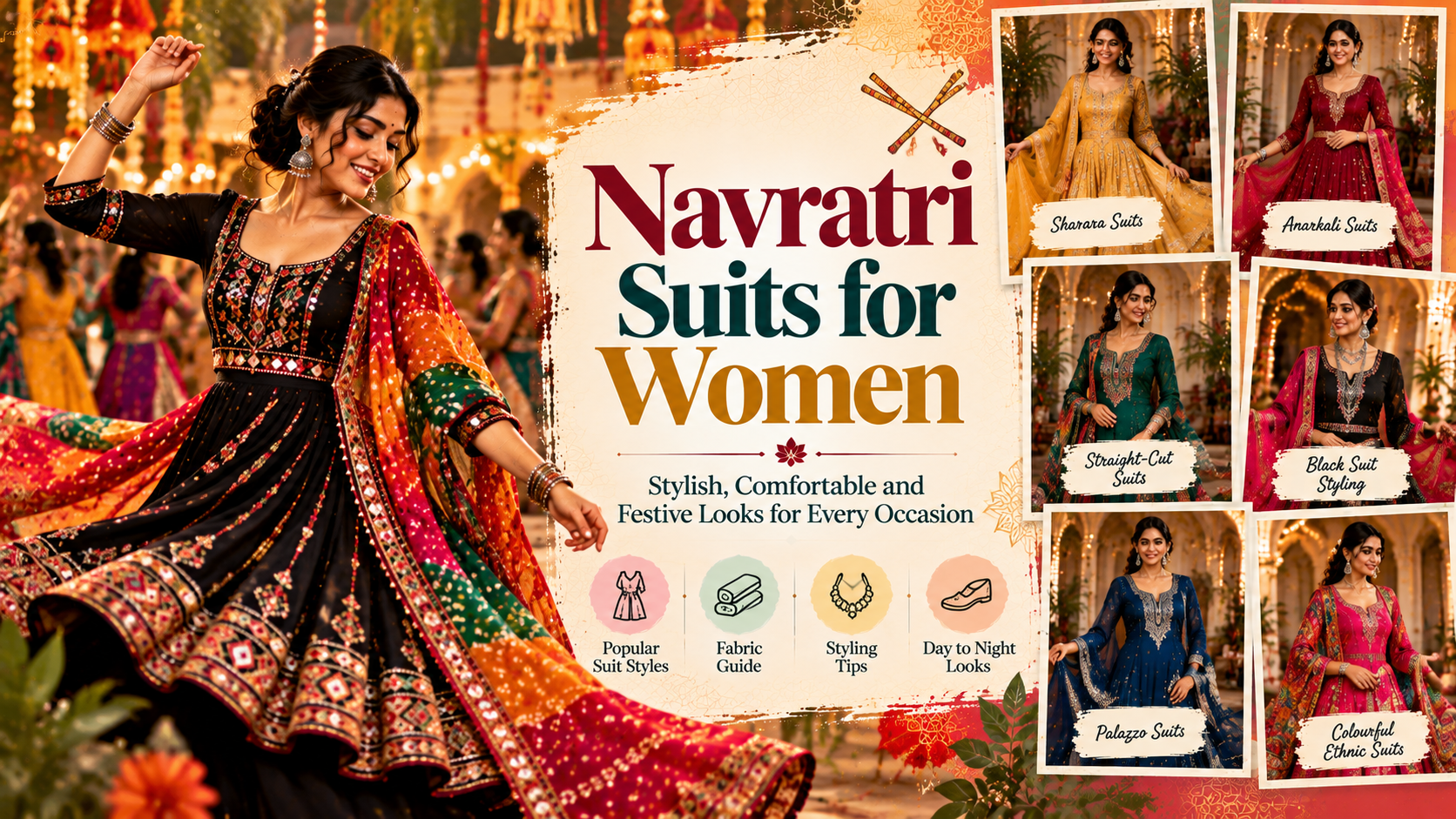
Nine nights of puja, dancing and gatherings ask a lot of one outfit. It has to look right at a morning aarti, hold up through two hours of Garba, and still feel comfortable when the last round of Dandiya ends well past midnight. Choosing Navratri suits for women is less about following a trend and more about matching the cut, fabric and details to how you will actually spend the evening.
This guide walks through the main suit styles, how to wear black and colourful ethnic suits, which fabrics and embroidery work best, how to handle the dupatta, jewellery and footwear, and what changes between a daytime puja and a night of Garba. If you want a wider set of looks, our Navratri Outfit Ideas 2026 pillar page covers every kind of festive outfit in one place.
How to Choose the Right Navratri Suit
Start with the plan for the day, not the outfit. Ask yourself four questions.
- Will I be dancing? If yes, flare, weight and hem length matter more than anything.
- Will I be sitting for a long puja or a family gathering? Then a softer, structured fabric and a longer sleeve may suit you better.
- How warm will the venue be? Crowded halls and open grounds can feel very different.
- Do I want to repeat the outfit? A suit with a simple base and a changeable dupatta gives you more options across nine days.
Once you know the answers, the styles below sort themselves out.
Popular Navratri Suit Styles
Sharara Suits
A sharara suit for women pairs a kurta or short kurti with wide, flared trousers that are fitted at the waist and flare out from the knee. The flare moves beautifully during Garba, and it gives you room to step and turn. It also suits long evenings, because the legs stay free. The trade-off is volume. A heavily layered sharara can feel warm and, if the hem is too long, it can catch under your feet, so choose one that clears the floor.
Anarkali Suits
An Anarkali has a fitted bodice and a long, flowing skirt. It looks graceful for puja and for photographs, and it works well for women who prefer more coverage. For dancing, check the flare. A very full Anarkali can feel heavy, and a long one can trip you, so look for a lighter fabric and an ankle-length hem.
Straight-Cut Suits
A straight kurta with slim or straight trousers is the easiest style to wear for hours. It suits daytime puja, family visits and anyone who prefers a streamlined look. It is not the best choice for energetic Garba, since it offers less movement than a flared suit, though a slit and a relaxed fit help.
Other Styles Worth Considering
- Palazzo suits. A kurta with wide palazzo trousers is lighter than a sharara and very comfortable for dancing.
- Patiala or salwar suits. The gathered salwar has a traditional look and moves freely, though it can feel bulky in a crowd.
- Kurta with flared skirt. This gives a lehenga-like effect without the weight, and it works well for Garba.
- Jacket or cape-style suits. A short jacket over a plain kurta adds structure for puja and can be removed for dancing.
Many of these ethnic suits for women also work for other festive occasions, so you can wear them again after Navratri.
Suit Styles and Occasions at a Glance
| Style | Best for | Fabric ideas | Comfort when dancing |
| Sharara | Evening Garba and Dandiya, festive gatherings | Georgette, crepe, cotton silk | High, if the hem clears the floor and the layers are light |
| Anarkali | Puja, family events, photographs | Cotton silk, chanderi, light georgette | Medium, depending on how full and long it is |
| Straight-cut | Daytime puja, long sitting, travel | Cotton, chanderi, rayon | Medium to low, a looser fit helps |
| Palazzo suit | Dandiya, all-day wear | Cotton, rayon, crepe | High, light and airy |
| Patiala or salwar | Traditional puja, relaxed Garba | Cotton, cotton blends | High, though it can feel bulky in crowds |
| Kurta with flared skirt | Garba, party wear suits for evenings | Georgette, cotton, crepe | High, with a lehenga-like movement |
Styling a Black Suit for Navratri
A black suit for women is popular for evening events because it photographs well and pairs easily with bright dupattas and statement jewellery. It is also a safe base if you want to repeat the outfit with different accessories.
A note on custom. In some families and communities, black is avoided during puja or on certain days of Navratri, and others have no such rule. If you are attending a family puja or visiting elders, check what is expected. Many women choose black for Garba nights and wear colour for puja.
To make black feel festive:
- Choose rich details such as gota patti, mirror work, zari or colourful thread embroidery.
- Add a bright dupatta in a shade that suits the day. Our Navratri colour guide explains how people follow colours across the nine days, since the sequence varies by year and region.
- Use oxidised silver or gold-toned jewellery, which stands out against black.
- Keep the fabric light enough to dance in, since black absorbs heat in a crowded venue.
Styling Colourful Ethnic Suits
Colour is the point of Navratri, so use it freely. Pick a suit in one strong shade, such as red, yellow, green or orange, and keep the dupatta in a contrasting or complementary tone. If your suit is heavily embroidered, choose a plainer dupatta. If your suit is plain, let the dupatta carry the embroidery or print.
Mixing colours works best when you keep one anchor. A plain kurta with a bold printed dupatta, or a printed suit with plain trousers, avoids a cluttered look. For traditional festive outfits, bandhani, block prints and mirror work are all good starting points.
Fabrics, Embroidery and Prints
Fabric decides how the outfit feels at midnight, so choose it carefully.
- Cotton and cotton blends. Breathable and easy to wear, and a good choice for puja and long events.
- Cotton silk and chanderi. Light and slightly structured, with a festive sheen that suits daytime and evening.
- Georgette and crepe. Light and flowy, which gives shararas and skirts good movement. Check that the lining is soft.
- Rayon and muslin. Soft and comfortable, though they may crease easily.
- Heavier fabrics such as velvet or stiff organza. These can look rich, but they are warm and restrict movement, so they suit sitting events better than dancing.
For embroidery and prints, common festive choices include:
- Mirror work, which is widely associated with Gujarati and Rajasthani embroidery and catches the light during Garba.
- Gota patti, a metallic ribbon appliqué that adds shine without much weight.
- Zari and thread work for a richer, more formal look.
- Bandhani, a tie-dye technique often linked to Gujarat and Rajasthan, and block prints for a lighter, printed feel.
Heavy embroidery adds weight, so check the inside of the garment. Scratchy mirror work or stiff lining can irritate during long hours.
Dupatta, Jewellery, Footwear and Accessories
Dupatta Styling
The dupatta is where you can adjust comfort and style on the day.
- Drape it over one shoulder and pin it at the back so it stays put while you dance.
- Wear it cape-style, pinned at both shoulders, for a more secure and polished look.
- Tie it loosely around your waist or hips for Garba if you want your upper body free.
- Choose a lighter dupatta for dancing, and keep the heavier one for puja or photographs.
Jewellery
Keep jewellery light and secure. Oxidised silver jhumkas, a simple necklace, bangles or a kada, and a small maang tikka are common festive choices. Avoid long, dangling earrings and heavy necklaces if you will be dancing, since they can catch or pull. Mirror work on the suit already adds sparkle, so you can keep jewellery simpler.
Footwear
Comfort matters most. Flat juttis, kolhapuris, sandals with a back strap or cushioned flats are practical options. Avoid high heels for Garba. Some venues also ask you to leave footwear outside or dance barefoot, so check the rules and carry a small bag for your shoes.
Other Accessories
A small cross-body bag or potli keeps your hands free. Carry safety pins, a handkerchief and a compact water bottle if the venue allows it.
Tips for Dancing and Long Celebrations
- Check the hem. It should clear the floor so you do not step on it.
- Try the full movement before the event. Sit, twirl, lift your arms and take a few steps at home.
- Choose breathable fabric and consider the lining. A synthetic lining can feel warm.
- Wear comfortable innerwear and consider a light slip under thin fabrics.
- Pin the dupatta, and carry spare pins.
- Keep hair and jewellery manageable. A braid or bun stays tidy longer than loose hair.
- Pack a change of outfit if you will be out all day, such as a lighter kurta or a clean dupatta.
- Hydrate and take breaks. Comfort affects how much you enjoy the night.
Daytime Puja vs Evening Garba and Dandiya
Daytime puja and evening dancing call for different outfits, even within the same festival.
For daytime puja, think soft, modest and easy to sit in. A cotton or chanderi suit in a pastel or traditional colour, with a full-length kurta and a simple dupatta, works well. Keep jewellery minimal and choose comfortable footwear you can remove easily.
For evening Garba and Dandiya, think movement and colour. A flared sharara, palazzo suit or kurta with a skirt, with mirror work or bright prints, suits the dancing. Add a bold dupatta, oxidised jewellery and flat footwear. Party wear suits in georgette or crepe suit these evenings, as long as they are light enough to move in.
If you only want one suit, choose a flexible base such as a cotton silk or georgette suit in a rich colour, and change the dupatta and jewellery between the morning and the night. If you are considering a different style altogether, our Navratri saree ideas cover draping and fabrics for puja and evening events.
Frequently Asked Questions
Which suit style is best for Garba?
Sharara, palazzo and flared skirt suits are popular because they move freely. Choose a light fabric and a hem that clears the floor.
Can I wear a black suit for Navratri?
Many women do, especially for evening Garba. Some families avoid black for puja, so check what is expected in your household or community.
What fabric is most comfortable for dancing?
Cotton, cotton blends, georgette and crepe are comfortable and breathable. Avoid heavy fabrics, stiff organza and scratchy linings if you will dance for hours.
How do I keep my dupatta from slipping?
Pin it at the shoulder, wear it cape-style or tie it around your waist. Choose a lighter dupatta for dancing.
What footwear should I wear for Garba and Dandiya?
Flat juttis, kolhapuris or cushioned flats are practical. Avoid high heels, and check whether the venue asks you to leave footwear outside.
Conclusion
The best Navratri suits for women are the ones you can sit, dance and celebrate in without thinking about them. Pick a style that suits how you plan to spend the nights, choose breathable fabric, keep jewellery light and let the dupatta carry the colour. With a few changes between puja and Garba, one good suit can work across several evenings.
