Blog
How to Choose the Right Lehenga for Your Body Shape: A Festive Styling Guide

Two lehengas can look identical on the hanger and completely different once you wear them. One sits at the waist just right, swirls when you turn, and lets you sit through a three-hour wedding without thinking about it. The other bunches at the hips, drags on the floor, and needs adjusting every ten minutes. The difference usually comes down to silhouette, proportion, fit and fabric, not the price tag or the embroidery.
Choosing a lehenga for body shape is not about hiding anything or following strict rules. It is about understanding how a skirt’s cut, waist placement and fabric interact with your proportions, and then picking what makes you feel comfortable and confident. Personal preference matters as much as any styling guideline. If you love a silhouette, that is reason enough to wear it.
This guide walks through the main lehenga silhouettes, how to think about torso length, shoulders, waist and hips, how fabric and flare change the look, and how to choose for Garba, puja, weddings and family functions. It also covers common fitting problems and what to check when buying ready-made or semi-stitched lehengas. For broader festive inspiration, see our pillar guide to Navratri Outfit Ideas 2026.
Understanding common lehenga silhouettes
A silhouette is the overall outline the skirt creates. It decides how much volume you carry, how the skirt moves and where the eye is drawn.
A-line lehenga
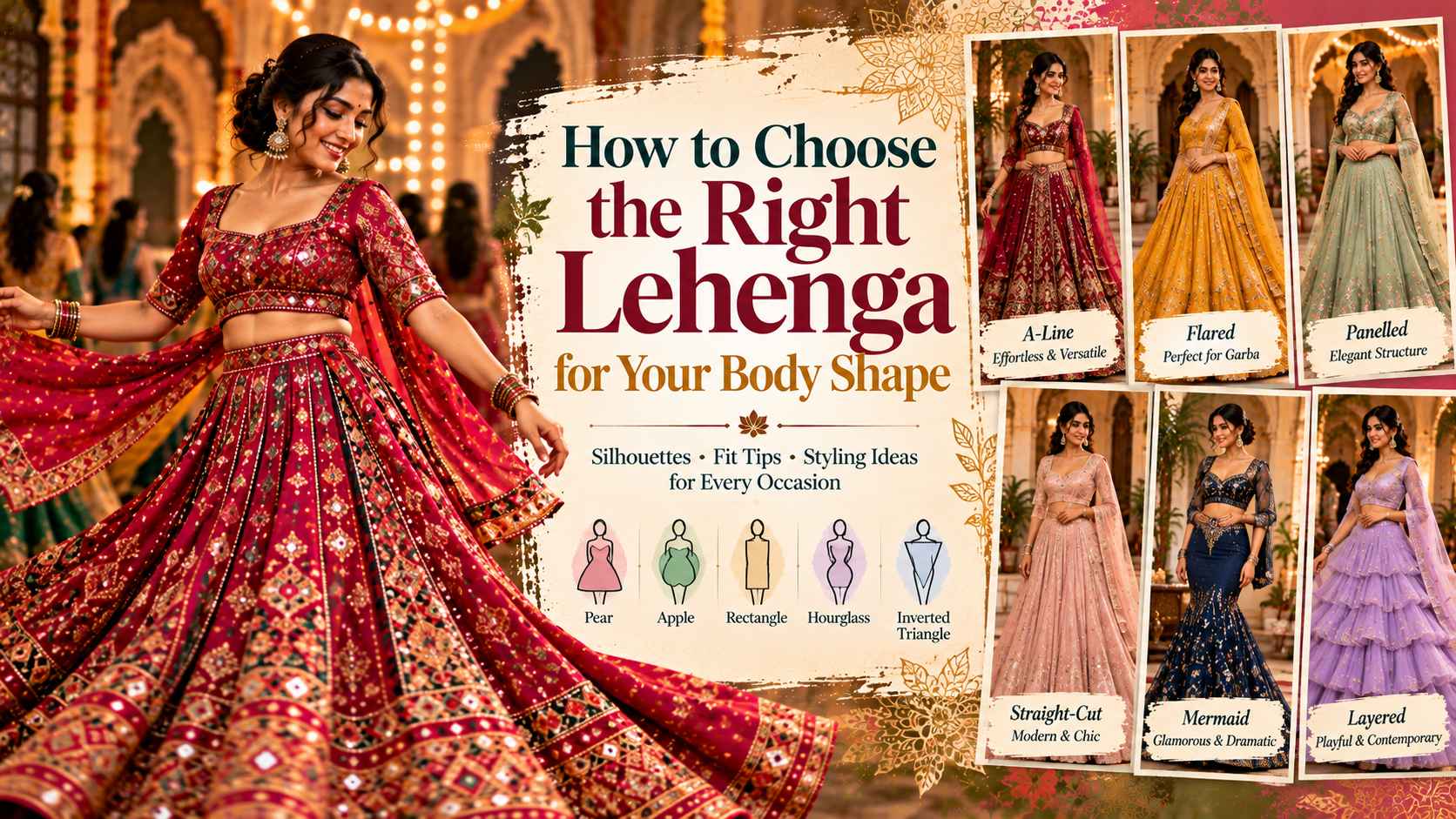
An A-line lehenga is fitted at the waist and widens gradually towards the hem, like the letter A. It is one of the easiest silhouettes to wear because it skims the hips instead of hugging them and does not add a lot of bulk. It works for long events, suits most fabrics, and moves comfortably without overwhelming a smaller frame.
Circular or flared lehenga
A circular or flared lehenga is cut from a full or near-full circle of fabric, so it falls in deep folds and swirls when you spin. This is the classic Garba silhouette. It adds noticeable volume below the waist, which creates a defined waist and a dramatic movement. Heavier circular skirts can feel weighty over a long evening, so fabric choice matters.
Panelled or kalidar lehenga
A panelled lehenga, often called kalidar, is made from many vertical panels stitched together. The seams create long lines down the skirt, and the panels add flare towards the hem without a lot of gathering at the waist. Panels can also be in contrasting colours or fabrics, which adds interest.
Straight-cut lehenga
A straight-cut lehenga falls fairly straight from the waist with little flare, closer to a long skirt. It gives a streamlined, contemporary look and is easy to manage in crowds and on stairs. It offers less movement for dancing, so it suits receptions, dinners and evening functions more than Garba.
Mermaid or fishtail lehenga
A mermaid lehenga fits closely through the hips and thighs and flares out near the knees or below. It draws attention to the hip and waist line and creates a dramatic, glamorous look. It restricts stride, so it works best for receptions, cocktail events and occasions with limited walking or dancing.
Layered or tiered lehenga
A layered lehenga has multiple tiers of fabric, often in net, organza or georgette, stacked one over another. It creates volume and soft texture, and lighter layered fabrics can look full without much weight. Many layers in a stiff fabric can add width quickly, so check how the tiers fall before buying.
How to choose a lehenga based on different body proportions
Instead of fixed body-type labels, it helps to look at specific proportions: torso length, shoulders, waist and hips. Most people have a mix of features, and you can choose which ones you want to highlight.
Torso length
If your torso is long compared with your legs, a lehenga worn at the natural waist or slightly above, paired with a blouse that is not too short, can balance the proportions. A slightly longer blouse or a cropped jacket can break up the length of the torso.
If your torso is short compared with your legs, wearing the lehenga a little lower than your natural waist can add the impression of length to the torso. A shorter blouse with a deeper neckline can also lengthen the upper body visually. Avoid very wide, heavy waistbands that take up much of a short torso.
Shoulder proportions
If your shoulders are broader than your hips and you want to balance them, a fuller skirt such as a flared, panelled or layered lehenga adds volume below the waist. V-necklines, sweetheart necklines and simpler sleeves keep the upper body less busy. Draping the dupatta diagonally can soften the shoulder line.
If your shoulders are narrower than your hips and you want balance, add interest to the upper body with embellished blouses, boat necklines, cap sleeves or shoulder detailing. A-line or panelled skirts that skim the hips work well, and a dupatta draped over both shoulders adds width at the top.
Waist placement and definition
If you like to highlight your waist, almost any silhouette with a well-fitted waistband will do it. Flared and mermaid skirts emphasise the contrast between waist and hips.
If you prefer less emphasis at the waist, choose a slightly longer blouse, a peplum or jacket-style blouse, or a lehenga with a smooth, flat waistband rather than heavy gathers. An A-line or straight-cut skirt also keeps attention on the overall line.
Hip proportions
If you want to show off your hips, a mermaid or fitted A-line lehenga does that well.
If you want a softer line over the hips, panelled and A-line skirts avoid bulky gathers at the waist and fall more smoothly. Fabrics with good drape, such as georgette or crepe, follow the body gently without clinging. Very stiff, heavily gathered skirts add volume right at the hip.
Height
Height affects proportions too. If you are petite, lighter fabrics, vertical panels, smaller motifs and a lehenga length that just touches the floor in your heels help avoid being overwhelmed by fabric. If you are tall, you can carry wide borders, large motifs, heavy flare and dramatic layers easily, and longer blouses or jacket styles also suit you.
These are styling considerations, not rules. If a silhouette makes you feel good, wear it.
Choosing the right waistband and waist placement
The waistband is where most lehenga fitting problems start. A good lehenga waist fitting keeps the skirt in place, distributes its weight and shapes the whole look.
Natural waist
The natural waist is the narrowest part of the torso, usually just above the navel. A lehenga worn here defines the waist and suits most silhouettes. It is also the most secure position for heavy skirts.
Low waist
Wearing the lehenga slightly below the navel shows more midriff, lengthens the torso visually and suits shorter blouses. It is popular for Garba and contemporary styling, but heavy skirts may slip lower over a long evening.
High waist
A high-waisted lehenga sits above the natural waist and can lengthen the legs visually. It pairs well with cropped blouses or jackets and suits those who prefer less midriff exposure.
Waistband width and finish
- Narrow waistbands look neat and suit short torsos.
- Wider waistbands, sometimes called belts or yokes, add structure and can smooth the hip line, but take up more of a short torso.
- Drawstring waists are adjustable but can bunch fabric.
- Hook and zip closures with an inner elastic or belt give a cleaner fit.
- Can-can or inner layers should be attached securely so they do not shift.
Always check how the skirt sits when you sit down and bend, not just when standing.
Understanding skirt flare, volume and length
Flare
Flare is how much the skirt widens from waist to hem. A little flare gives a soft A-line; full flare gives the dramatic Garba swirl. More flare means more movement but also more fabric to carry and manage.
Volume
Volume comes from flare, layers, gathers and inner can-can. It changes how much space the skirt takes up. High volume looks festive and dramatic but can be tiring in crowded venues or when travelling between functions.
Length
The right length depends on your footwear and the occasion.
- For Garba, an ankle-length skirt avoids tripping during spins and fast steps.
- For weddings and receptions, a floor-length lehenga that just grazes the floor in your chosen heels looks elegant.
- Always measure the length with the footwear you plan to wear.
- A short train is attractive for photographs but needs care while walking.
How fabric weight and drape affect the final look
Fabric decides whether a silhouette looks soft, structured, light or regal.
| Fabric | Weight and drape | Effect | Best for |
| Georgette | Light, flowing | Soft movement, follows the body gently | Garba, day functions, long events |
| Chiffon | Very light, sheer | Airy, delicate | Summer events, layered lehengas |
| Net | Light, slightly stiff | Volume without much weight, sheer layers | Layered and flared lehengas |
| Organza | Light but crisp | Structured volume, glossy finish | Receptions, layered designs |
| Silk | Medium to heavy | Rich sheen, structured fall | Weddings, puja, family ceremonies |
| Brocade and banarasi | Heavy, stiff | Regal, holds shape | Weddings, formal ceremonies |
| Velvet | Heavy, plush | Luxurious, warm | Winter weddings and receptions |
| Cotton and mul | Light to medium, breathable | Casual, comfortable | Day functions, Navratri, puja |
| Crepe | Medium, smooth drape | Sleek, fluid lines | Straight-cut and mermaid styles |
Heavy embroidery, mirror work and stone work add weight. A lehenga that feels fine in the trial room can feel much heavier after hours of dancing. If comfort is your priority, read our guide to Comfortable Navratri Outfits for Long Garba Nights.
Choosing blouses and dupatta arrangements
Blouses
The blouse frames the upper body and can shift the balance of the whole outfit.
- Short blouses with a low-waisted skirt lengthen the torso.
- Longer blouses and peplum styles balance a long torso and reduce emphasis at the waist.
- Jacket and cape styles add structure and a contemporary look.
- V, sweetheart and deep round necklines lengthen the neck and upper body.
- Boat necks and embellished shoulders add width at the top.
- Full sleeves suit cooler weather and formal events; sleeveless and cap sleeves suit dancing.
For more ideas, see our Navratri Blouse Design Ideas.
Dupatta arrangements
The way you drape a dupatta changes the outline of the outfit.
- Over one shoulder, falling at the back: shows off the blouse and keeps the front clear for dancing.
- Diagonal drape across the body: creates a vertical line and softens broad shoulders.
- Over both shoulders like a cape: adds width at the top and works with heavy lehengas.
- Pinned at the waist, Gujarati style: practical for Garba and keeps the dupatta secure.
- Over the head: traditional for puja and wedding rituals.
For festive Navratri drapes and combinations, our Chaniya Choli Styling Guide covers more options.
How to select lehenga designs for different occasions
Garba and Dandiya
Choose a flared or circular skirt in a light to medium fabric, ankle length, with secure closures. Mirror work and bright colours suit the mood. Make sure you can lift your arms, spin and move fast. A pinned dupatta stays out of the way.
Puja and religious ceremonies
Choose comfortable fabrics such as cotton, silk or georgette, a modest blouse, and a dupatta that can be draped over the head if needed. A-line or panelled skirts are easy to sit cross-legged in.
Weddings
Silk, brocade, velvet and heavily embroidered lehengas suit weddings. Floor length, a structured silhouette and richer colours work well. Consider how long you will stand, walk and sit, and whether the weight is manageable.
Receptions and evening events
Straight-cut, mermaid and layered net or organza lehengas suit receptions. Contemporary blouses, jacket styles and lighter dupattas add a modern touch.
Family functions and smaller gatherings
Mehndi, haldi, sangeet and family dinners call for lighter, comfortable lehengas. A-line cotton or georgette lehengas, pastel or floral prints, and simpler blouses work well and let you move freely.
Common lehenga fitting problems and practical solutions
| Problem | Likely cause | Practical solution |
| Skirt slips down | Waist too loose, heavy skirt | Take in the waist, add a hook and inner belt, or wear at the natural waist |
| Waistband digs in | Waist too tight, stiff waistband | Let out the seam, use a softer lining or wider band |
| Skirt bunches at the hips | Too many gathers at the waist | Choose panelled or A-line, or ask a tailor to reduce gathers |
| Hem too long | Length set without footwear | Re-hem with the shoes you will wear |
| Hem uneven | Skirt not balanced on the waist | Re-level the hem while wearing it |
| Can-can shows or scratches | Poorly attached or rough inner layer | Add a soft lining or reattach can-can |
| Blouse rides up | Blouse too short or tight at the bust | Adjust darts, add length or use a longer style |
| Dupatta keeps slipping | Heavy dupatta, no pinning | Use safety pins or a brooch at shoulder and waist |
| Lehenga feels too heavy | Heavy fabric and embellishment | Choose lighter fabric or lighter embroidery for long events |
| Hard to walk or dance | Too much flare or a narrow mermaid cut | Choose a silhouette suited to the occasion |
A trial with your actual footwear, jewellery and blouse a week or two before the event gives time for adjustments.
Ready-made versus semi-stitched lehengas: what to check before buying
Ready-made lehengas
Ready-made lehengas are stitched to standard sizes and can be worn immediately or with small adjustments.
Check:
- Waist size and how much seam allowance is left for alterations
- Skirt length, and whether the hem can be lengthened if needed
- Blouse fit at bust, shoulders and armholes
- Quality of stitching, lining and closures
- Weight of the outfit
- Return and exchange terms
Semi-stitched lehengas
Semi-stitched lehengas usually come with the skirt partly stitched and the blouse as unstitched fabric. They allow a custom fit but need tailoring time.
Check:
- Whether the skirt waist and length can be adjusted to your measurements
- How much blouse fabric is provided, and whether it is enough for your preferred sleeve and length
- Whether the dupatta and lining are included
- Time needed by your tailor, especially during festive rush
- Work and borders near seams, which can limit alterations
Lehenga silhouette comparison table
| Silhouette | Visual effect | Movement | Suitable occasions |
| A-line | Skims hips, balanced outline | Comfortable, easy to walk and sit | Almost any occasion, long events, puja |
| Circular or flared | Defined waist, full volume below | Excellent for spins and dance | Garba, Dandiya, sangeet, weddings |
| Panelled or kalidar | Vertical lines, flare at the hem | Good movement without heavy gathers | Navratri, weddings, family functions |
| Straight-cut | Streamlined, contemporary | Easy in crowds, limited swirl | Receptions, dinners, evening events |
| Mermaid or fishtail | Highlights waist and hips, dramatic | Restricted stride | Receptions, cocktail events |
| Layered or tiered | Soft volume and texture | Light if fabric is light, fuller footprint | Sangeet, receptions, festive parties |
Frequently asked questions
How do I choose a lehenga for my body shape?
Start with the occasion and how much you will move. Then look at your proportions: torso length, shoulders, waist and hips. Pick a silhouette and waist placement that balance or highlight the features you want, and choose a fabric that feels comfortable. Personal preference matters most.
Which lehenga silhouette is the most versatile?
The A-line lehenga is often the easiest to wear across occasions because it skims the hips, moves comfortably and suits most fabrics. That does not make it the best for everyone, just a flexible starting point.
What is the best lehenga for Garba?
A flared or circular lehenga in a light to medium fabric, cut to ankle length, with secure closures, is practical for Garba because it moves well during spins and fast steps.
Where should a lehenga sit on the waist?
It can sit at the natural waist, slightly lower or slightly higher. The natural waist is most secure for heavy skirts. A lower waist lengthens the torso, while a higher waist can lengthen the legs visually.
How long should a lehenga be?
For dancing, ankle length is safest. For weddings and receptions, it should just touch the floor when you wear your chosen footwear. Always measure length with the shoes you plan to wear.
Can petite women wear heavy or flared lehengas?
Yes. Choosing lighter fabrics, vertical panels, proportionate motifs and a length that suits your footwear helps a flared lehenga look balanced on a petite frame.
How do I stop my lehenga from slipping?
Make sure the waist fits snugly, use a hook closure with an inner belt or elastic, and wear heavier skirts closer to the natural waist. A tailor can reinforce the waistband if needed.
Should I buy a ready-made or semi-stitched lehenga?
Ready-made lehengas save time and suit standard sizes. Semi-stitched lehengas allow a more custom fit but need tailoring time. Choose based on your schedule, fit needs and how much alteration you expect.
How heavy should a lehenga be for a long event?
There is no single right weight, but lighter fabrics and less dense embellishment are easier to wear for long events and dancing. Try the outfit on and move around in it before deciding.
Conclusion
The right lehenga for body shape is the one that fits your proportions, suits the occasion and feels good to wear for hours. A few practical steps make the choice easier:
- Decide the occasion first, since Garba, puja, weddings and receptions call for different silhouettes.
- Look at your proportions, not rigid labels, and decide what you want to highlight.
- Get the waistband right; it controls comfort and how the whole skirt falls.
- Match flare and length to how much you will move, and measure with your footwear.
- Choose fabric for comfort as well as looks, especially for long events.
- Use the blouse and dupatta to balance the outline.
- Schedule a full trial with accessories, and leave time for alterations.
Above all, wear what makes you feel confident. No silhouette is right for everyone, and your comfort and enjoyment matter more than any styling rule.
