
Blog
Comfortable Navratri Outfits for Long Garba Nights: Fabrics, Fits and Styling Tips

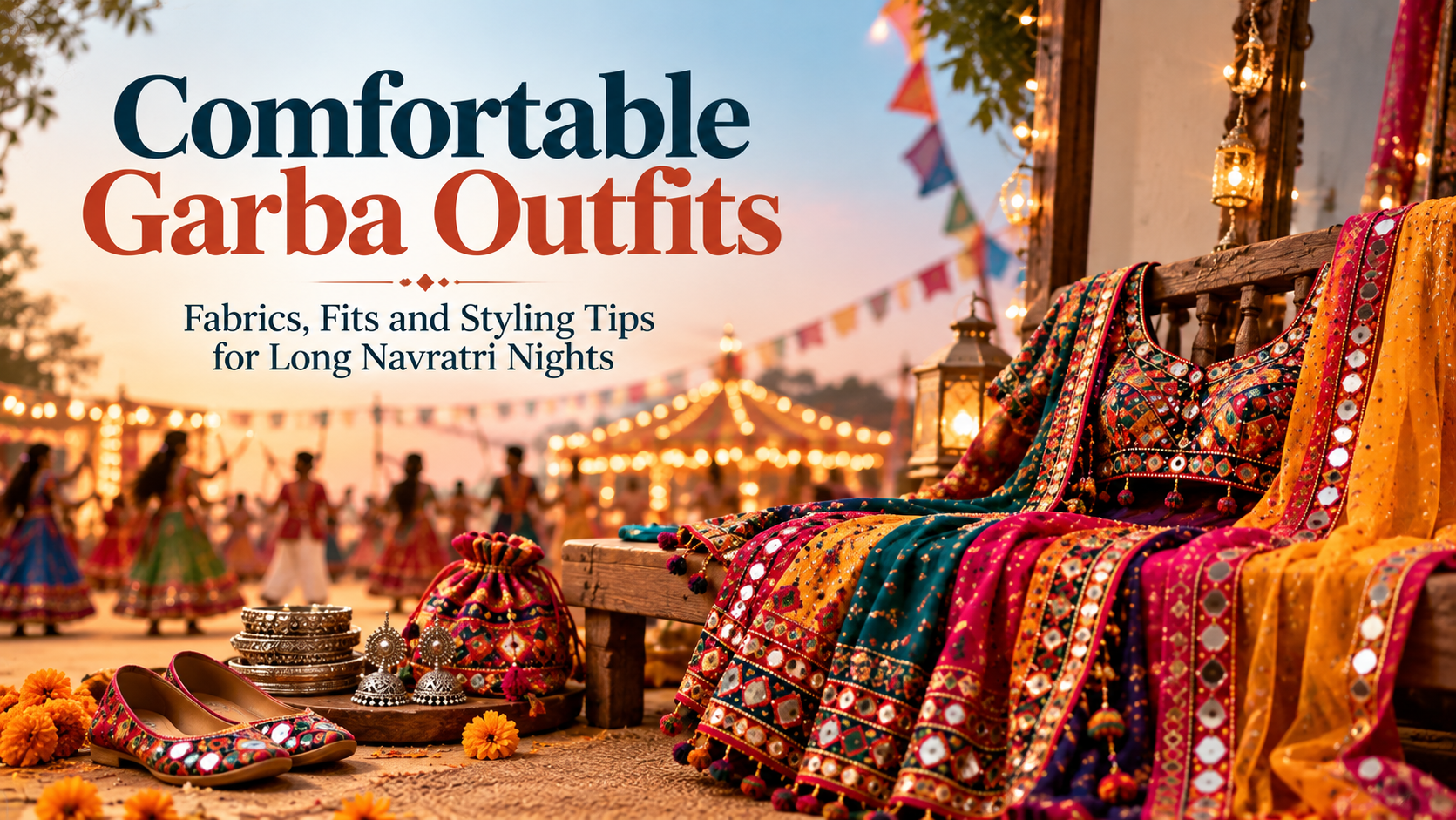
Garba nights rarely end when you expect them to. A few rounds can turn into hours of circling, clapping and dandiya in a warm, crowded hall. By the second hour, the outfit that looked perfect in the mirror is either an ally or a problem. A skirt that drags, a blouse that pinches or a dupatta that keeps sliding pulls your attention from the music.
That is why comfortable Garba outfits are about choosing well, not compromising. This guide covers which outfit types move best, how to judge fabric, lining and embellishment, how to get fit and hem right, how to keep everything in place and how to prepare before you leave home. It complements our pillar guide to Navratri outfit ideas 2026, which covers the full range of festive looks.
Best outfit types for dancing
Every outfit type can work if it is well made. Here is how the common options behave once the dancing starts.
Chaniya choli
The classic Garba outfit is designed for this: a flared skirt that opens as you turn and a short choli that keeps the torso free. The trade-off is weight, since a heavily worked one is tiring. Look for a flare you can swing easily and a waistband that stays put.
Lightweight lehenga
A lehenga in a lighter fabric with moderate flare gives the same festive feel with less to carry, which is why pastel and contemporary designs are popular as lightweight festive wear. Check that the underskirt is not stiff or scratchy.
Sharara
Wide, flowing legs move well and cover your legs, which some people prefer in crowds. Make sure the hem clears the floor and the legs are wide enough to turn in. Our guide to Navratri suit designs for women covers more suit styles.
Kurta sets
Kurta with palazzo, pants or dhoti-style bottoms is among the easiest to dance in, with full coverage and simple fabrics. Add a good dupatta and jewellery to dress it up.
Sarees can work with a pre-draped option or careful pinning, but need more preparation. See our guide to the best sarees to wear for Navratri 2026 if you prefer that route.
Breathable fabrics and how to assess them
Breathable ethnic wear starts with the fibre, but construction matters just as much. As a general guide, with the caveat that comfort varies by weave and finish:
- Cotton, mulmul and cotton blends are generally breathable and easy to wash.
- Light silk blends and georgette are festive but can feel warmer under a heavy lining.
- Heavy brocade, velvet and thick synthetics tend to trap heat and add weight.
Before you commit, run a few checks.
Lining. Turn the garment inside out. A soft, smooth lining sits comfortably against the skin, while stiff net, rough edges and scratchy seams cause irritation after hours of movement.
Weight. Lift the skirt in your hands, then try it on with the dupatta and accessories to feel the true weight.
Embellishment. Mirror work, sequins and heavy embroidery add weight, stiffness and scratching risk. Check that the work is secure and nothing sharp touches the inside. Light work on borders and necklines is easier to manage than dense all-over work.
Dyes and finishes. Brightly dyed or hand-dyed fabrics can bleed in the wash, so check the care label.
Getting fit and hem length right
Blouse or kurta. You should be able to raise both arms and clap overhead without the fabric digging in or riding up. A slightly relaxed fit is usually more comfortable than a snug one for a long evening.
Waist. A skirt, lehenga or palazzo waistband should be secure but not tight. Too loose slips, and too tight becomes unbearable after a few hours. A drawstring or adjustable closure gives flexibility.
Hem length. Aim for a hem that clears the floor by a small margin when worn with your planned footwear. Very long hems catch underfoot in a crowd, and very short ones may feel exposing when you twirl. Always check the length with your shoes or bare feet.
Flare. A moderate flare moves well without becoming a burden, while very full skirts tire you and bump other dancers.
Alterations. If something almost fits, adjust it before the event.
Dupatta draping and keeping everything in place
A dupatta can finish a look or ruin a night. A few habits help.
- Choose a lightweight dupatta in net, georgette or similar rather than a heavy, slippery one.
- Pin it to the shoulder of the blouse or kurta with one or two safety pins, where the pin will not scratch.
- Drape it across the body and tuck it at the waist, or wear it on one shoulder.
- Keep the loose end short so it does not trail or catch in dandiya sticks.
- Secure the waistband with pins or a hook, and consider a kamarbandh, which holds fabric in place as well as decorating it.
- Fashion tape can help a neckline that shifts, though results vary and skin sensitivity matters.
Test the arrangement by turning, bending and raising your arms before you leave.
Comfortable footwear and accessories
Footwear. Flat, secure, cushioned shoes such as juttis, kolhapuris and flat sandals suit long evenings, and many people dance barefoot. Some venues expect bare feet or restrict footwear on the dance floor, so check with the organisers. Avoid heels and brand-new shoes.
Jewellery. Oxidised silver and similar lightweight pieces are a Garba favourite. Avoid long, dangling earrings and necklaces that catch on dupattas and dandiya sticks.
Bag. A small potli or crossbody bag holds a phone, key, tissues and cash and leaves your hands free.
Hair and water. Braids or a secure bun keep hair out of your face, and a small water bottle helps through long dances.
Daytime puja versus evening dance events
The same outfit rarely suits both, and the differences are practical as well as stylistic.
For daytime puja or family gatherings, comfort means modesty and ease. Cotton or cotton silk in simple designs, a full dupatta and light jewellery work well for sitting longer, and many people choose softer traditional colours. Check your own tradition for which colours apply.
For evening dance events, prioritise movement: a lighter outfit, a secure fit and fewer loose elements. Brighter colours and more embellishment work if the outfit stays manageable. To wear one outfit for both, change the dupatta, jewellery and footwear.
Practical preparation checklist before leaving home
- Try the full outfit with footwear and move as you would on the dance floor.
- Check closures and hooks, and pin the dupatta and waistband.
- Pack safety pins, a spare hair tie, tissues and a plaster.
- Carry water, a snack and a light shawl if the venue turns cool.
- Charge your phone and carry a small power bank.
- Check the venue’s footwear rules and the weather.
- Keep valuables to a minimum and arrange your transport.
Common outfit mistakes and how to avoid them
Most of the fixes appear above, but these mistakes are worth a quick scan.
- Choosing the heaviest outfit instead of one you can dance in.
- Skipping the lining check.
- Trusting an unpinned dupatta.
- Wearing a hem that is too long, or shoes that are new or heeled.
- Loading up on dangling jewellery.
- Skipping the trial run. Dress and dance at home first.
Frequently asked questions
What are the most comfortable Garba outfits?
Lightweight chaniya cholis, lehengas, sharara sets and kurta sets in breathable fabrics are all comfortable, if they fit well and have a soft lining.
Which fabrics are best for long Garba nights?
Cotton, mulmul and cotton blends are generally breathable, and light silk blends or georgette work with a light lining. Heavy brocade and velvet tend to be warm.
How long should a lehenga be for Garba?
Long enough to look finished but short enough to clear the floor, tested with the footwear you plan to wear.
How do I keep my dupatta from slipping?
Use a lightweight dupatta, pin it securely at the shoulder and waist, and test the drape by turning and raising your arms.
Can I wear a saree to Garba comfortably?
Yes, with a pre-draped or well-pinned drape and a lightweight fabric, though it needs more preparation than a chaniya choli or suit.
Conclusion
Comfortable Garba outfits come from small, practical choices: a flare you can handle, a lining that does not itch, a fit that lets your arms move, a hem that clears the floor and a dupatta that stays put. Choose breathable fabrics, keep embellishment manageable and test your outfit in motion before the event.
With a little preparation, you can look festive and still feel good at the end of a long night. For more outfit ideas, explore our festive clothing guides and collections.
