Blog
Indo-Western Navratri Outfit Ideas: How to Blend Traditional and Modern Fashion

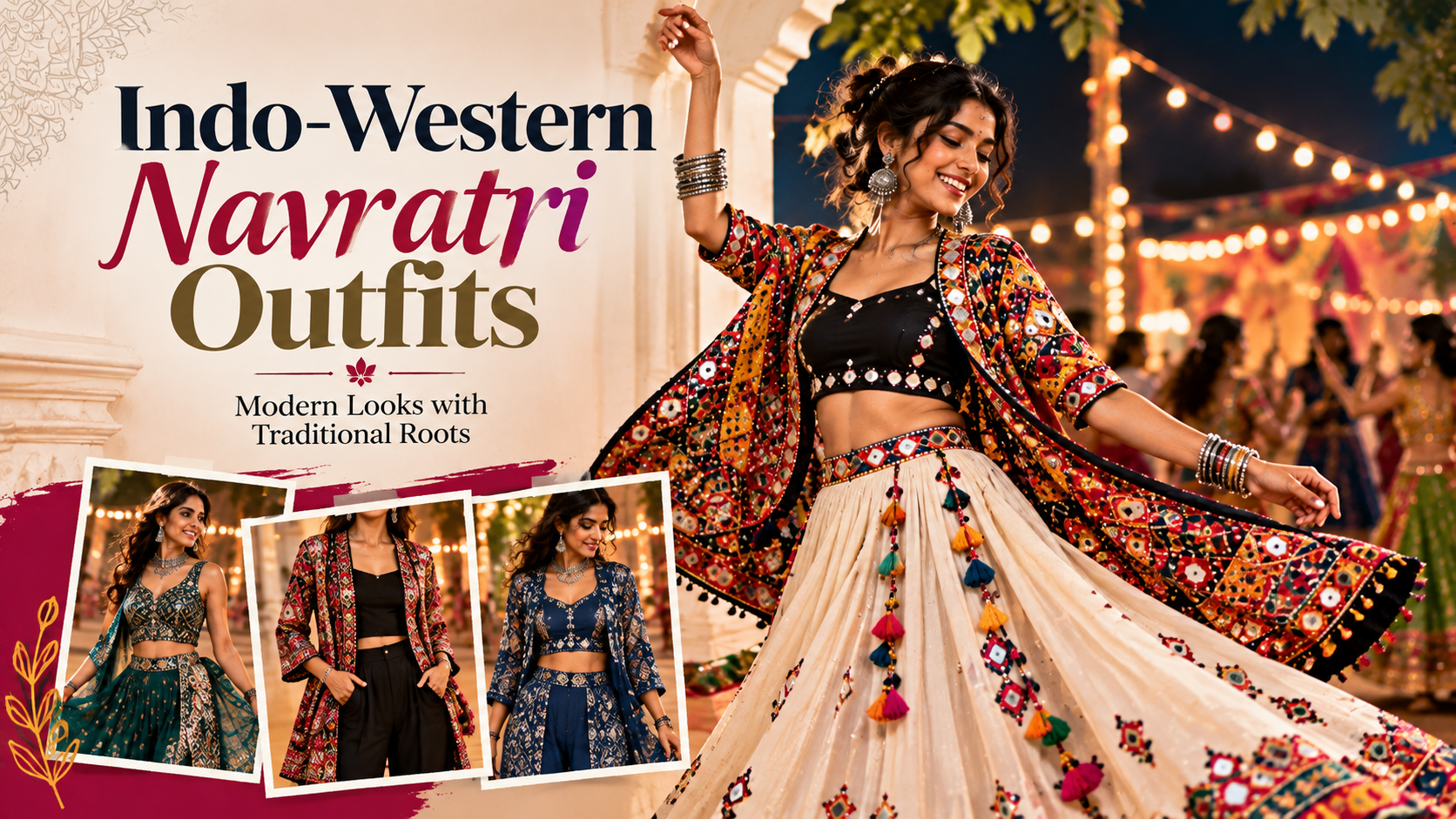
Navratri is the festival where you can dance in a chaniya choli, a cotton kurta or a jacket over a lehenga skirt, and nobody thinks you are doing it wrong. That freedom is part of why Indo-Western Navratri outfits appeal to so many young adults. They keep the colours, embroidery and fabrics of traditional wear, and they add cuts, layers and combinations that feel current and easy to move in.
This guide explains how to build fusion ethnic wear that still feels rooted: which silhouettes work, how to use embroidery and regional textiles with care, which colours and jewellery suit a modern look, and how to stay comfortable at Garba, Dandiya, puja and family gatherings. It also shows how to restyle what you already own. For more looks across the festival, see our Navratri Outfit Ideas 2026 pillar page.
What Indo-Western Means at Navratri
Indo-Western festive wear mixes traditional Indian elements with Western cuts or styling. Three terms are often used loosely, so here is a working distinction.
- Traditional outfits follow established silhouettes, such as a chaniya choli, a saree or a kurta with salwar.
- Fusion ethnic wear combines pieces from both traditions, such as a crop top with an ethnic skirt.
- Contemporary traditional outfits keep the traditional cut but change the fabric, colour or detailing, such as a minimalist sharara set in a muted shade.
The categories overlap, so treat them as a spectrum and not a set of rules. A good modern Garba outfit usually keeps at least one traditional anchor, whether that is a textile, an embroidery style or a recognisable silhouette, and then plays with everything else.
Crop Tops with Ethnic Skirts and Lehenga-Style Bottoms
A crop top with a flared ethnic skirt is one of the most popular Indo-Western festive wear combinations, because it looks like a chaniya choli and feels lighter. A few practical points help:
- Choose a skirt with enough flare to spin, and a hem that clears the floor. A can-can or heavy lining adds weight, so check that it is breathable.
- Pick a top that stays in place when you lift your arms. Test it by raising your arms and twirling before you commit.
- Mirror work or Bandhani on the skirt gives a traditional anchor, so the top can be plain or minimally embroidered.
- A dupatta pinned cape-style adds coverage and keeps the look rooted without trailing on the floor.
If a cropped top does not suit the occasion or your comfort, a longer blouse, a peplum top or a short kurti works with the same skirt.
Jacket-Style Kurtas, Sharara Sets and Fusion Co-ords
Jacket-Style Kurtas
A short or long jacket over a plain kurta and trousers gives a polished look that also adapts to the evening. Wear it for puja or photographs, and take it off when the dancing starts. Choose lightweight fabrics, since layers get warm in crowded venues. A jacket with Bandhani or block print gives a traditional touch against plain separates.
Contemporary Sharara Sets
A sharara suit for women remains a festival favourite, and modern versions often use cleaner lines, shorter kurtas and softer colours. Look for a fit that sits comfortably at the waist and a flare that moves without bunching. Our Navratri suits for women guide explains sharara, palazzo and other suit styles in more detail.
Fusion Co-ord Sets
Co-ords, matching tops and bottoms, are easy to wear and easy to restyle. A printed or embroidered co-ord can be worn together for Garba and separately for other occasions. Check that the fabric is breathable, and that the pieces still look good worn separately.
Using Embroidery, Bandhani, Mirror Work and Regional Textiles
Traditional details are what keep an Indo-Western outfit connected to Navratri. Use them thoughtfully.
- Mirror work is widely associated with Gujarati and Rajasthani embroidery and catches the light during Garba. Use it on a skirt, border or dupatta, and keep the rest of the outfit simpler.
- Bandhani, a tie-dye technique often linked with Gujarat and Rajasthan, works as a dupatta, a skirt or a jacket. It brings texture and colour in a small amount.
- Block prints and thread embroidery suit lighter, daytime looks and layer well with plain separates.
- Regional textiles such as ajrakh block prints from Kutch or handloom borders add depth. If you want to use one, learn what it is called and where it comes from, and buy from makers or sellers who can explain it. Textile traditions belong to specific communities, so avoid copying a design without understanding its context.
A good rule is one traditional hero per outfit. A heavily embroidered skirt with a plain top works better than three heavily embellished pieces competing.
Colours and Jewellery for Modern Festive Looks
Modern looks often lean on a restrained palette, with one bright accent. Try these approaches.
- Monochrome with a pop. Wear a single colour from top to bottom, and add a contrasting dupatta or jewellery.
- Jewel tones with neutrals. Deep green, wine, blue or mustard pair well with cream, black or beige.
- Pastels with oxidised metal. Soft shades look fresh against oxidised silver, which gives a pleasing contrast.
- Prints with solids. Let one printed piece, such as a Bandhani skirt, carry the pattern, and keep the rest plain.
Our Navratri colour guide explains how people follow colours through the nine days, and the sequence varies by year and region, so use it as inspiration and not as a rule.
For jewellery, oxidised silver pieces work with most fusion looks. Light jhumkas, a choker or a layered chain and a stack of thin bangles suit a modern style. Keep pieces light enough to dance in, and avoid long dangling pieces that can catch on sticks or sleeves.
Comfortable Styling for Garba, Dandiya, Puja and Family Gatherings
Modern should not mean uncomfortable.
- Garba. Choose a light, flared bottom and a top that stays put. Pin your dupatta securely, and wear flat, cushioned footwear. Some venues ask guests to leave shoes outside, so check the rules.
- Dandiya. Avoid long trailing fabric and loose, dangling jewellery, since sticks and fast turns can catch them.
- Puja. Choose a more modest, soft look. A longer kurta, a jacket over a crop top or a skirt with a full-length blouse suits sitting on the floor and meeting elders.
- Family gatherings. Layer thoughtfully. A jacket, a cape or a dupatta adds coverage if you want it, and you can remove it later.
Check how your outfit moves before the event. Sit, twirl and raise your arms at home, and fix anything that rides up, slips or pulls.
Ideas for Different Ages and Styles
- College and early twenties. Crop tops with mirror work skirts, co-ords with bold dupattas and sneakers-style flats for dancing, if the venue allows.
- Working professionals. A contemporary sharara set, a jacket-style kurta or a muted skirt and top combination that moves from office events to the evening.
- Women who prefer more coverage. A long jacket over a kurta, a peplum top with palazzo trousers or a longer blouse with a skirt and dupatta.
- Minimalists. A solid-colour co-ord with one statement dupatta and oxidised jewellery.
- Maximalists. A heavily embroidered skirt, a contrasting blouse and layered jewellery, as long as you keep the weight manageable.
- Older women and mothers. Soft fusion, such as a straight kurta with a modern jacket, or a sharara set in a calm colour, can feel contemporary without losing familiar elements.
Wear what feels like you, and let comfort and the occasion guide the final decision.
Restyling Your Existing Wardrobe
You may already own the pieces for a fusion look.
- Pair an old lehenga skirt with a plain crop top or a short kurti, instead of its original choli.
- Wear a saree blouse as a crop top with a long skirt, if the fit works.
- Layer a plain jacket or shrug over an old kurta.
- Turn a heavy dupatta into a cape or belt by pinning it.
- Combine a Bandhani dupatta with a plain co-ord or a white kurta.
- Switch the bottom of a suit, for example a palazzo with a new kurta, or the other way round.
- Update with accessories, such as a new belt, oxidised jewellery or contrasting footwear.
For saree-based ideas, our Navratri saree ideas show how to restyle a saree for festive evenings, including with modern blouses.
Traditional, Fusion and Contemporary Outfits Compared
| Style | Typical pieces | Best for | Comfort when dancing |
| Traditional | Chaniya choli, saree, kurta with salwar | Puja, family events, classic Garba | Varies, and heavy lehengas can feel warm |
| Fusion | Crop top with ethnic skirt, jacket over kurta, co-ords | Garba, Dandiya, parties | Usually good, with light fabrics and fitted tops |
| Contemporary traditional | Minimal sharara set, muted palazzo suit, modern drape saree | Puja, work events, evening gatherings | Good, since cuts are often simpler |
Frequently Asked Questions
What are Indo-Western Navratri outfits?
They blend traditional elements, such as mirror work, Bandhani or an ethnic skirt, with modern cuts or styling, such as a crop top, a jacket or a co-ord set.
Can I wear a crop top for Garba?
Many people do, with an ethnic skirt. Choose a top that stays in place when you move, and keep your dupatta pinned.
Is fusion wear suitable for puja?
Yes, with a more modest version. A longer kurta, a jacket or a skirt with a full-length blouse works well, and you can check what your family prefers.
How do I keep a modern outfit comfortable for dancing?
Choose light, breathable fabrics, a hem that clears the floor, secure tops and flat footwear. Test the outfit by moving around before the event.
Can I restyle old outfits instead of buying new ones?
Yes. Pair an old skirt with a plain top, layer a jacket, change the dupatta or swap jewellery to refresh what you already own.
Conclusion
The best Indo-Western Navratri outfits keep one clear link to tradition, such as a textile, an embroidery or a silhouette, and let the rest feel like you. Choose light fabrics, secure fits and details you can dance in, and restyle what you own before you buy more. Done well, a modern look carries the spirit of the festival as comfortably as a classic one.
