
Blog
Navratri Shopping Checklist: How to Choose Festive Wear You Can Reuse All Year

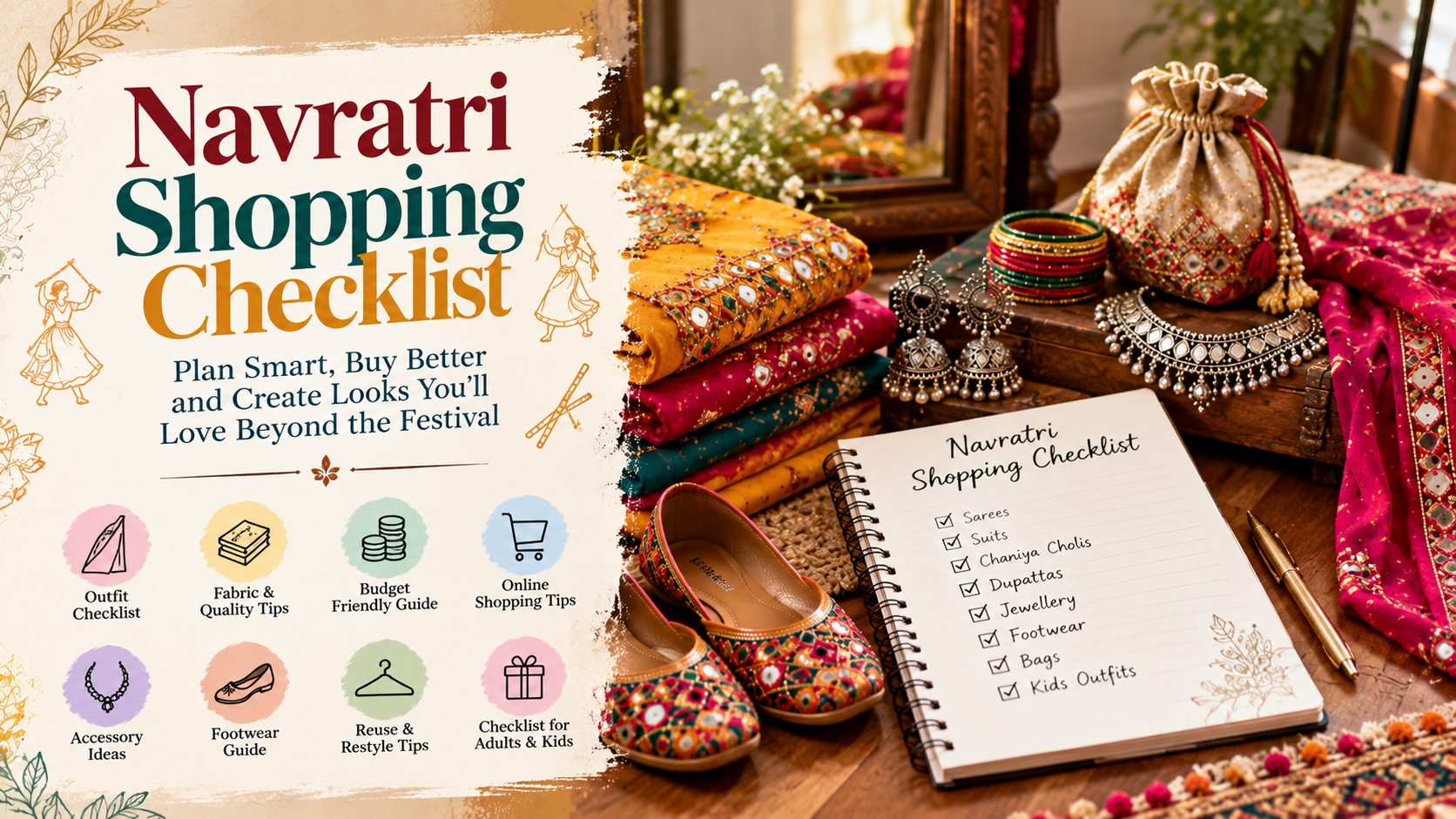
Festival shopping goes wrong in a predictable way. A bright outfit looks perfect in the shop, gets worn for one evening and then sits at the back of a cupboard until next year. A Navratri shopping checklist helps you avoid that, because it makes you ask the dull but useful questions before you buy: will this fit, will it wash, and will I wear it again?
This guide is for budget-conscious shoppers and families. It explains why planning ahead helps, gives separate checklists for adults and children, shows how to judge fabric, lining, stitching and fit, and covers online shopping, care and storage. It does not quote prices or promise savings, because they depend on what you buy and where. For wider outfit ideas, see our Navratri Outfit Ideas 2026 pillar page.
Why Planning Ahead Helps
Festive outfit shopping under pressure tends to produce duplicates, impulse buys and clothes that do not fit properly. Planning ahead gives you room to think.
- You can check what you already own and avoid buying a third red dupatta.
- You have time for alterations, which are hard to fit in during the festival rush.
- You can compare options without feeling hurried.
- You can set a limit for each person and stick to it.
- You can choose pieces for several occasions, not just one evening.
None of this guarantees you will spend less, but it makes it easier to spend deliberately.
Start with What You Already Have
Before you shop, lay out your existing ethnic wear and list what you have: sarees, suits, dupattas, blouses, jewellery and footwear. Note what is missing. Often it is a single piece, such as a plain base suit, a contrast dupatta or a comfortable pair of flats. Buying to fill a gap is more useful than buying a new complete outfit.
Affordable festive styling usually comes from combining and refreshing, not from replacing. A blouse in a new colour can change a saree, and a different dupatta can change a suit.
How to Assess Quality, Lining, Stitching and Fit
You can judge a lot without special knowledge. Do these checks in the shop, or ask a seller for photographs and details online.
- Fabric. Feel it. Check that it is soft enough for long wear, and look at the weave for uneven patches. Hold it against light to see how sheer it is. Check what the label says it is made of, and whether the claim matches how it feels.
- Lining. A good lining makes a garment comfortable and helps it hang well. Check that it is soft, not scratchy, and that it matches the outer fabric in colour, so it does not show through.
- Stitching. Look at seams, hems and the inside of the garment. Even, tight stitches are a good sign, while loose threads, puckering and uneven hems suggest hurried work. Check that embroidery is secure and does not snag.
- Embellishments. Pull gently at beads, mirrors and sequins to see if they are firmly attached. Loose pieces can scratch skin and fall off.
- Colour. Check whether the dye is likely to run. Ask about care instructions, and test a small hidden area if the seller permits.
- Fit and comfort. Try it on, then sit, lift your arms and take a few steps. Check the waist, shoulders and armholes. If you plan to dance, check the length and flare.
- Alteration room. Look at seam allowances inside the garment. Extra fabric gives you room to adjust later.
We cannot say what a particular price buys in quality, and a higher price does not guarantee a better garment. Judge each piece on what you can see and feel.
Choosing Versatile Colours and Designs
Pieces you can wear beyond Navratri tend to share a few traits.
- Rich but not extreme colours. Deep reds, greens, mustards, blues and maroon are easier to wear again than a very bright neon. Neutral bases such as beige, black or off-white take any dupatta.
- Moderate embellishment. Heavy mirror work or loud sequins can limit reuse. Subtle embroidery, block prints or a contrast border are more flexible.
- Classic cuts. A straight kurta, an Anarkali or a simple saree drape suits many occasions. Very trend-led shapes may date.
- Breathable fabrics. Cotton silk, cotton and chanderi work in more seasons than heavy silk or stiff organza.
- A separate dupatta. A plain suit with a changeable dupatta gives you several looks from one purchase.
Check our Navratri colour guide if you want to match the nine-day colours, and remember the sequence varies by year and region, so you do not need to follow it strictly.
Refreshing Existing Outfits
You can change a look without buying a new outfit.
- Blouses. A contrasting blouse changes the character of a plain saree. Check that you can alter or restitch it to fit.
- Dupattas. A new dupatta can transform a suit. Choose one that works with at least two or three outfits.
- Jewellery. Swap between oxidised and gold-toned pieces. Light oxidised earrings suit many colours.
- Footwear. A comfortable pair of juttis or flats in a neutral shade works across outfits.
- Belts and bags. A waist belt or a small potli adds a festive touch to a plain outfit.
Checklist for Adults
Sarees
- Do I have a blouse that fits and works with this saree, or can I get one made?
- Is the fabric easy to drape and comfortable for the length of the event?
- Will the border and colour work with more than one blouse?
- Does it need a fall, a petticoat or pre-stitching, and have I allowed for that?
- Can I wear it again for weddings, office events or family gatherings?
Our Navratri saree ideas cover fabrics and draping options.
Ethnic Suits
- Is the style suitable for the activity, such as sitting through puja or dancing?
- Is the dupatta included, and can it be worn with other outfits?
- Is the lining soft, and is the hem the right length?
- Will the bottom wear (palazzo, sharara, salwar) work with other kurtas?
See our Navratri suits for women guide for style details.
Chaniya Cholis
- Is the skirt light enough to dance in, and does the flare suit you?
- Is the blouse comfortable, with room for movement and easy to alter?
- Can I wear the skirt or choli separately with other pieces?
- Is the embroidery secure, and does the lining feel comfortable?
Checklist for Children
Children’s clothes need extra thought because they grow and move constantly.
- Does it fit now, with a little room, and not so large that it trips them?
- Are the fabric and lining soft and skin-friendly?
- Are the closures easy, such as elastic waists or front fastenings?
- Can the outfit be worn again for other festivals or family events?
- Are there small decorations that could come off and become a hazard?
- Is it easy to wash, and will the colour hold?
- Can the kurta, skirt or dupatta be mixed with other clothes?
Our Navratri outfits for kids guide covers comfort and safety in more detail. For children, consider borrowing, swapping or buying second-hand from family and friends for pieces they will outgrow quickly.
Online Shopping Checks
Online festive outfit shopping is convenient, but you cannot touch the fabric, so check the information more carefully.
- Size chart. Use the seller’s size chart and your own measurements, not just your usual size, and check whether measurements are for the garment or the body.
- Product description. Look for fabric details, lining, length, care instructions and what is included, such as a dupatta or blouse piece.
- Photographs. Check for clear images from several angles, and be wary of a single studio shot. Colours may look different on screen.
- Seller information. Look for a clear business name, contact details and any customer reviews, and check whether reviews include photographs of the actual product.
- Return and exchange policy. Read it before you pay. Check the time limit, whether returns are free, whether items must be unworn and whether custom stitching or altered pieces are excluded.
- Delivery time. Allow enough time for delivery, a trial and any alterations before the event.
- Payment and protection. Use a payment method you trust, and keep records of the order and messages.
We cannot verify any particular seller, and we do not recommend any, so rely on what you can check yourself.
Care, Alterations and Storage
- Read the care label, and follow it. When there is none, ask the seller.
- Hand wash or dry clean delicate and embroidered pieces, and wash dark or bright colours separately at first.
- Press embroidered clothes on the reverse side, and keep an iron away from mirrors and beads.
- Book alterations early. A tailor will be busy near the festival.
- Check what can be altered. Seam allowance and construction affect how much a garment can be taken in or let out.
- Dry clothes fully before storing them.
- Store in breathable cotton bags, away from damp, and fold along different lines from time to time.
- Keep jewellery in separate pouches to avoid scratches.
Comparison: First-Time Buyers vs Reusing Existing Clothes
| Point | First-time buyers | Shoppers reusing existing clothes |
| Starting point | Little or no festive wear, so you need a base | A wardrobe to build on |
| Priority | One or two versatile outfits in classic cuts | Gap-filling pieces such as a dupatta, blouse or footwear |
| Colours | Rich, flexible shades and neutrals | Colours that complement what you own |
| Fit | Try on or use a size chart carefully, and plan alterations | Check whether existing pieces still fit and need alteration |
| Accessories | A neutral set of jewellery, flats and a potli | Refresh with a new dupatta, jewellery or belt |
| Main risk | Buying heavy, single-use outfits | Buying duplicates of what you already have |
Frequently Asked Questions
How can I plan festive shopping on a budget?
List what you own, note the gaps and set a limit for each person. Buy versatile pieces and refresh existing outfits with new dupattas or accessories.
What colours are easiest to reuse?
Deep, rich shades and neutrals such as maroon, green, mustard, blue, beige and black are easier to wear again than very bright or heavily embellished pieces.
How do I check quality when shopping online?
Read the fabric and lining details, use the size chart, look at photographs from several angles and check seller information, reviews and the return policy before you pay.
Should I buy a size up for my child?
Choose a size that fits comfortably now. A garment that is too large can trip or slip, and one that is too tight restricts movement.
How should I store festive wear?
Make sure it is clean and dry, then store it in breathable cotton bags away from damp, and keep jewellery in separate pouches.
Conclusion
A good Navratri shopping checklist is mostly a habit of asking questions before you pay. Look at what you already own, buy to fill gaps, check fabric, lining, stitching and fit, and choose colours and designs you can wear again. Plan for alterations and care, read the policies when shopping online, and let accessories do some of the work. You may not save a fixed amount, but you are more likely to wear what you buy.
