
Blog
Navratri Accessories Guide: Jewellery, Dupattas, Potli Bags and Footwear

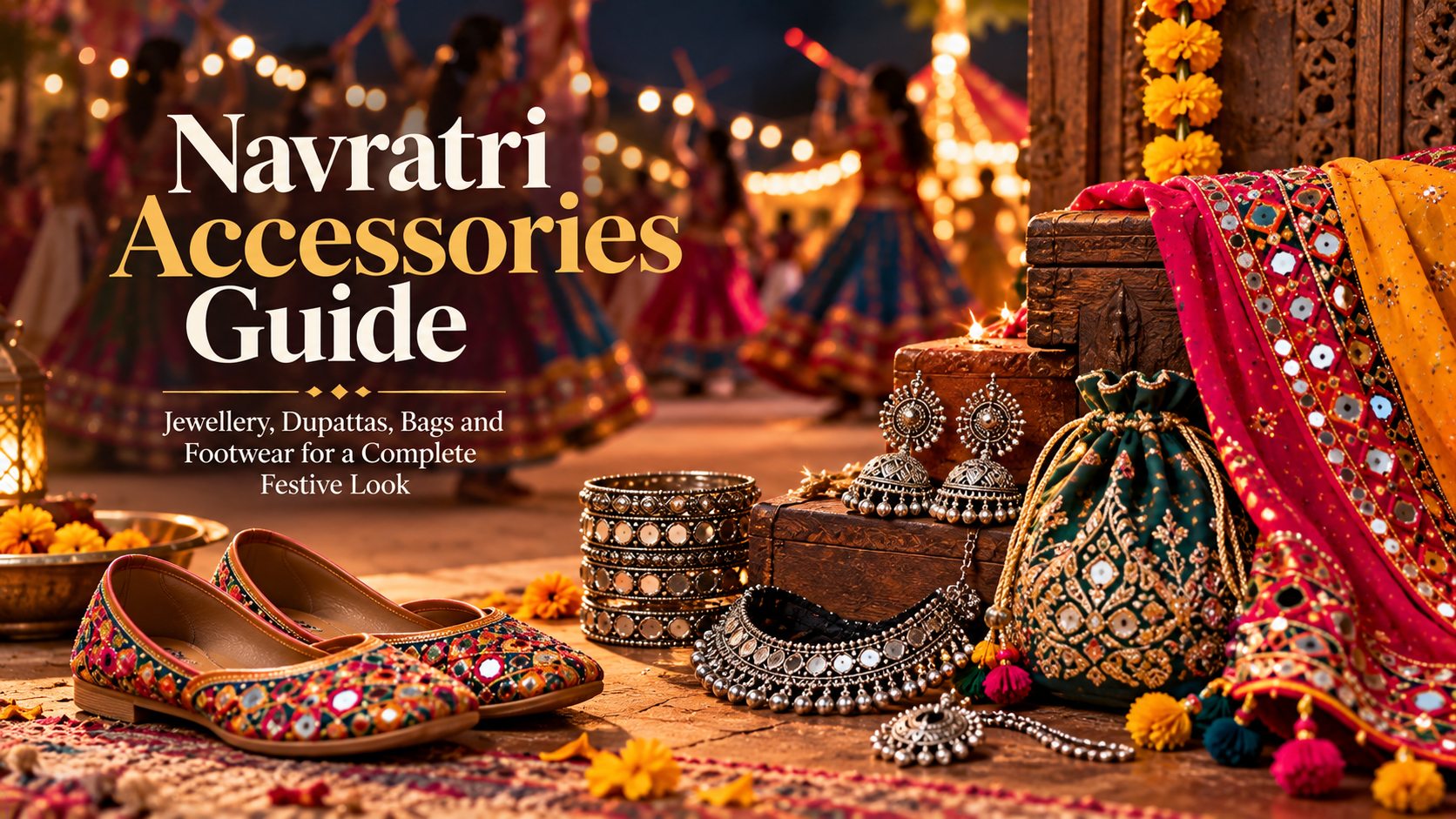
You do not need nine new outfits for nine nights. A few well-chosen Navratri accessories can make the same saree, suit or chaniya choli look different from one evening to the next, and they cost far less in space and effort than a fresh wardrobe. The trick is choosing pieces that work together, survive a night of dancing and suit what you already own.
This guide covers jewellery, dupatta styling, bags and footwear, then shows how to match them with different outfits and colours, reuse them across the festival and keep yourself comfortable and safe in a crowded venue. For the bigger picture, our Navratri Outfit Ideas 2026 pillar page covers every kind of festive look.
Why Accessories Do the Heavy Lifting
An outfit sets the base, and accessories set the mood. A plain cotton suit becomes festive with mirror work earrings and a bright dupatta, and the same suit looks calmer with a simple pair of studs and a pastel one. Accessories are also the easiest part of a look to change in the middle of the night, which helps when you move from puja to Garba.
Think in terms of a small capsule: one set of oxidised jewellery, one gold-toned set, two or three dupattas, a neutral potli bag, a pair of juttis and a pair of flats. Nearly every outfit in your wardrobe can borrow from it.
Jewellery for Navratri
Oxidised Silver and Garba Jewellery
Oxidised jewellery for Navratri is popular because its darkened silver tone goes with almost every colour and suits the folk look of Garba. Look for pieces that are light enough to dance in. Heavy sets can pull on the neck and ears after an hour, and large mirrors or dangling charms can catch on dupattas and hair.
Oxidised pieces also work as a unifying element when you wear colours that vary from day to day, since the same set sits comfortably with red, blue, green or yellow.
Jhumkas, Earrings and Hair Pieces
Jhumkas, the bell-shaped earrings, are the classic choice. Choose light ones, since large jhumkas can drag the earlobe during hours of movement. If you are worried about weight, studs with a small hanging drop give a similar effect. A maang tikka or a small hair ornament adds a festive finish, and braids with tassels or flowers keep hair tidy while you dance.
Bangles and Kadas
Bangles suit the rhythm of Garba, but a full stack can clash with Dandiya sticks and catch on sleeves. A few bangles on each wrist, or one broad kada, is easier to manage. Avoid very sharp or rough edges, which can scratch you and your partner.
Necklaces
Match the necklace to the neckline. A choker suits an open neck, and a long mala works with a plain neckline. If your outfit has heavy embroidery or mirror work around the neck, keep the necklace simple or skip it, so that the details do not compete.
Skin and Care
Some people react to the metal in costume jewellery, so choose pieces you know your skin tolerates, and take them off if they irritate. Wipe oxidised pieces dry after wearing, keep them away from water and perfume, and store them in a pouch so that they do not scratch each other.
Matching Jewellery with Sarees, Suits and Chaniya Cholis
- Sarees. Silk and cotton silk sarees look good with gold-toned jewellery, while cotton and block-printed sarees suit oxidised pieces. Our Navratri saree ideas explain how fabric and border can guide the choice.
- Suits. A sharara or palazzo suit with mirror work pairs well with oxidised earrings and a few bangles. A plain suit can carry heavier pieces. See our guide to Navratri suits for women for the suit styles themselves.
- Chaniya choli. Heavily embroidered chaniya cholis look best with a statement piece or two, such as a choker or large earrings, and a waist belt if the outfit suits it. Avoid wearing everything at once.
A simple rule helps: let one area carry the weight. If your earrings are bold, keep the necklace light, and if the necklace is bold, wear small earrings.
Dupatta Styling and How to Secure It
The dupatta is both a style feature and a practical risk when you dance, since it can slip, trail on the floor or catch on someone else.
- One shoulder, pinned. Drape it over one shoulder and pin it at the back and front so that it stays put.
- Cape style. Pin it at both shoulders so that it falls like a cape, which looks neat and stays secure.
- Waist tuck. Tie or tuck the dupatta loosely around your waist for energetic Garba, leaving your upper body free.
- Belt it. A thin belt or a hip chain over a draped dupatta holds the fabric in place.
- Choose the right fabric. Lighter fabrics such as georgette and cotton move easily, while heavy or stiff dupattas are better for puja and photographs.
- Keep it short for dancing. A very long dupatta will trail, so fold or pleat it, or switch to a shorter one.
Carry extra safety pins, and test your styling by moving around at home before the event. A dupatta in a contrasting colour is also one of the cheapest ways to change a look, so it is worth having two or three.
Potli Bags and Small Bags
A potli, the drawstring pouch, is practical because it holds just the essentials and leaves your hands free. Choose one with a wrist loop or a cross-body cord, and keep it light.
Good contents are a phone, a little cash or a card, a lip balm, a handkerchief and a few safety pins. Leave heavy items such as a full wallet and large cosmetics at your seat or with a trusted person.
A neutral potli in gold, beige or black works with most outfits. Embroidered or mirror work ones add colour, so use them to contrast with a plainer outfit. For crowded venues, wear the bag cross-body and keep it in front of you.
Footwear for Puja, Garba and Dandiya
Comfort comes first, and the right pair can decide how long you last.
- Puja. Juttis, kolhapuris or simple flats are easy to slip on and off. Some temples and homes ask you to remove footwear, so choose something you can manage quickly.
- Garba. Many people dance barefoot, and some venues ask guests to leave footwear outside. If you wear shoes, choose flat, cushioned and non-slip ones. Avoid heels.
- Dandiya. Closed-back flats or sandals with a back strap stay on during fast turns, and sturdier soles protect your toes from stray sticks.
Break in new footwear before the event, and carry a small bag for your shoes and a pair of clean socks or a spare pair of flats for the walk home. Festive footwear with embroidery or mirror work looks good, but check the inside for rough edges that could rub.
Matching Accessories with Colours
Colour decides which metals and tones work. Our Navratri colour guide explains how families follow colours across the nine days, and the principle below helps whichever colour you wear.
- Warm colours. Red, orange and yellow suit gold-toned jewellery, though oxidised pieces also work as a cooler contrast. Add a dupatta in a deeper or contrasting shade.
- Cool colours. Blue, green, purple and grey sit well with silver and oxidised jewellery. A touch of gold in the earrings or border adds warmth.
- Contrast. Choose one contrasting accessory instead of several. A bright dupatta or potli against a plain outfit, such as orange against blue, makes the look feel intentional.
- Keep a limit. Two or three accessory colours are enough. More can look busy beside embroidery or prints.
Outfit and Accessory Combinations
| Outfit | Jewellery | Dupatta and bag | Footwear |
| Cotton saree for daytime puja | Light oxidised earrings, a few bangles | Neutral potli, no extra dupatta | Juttis or flats |
| Silk saree for puja | Gold-toned earrings and a simple necklace | Small embroidered potli | Embroidered flats |
| Sharara suit for Garba | Oxidised jhumkas, a kada | Contrasting dupatta pinned cape-style, cross-body potli | Cushioned flats or barefoot |
| Anarkali suit for family events | Gold-toned jhumkas and a choker | Matching dupatta, wrist potli | Juttis |
| Chaniya choli for Garba | Statement choker, oxidised earrings, waist belt | Bright dupatta tucked at the waist, small potli | Barefoot or flat sandals |
| Black suit for evening | Silver or oxidised pieces | Bright dupatta, neutral potli | Closed-back flats |
Reusing Accessories Across Outfits
You can stretch a small collection across several evenings.
- Rotate dupattas. Keep the outfit and change the dupatta to change the look.
- Swap earrings. Switch between oxidised and gold-toned pairs, and keep the rest of the jewellery the same.
- Keep a neutral bag. A beige or gold potli goes with almost everything.
- Layer or remove. Add a necklace for puja and remove it for dancing.
- Mix and match. A belt, a hair ornament or a bangle in a contrasting colour can refresh an old outfit.
- Think ahead. Choose pieces you can wear after Navratri, such as plain oxidised earrings and a good pair of juttis.
Comfort and Safety in Crowded Dance Venues
- Choose light jewellery and avoid long, dangling earrings or chains that can snag on sticks, hair or sleeves.
- Keep valuables to a minimum. Wear real gold and expensive pieces only if you are comfortable with the risk, and keep a bag zipped and in front of you.
- Secure your dupatta and check your hem so you do not trip.
- Wear closed-back or secure footwear, and watch where you step. Crowds and sticks make toes vulnerable.
- Carry safety pins, tissues, a small bottle of water if the venue allows it and a charged phone.
- Take breaks. Fatigue and heat affect balance, so rest and drink water.
- Agree a meeting point with your group in case you get separated.
- Check venue rules about footwear, bags and sticks before you go.
Frequently Asked Questions
What jewellery is best for Garba?
Light oxidised silver pieces such as small jhumkas, a few bangles or a kada and a simple necklace are practical. Avoid heavy or dangling jewellery that can snag while you dance.
How do I keep my dupatta from slipping?
Pin it at the shoulder, wear it cape-style or tie it loosely at the waist. A lighter dupatta is easier to manage for dancing.
What footwear should I wear for Dandiya?
Flat, closed-back or strapped shoes with a non-slip sole are practical. Some venues ask you to leave footwear outside, so check the rules and carry a bag.
Can I reuse the same accessories on different days?
Yes. Rotate dupattas and earrings, keep a neutral bag and add or remove a necklace to change the look without new purchases.
How many accessories should I wear with one outfit?
Let one area, such as the earrings or the dupatta, carry the weight, and keep the rest simple. Heavy embroidery needs fewer accessories.
Conclusion
The best Navratri accessories are the ones that earn their place. Choose light, secure jewellery, a dupatta you can pin down, a small bag and footwear you can dance in, and let one piece in each outfit make the statement. With a small, flexible capsule, you can refresh the outfits you already own every night of the festival.
