
Blog
Chaniya Choli Styling Guide: Traditional Gujarati Outfits for Garba Nights

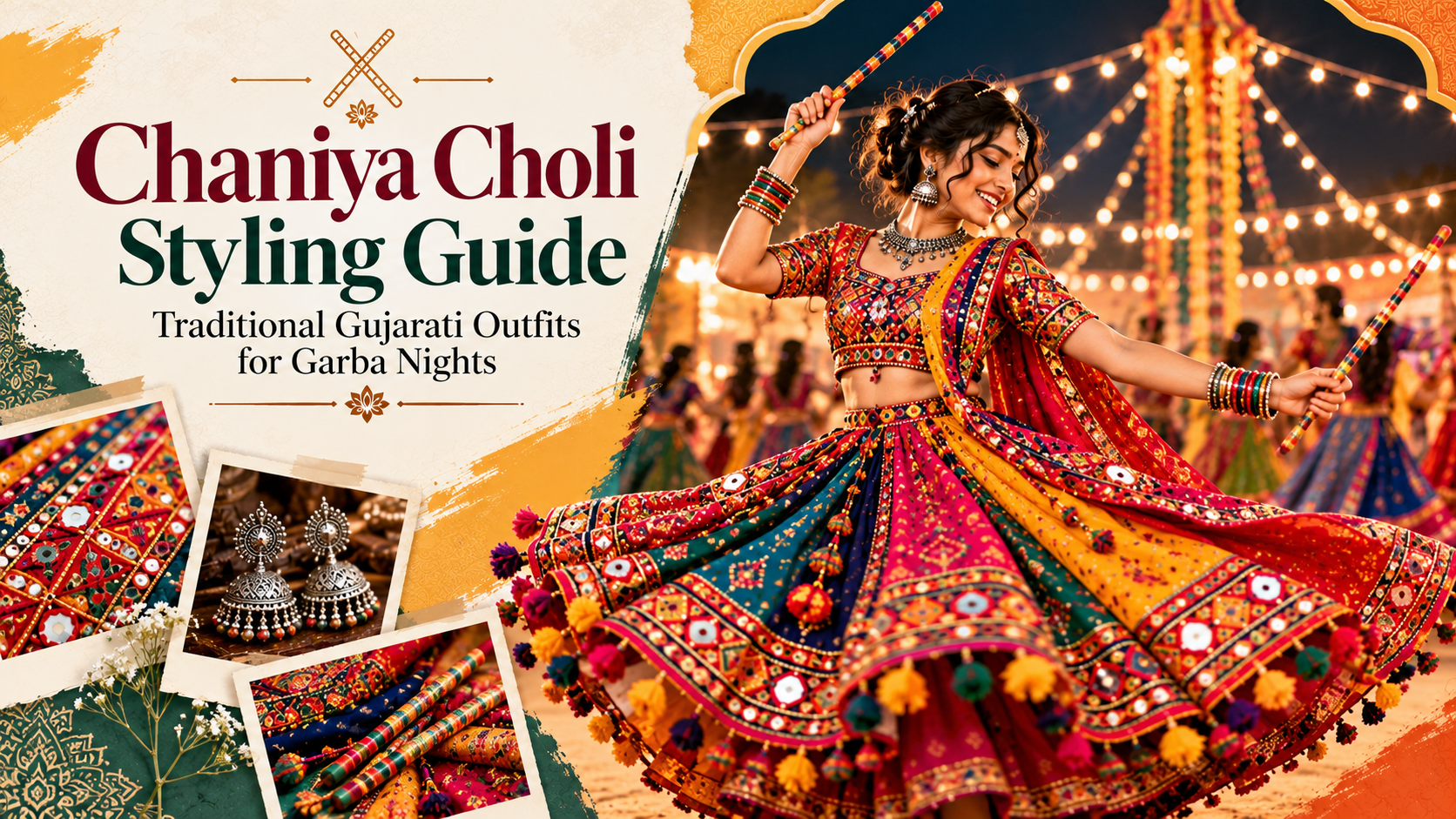
Walk into a Garba ground and the first thing you notice is colour: swirling skirts, flashes of mirror work and dupattas that move with the music. There is a reason chaniya choli for Navratri is so closely tied to the festival. The outfit is built for movement, with a flared skirt that opens up as you turn, a fitted blouse that stays out of the way and a dupatta you can style to suit the evening.
This guide covers the main styles, how to judge flare, blouse and dupatta, comfortable fabrics, jewellery and footwear, daytime puja versus evening Garba, mistakes to avoid and how to reuse your outfit. For sarees, suits and other festive options, see our pillar guide to Navratri outfit ideas 2026.
What is a chaniya choli?
A chaniya choli is a three-piece outfit: a chaniya (the flared skirt, also called a ghagra or lehenga), a choli (the blouse) and an odhani or dupatta. It is widely worn as Gujarati traditional dress during Navratri, especially for Garba and Dandiya, and is also seen in Rajasthan and other parts of western India. Styles and names vary by region and community, so treat the ideas below as suggestions.
Chaniya choli for Navratri: styles to know
Bandhani chaniya choli
Bandhani is a tie-dye technique associated with Gujarat and Rajasthan, in which small points of cloth are tied before dyeing to create dotted patterns. A Bandhani chaniya choli feels festive and rooted in craft, and lighter versions are easy to dance in. Hand-dyed pieces may need gentle washing, and bright colours can bleed, so test before the first wash.
Mirror work lehenga
Mirror embroidery is a hallmark of Garba outfits, and the small mirrors catch the light as you move. A mirror work lehenga can range from light touches on the border to dense all-over work. Heavy work adds weight and can scratch, so check the inside finish and lining before you buy.
Embroidered chaniya choli
Thread embroidery, patchwork and gota add texture with less weight than dense mirror work. Quality varies, so look closely at the stitching and finish.
Contemporary chaniya choli
Modern designs mix traditional elements with new silhouettes, such as asymmetric hems, crop-top cholis, pastel palettes and lighter fabrics. The same comfort rules apply.
How to choose skirt flare, blouse and dupatta
Skirt flare and length
Flare decides how the skirt moves. A fuller, panelled skirt opens beautifully when you twirl, but a very heavy one tires you quickly. A moderate flare in a lightweight fabric often feels better over a long night.
- Check how much the skirt weighs when you hold it, not just how it looks on a hanger.
- Choose a hem that clears the floor, so you do not trip or step on it.
- Make sure the waistband is secure and comfortable. A drawstring or well-fitted hook closure helps it stay put.
Blouse designs
The choli should be comfortable first and decorative second. Cap sleeves, short sleeves and elbow-length sleeves give freedom for arm movement, and a secure back closure or tie-back keeps the fit adjustable. Crop-length cholis are common, and mirror work or embroidery can sit on the neckline and sleeves. Avoid anything so tight that you cannot raise your arms comfortably, since Garba involves a lot of arm movement.
Dupatta styles
A dupatta finishes the look, but it can also get in the way.
- Pin it securely on one shoulder, or drape it across the body and tuck it at the waist.
- Choose lighter fabrics such as net or georgette for dancing, and avoid heavy, slippery pieces that slide off.
- Keep it from trailing so partners and dandiya sticks do not catch on it.
- Some people prefer a smaller stole or a draped shawl for movement.
Fabrics for comfort during Garba
Garba nights are warm and crowded, so breathability matters.
- Cotton and cotton silk. Comfortable for long hours and easy to manage.
- Mulmul and light blends. Soft and airy, good for daytime or early evening.
- Georgette. Light and flowing, though it can feel warm under a heavy lining.
- Silk blends. Rich and festive, but heavier.
- Heavy brocade, velvet and thick zari. Beautiful, but warm and weighty, so better for photographs and short wear.
Check the lining, which should be soft and not itchy, and try the outfit with the same footwear and accessories you plan to use.
Jewellery, footwear and accessories
Oxidised silver and German silver jewellery is a long-standing favourite for Garba because it looks bold and festive without the weight or value of gold. Jhumkas, maang tikka, a choker or statement neckpiece, a nose ring and stacked bangles all work. A kamarbandh, or waist belt, adds shape and helps hold the skirt in place.
Keep jewellery practical. Long, dangling pieces can catch on dupattas and dandiya sticks, and delicate items are easy to lose in a crowd. A potli or small crossbody bag carries essentials.
For footwear, flat and secure options such as juttis, kolhapuris or sandals work best, and many people dance barefoot. Some venues expect bare feet or restrict footwear on the dance floor, so check with the organisers. Avoid heels, and break in new shoes before the event.
Daytime puja versus evening Garba
The same chaniya choli does not have to do both jobs. A few adjustments help.
For daytime puja or family gatherings:
- Choose softer, simpler pieces, such as cotton or cotton silk with light embroidery.
- Wear a full dupatta for modesty and comfort.
- Keep jewellery light.
- Use traditional colours, and check your tradition and the day’s colour in our Navratri colour guide 2026.
For evening Garba:
- Go brighter and more embellished, with mirror work, bold prints or contrasting dupattas.
- Add oxidised jewellery and a kamarbandh.
- Wear a dupatta that is easy to secure and that you do not mind moving.
To avoid two outfits, wear the same skirt with a simpler blouse and dupatta by day and a more decorative set by night.
Common styling mistakes to avoid
- Choosing the heaviest outfit. It looks grand but wears you out.
- Skipping the trial run. Try the outfit, dance steps included, before the event.
- Forgetting the hem. A skirt that is too long catches underfoot.
- Letting the dupatta slip. Pin it or tuck it so it stays in place.
- Wearing a blouse that restricts your arms.
- Overloading on dangling jewellery that snags.
- Wearing heels or brand-new shoes.
- Ignoring the lining and inside finish, which affect comfort more than the outside.
Choosing an outfit you can wear again
A chaniya choli does not have to be a one-night purchase.
- Choose versatile colours that work with several blouses and dupattas.
- Pick moderate embellishment rather than very heavy work, which suits fewer occasions.
- Mix and match. Wear the skirt with a plain blouse, or the blouse with a saree or a different skirt. Our guide to the best sarees to wear for Navratri 2026 shows how a blouse can be restyled, and our guide to Navratri suit designs for women covers other options.
- Choose fabrics that can handle weddings, sangeet events and other celebrations.
- Check that the fit can be altered, since an adjustable lehenga lasts longer.
Frequently asked questions
What is a chaniya choli?
It is a three-piece outfit of a flared skirt, a blouse and a dupatta, widely worn during Navratri, especially for Garba and Dandiya.
Which fabric is best for a Garba chaniya choli?
Cotton, cotton silk and light blends are comfortable for long dance nights. Heavy brocade and velvet suit short wear.
How do I choose the right skirt flare?
Choose a flare you can move and twirl in without tiring, in a lightweight fabric, with a hem that clears the floor.
Can I wear a Bandhani chaniya choli outside Navratri?
Yes, many people wear it to other festive occasions and family events, and a simpler blouse or dupatta can change the look.
What footwear is best for Garba?
Flat, secure and comfortable footwear, or bare feet where the venue expects it. Avoid heels and check the venue’s rules.
Conclusion
The best chaniya choli for Navratri is the one you can move in comfortably, whether it is a Bandhani set, a mirror work lehenga or a modern design. Focus on flare you can handle, a blouse that lets your arms move, a dupatta that stays put and fabrics that breathe, then add jewellery and footwear that keep up with the dance.
Try your outfit in motion, check the venue and weather and think ahead to how you will reuse the pieces. When you are ready to shop, explore festive chaniya choli collections with comfort and quality in mind, and enjoy the music.
