
Blog
Cotton Silk Sarees: Benefits, Price Factors, Styling Tips and Care Guide

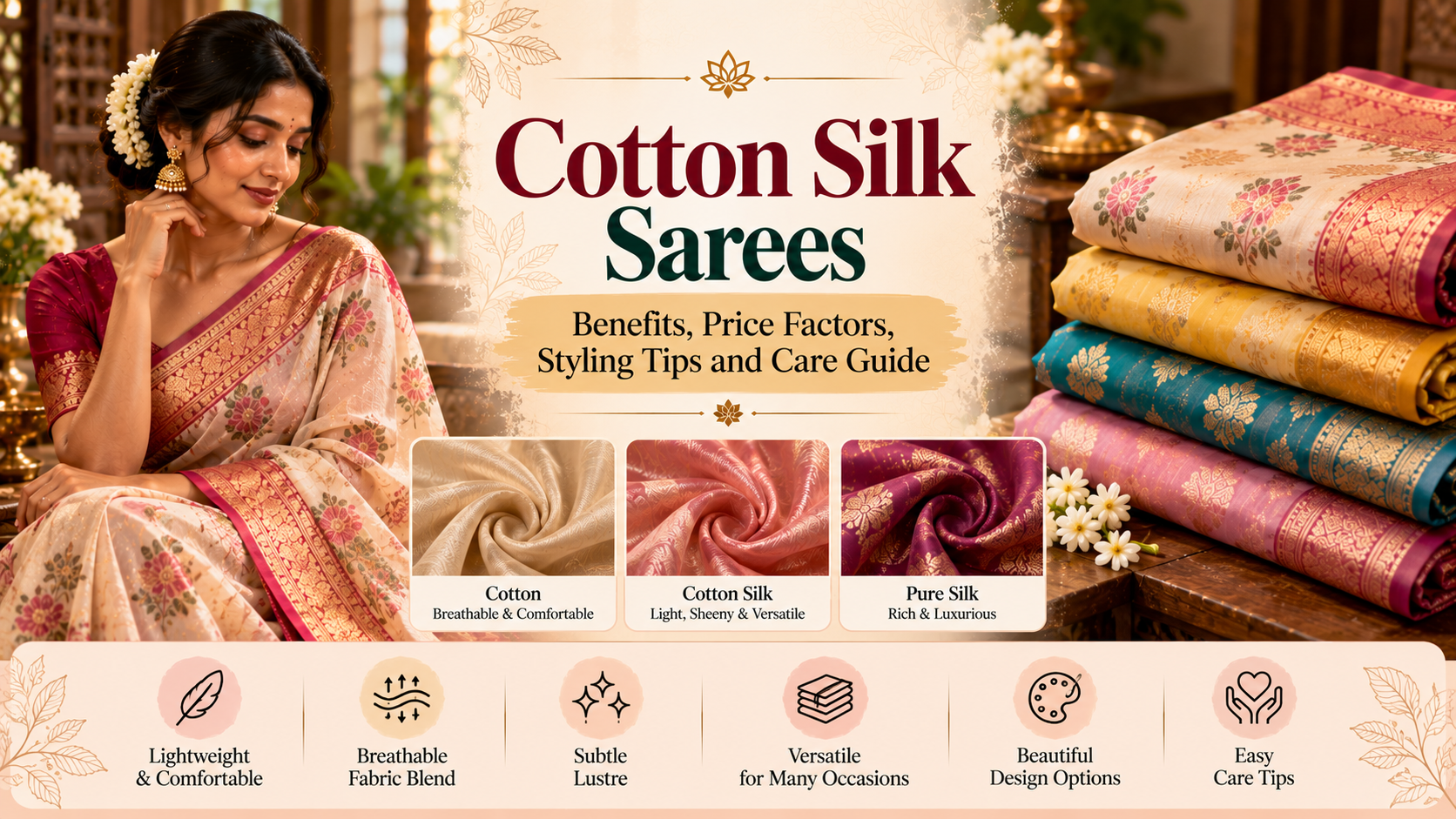
Some days call for the ease of cotton; others call for the glow of silk. A cotton silk saree sits between the two. It is light enough to wear through a long day, yet it has enough sheen and structure to feel dressed up. That balance is why cotton silk sarees are a regular choice for office functions, pujas, family gatherings and festive daywear.
Because “cotton silk” covers a range of blends, weaves and finishes, though, two sarees with the same label can feel quite different. This guide explains what cotton silk sarees are, how they compare with pure cotton and pure silk, what affects their price, how to style them and how to care for them.
What is a cotton silk saree?
A cotton silk saree is woven from a combination of cotton and silk yarns. In many cotton silk weaves, one set of threads (for example, the warp) is silk and the other (the weft) is cotton, although the exact method and proportion vary by weaver, region and manufacturer. Some sarees sold as cotton silk may also contain other fibres, such as viscose or polyester, so the label matters.
The idea behind the blend is to combine:
- From cotton: breathability, a soft hand-feel and a matte base.
- From silk: a gentle sheen, smoothness and a richer appearance.
Cotton silk sarees are produced in many weaving traditions and on both handlooms and powerlooms. Chanderi and Maheshwari, for example, are traditional weaves often made with cotton-silk combinations, though they are also made in other fibres.
How cotton silk differs from pure cotton and pure silk
- Compared with pure cotton, cotton silk usually has more sheen, a smoother surface and a slightly more formal look.
- Compared with pure silk, cotton silk is usually lighter, more breathable and less heavy, with a softer, more subtle shine.
For a full comparison of cotton and silk as separate fabrics, see our guide to cotton vs silk sarees.
Benefits of a cotton silk saree for women
Comfort
The cotton content usually makes cotton silk sarees more breathable than pure silk, which many people find more comfortable in warm or humid weather and for long days.
Texture
Cotton silk typically feels smooth with a slight crispness. The exact feel depends on the blend, weave density and finishing.
Sheen
Cotton silk has a soft, subtle lustre rather than the deep shine of heavier silks. This makes it suitable for both daytime and evening settings.
Breathability
Natural fibres in the blend allow airflow. If synthetic fibres are included, breathability may be lower, so check the composition.
Drape
Cotton silk sarees generally have a light, slightly structured drape. They hold pleats reasonably well without feeling stiff, and they are often easier to manage than heavy silks.
Versatility
Cotton silk sarees can look polished for work, traditional for pujas and festive with a zari border or embellished blouse. That flexibility makes them popular festive sarees for women who want something lighter than silk.
Cotton vs cotton silk vs pure silk: comparison table
These are general tendencies. Actual sarees vary by fibre proportion, weave and finishing.
| Feature | Cotton | Cotton silk | Pure silk |
| Fibre | Natural cotton | Cotton and silk blend (proportions vary) | Natural silk |
| Texture | Soft, matte, can be crisp if starched | Smooth with slight crispness | Smooth, rich |
| Sheen | Little to none | Soft, subtle lustre | Natural lustre, often richer |
| Weight | Light to medium | Light | Light to heavy depending on weave |
| Breathability | Generally high | Generally good | Moderate |
| Drape | Structured or soft depending on finish | Light, holds pleats | Structured, defined |
| Formality | Casual to semi-formal | Semi-formal to festive | Formal to bridal |
| Care | Often washable at home | Often gentle hand wash or dry clean; check label | Usually dry clean |
| Common uses | Daily wear, summer | Office, puja, festive daywear | Weddings, major festivals |
Suitability for different occasions
- Office and formal events: solid colours, small motifs and simple borders look polished.
- Pujas and family functions: traditional colours with zari or contrast borders feel festive yet comfortable.
- Festivals: brighter shades and richer borders suit celebrations, especially daytime ones.
- Weddings (as a guest): a cotton silk saree with a broad zari border can look elegant, especially for daytime ceremonies or warm weather.
- Everyday wear: lighter, simpler cotton silks can be worn regularly, depending on care needs.
Cotton silk saree designs to look for
- Zari borders: gold or silver borders add a festive touch.
- Contrast borders: a different-coloured border frames the saree.
- Butis and small motifs: scattered motifs look subtle and versatile.
- Checks and stripes: suit office and daily wear.
- Woven pallus: add interest when draped.
- Printed cotton silk: block prints and digital prints offer a lighter, casual look.
Cotton silk saree price: what affects it
Prices vary widely. Instead of focusing on a single figure, it helps to understand what drives the cost:
- Fibre proportion: a higher silk content may cost more than a blend with less silk or with synthetic fibres.
- Weaving method: handloom weaving usually takes more time than powerloom weaving.
- Design complexity: intricate borders, pallus and motifs add work.
- Zari type: real, tested and metallic zari differ in material and cost.
- Weave density and yarn quality: finer, denser weaves often take longer and use better yarn.
- Regional or traditional weaves: some traditional weaves involve specialised skills.
- Finishing and extras: blouse piece, fall and pico, and packaging.
- Seller and retail factors.
Compare cotton silk sarees with similar fibre content, weave and design detail rather than comparing only the price. Our complete guide to buying sarees for women covers price factors across all saree types.
Styling tips
Choosing colours
- Office: navy, grey, olive, beige, ivory, mustard and soft pastels.
- Festive daywear: mustard, peach, magenta, teal, emerald and orange.
- Pujas: red, maroon, yellow, green and ivory with gold.
- Evening: deeper shades such as wine, bottle green and navy with zari.
Choosing borders
- Narrow borders suit everyday and office wear.
- Broad zari borders suit festivals and weddings.
- Contrast borders add colour and definition.
Blouse fabric
- Matching cotton silk: a seamless, classic look.
- Raw silk or brocade: adds richness for festive occasions.
- Cotton: comfortable for daily wear.
- Velvet: adds depth for cooler evenings.
- Contrast or metallic: modern and festive.
Accessories
- Office: small studs, a simple chain and a watch.
- Festive: jhumkas, temple jewellery or a choker.
- Handloom-style looks: oxidised silver, wooden or terracotta jewellery.
- Bags and footwear: juttis, kolhapuris or embellished flats, with a potli or structured clutch.
Cotton silk saree care guide
Care depends on the actual fibre blend, dyes, zari and finishing. Always follow the garment’s care label first. If no label is available, ask the seller.
Washing
- First wash: some cotton silk sarees may need dry cleaning for the first wash, especially if the colours are deep or the zari is heavy. Check the label.
- Hand washing: if the label allows, wash gently in cold water with a mild detergent suitable for delicate fabrics.
- Avoid soaking for long periods, which can cause colour bleeding.
- Avoid wringing. Press water out gently by rolling the saree in a towel.
- Wash separately, especially for the first few washes.
- Dry clean sarees with heavy zari, embroidery or uncertain colour fastness.
Drying
- Dry in shade to reduce fading.
- Avoid direct, strong sunlight for long periods.
- Dry flat or hang carefully to avoid stretching.
Ironing
- Iron on a low to medium setting suited to the most delicate fibre in the blend.
- Iron on the reverse side, especially over zari.
- Use a pressing cloth if needed.
- Avoid ironing while the saree is very wet if the label advises against it.
Storage
- Store folded in a cotton or muslin cloth.
- Refold periodically along different lines to avoid permanent creases.
- Keep away from damp areas.
- Avoid storing in plastic for long periods.
For more detailed advice on silk-containing sarees, see our guide on how to wash and store silk sarees.
Buying tips
- Read the fibre composition. Look for “cotton silk” or specific proportions, and check whether synthetic fibres are included.
- Check the weave. Look for even weaving and consistent texture.
- Inspect the border and pallu. They should be even and well finished.
- Check the zari. Look for broken or tarnished threads.
- View the colour in natural light.
- Check the blouse piece.
- Read care instructions.
- Ask the seller about weaving method and fibre if unclear.
For a detailed inspection checklist, see our guide on how to identify a good-quality saree.
Common mistakes
- Assuming all cotton silk sarees are the same. Blends and weaves vary.
- Not checking for synthetic fibres. These change feel, breathability and care.
- Washing without checking the label. Some cotton silks need dry cleaning.
- Ironing on high heat. It can damage silk and zari.
- Choosing by price alone. Compare fibre, weave and design.
- Ignoring creasing. Cotton silk can crease; plan for ironing.
Frequently asked questions
1. What is a cotton silk saree? A saree woven from a blend of cotton and silk yarns, combining cotton’s breathability with silk’s sheen. Proportions and methods vary.
2. Is a cotton silk saree good for summer? Many people find cotton silk comfortable in warm weather because of its cotton content. Comfort also depends on the blend and weave.
3. Can cotton silk sarees be washed at home? Some can be hand washed gently; others need dry cleaning. Follow the care label.
4. Is cotton silk suitable for weddings? It can be a good choice for wedding guests, especially for daytime functions, when chosen with a rich border or festive colour.
5. Why do cotton silk saree prices vary? Price depends on fibre proportion, weaving method, design complexity, zari type and finishing.
6. How is cotton silk different from pure silk? Cotton silk is usually lighter and more breathable, with a softer sheen. Pure silk is usually richer and more formal.
7. How should I store a cotton silk saree? Fold it in a cotton or muslin cloth, keep it dry and refold periodically.
Conclusion
A cotton silk saree offers a practical balance of comfort and elegance. It is light enough for long days, polished enough for work and festive enough for pujas and celebrations. Read the fibre details, check the weave and finishing, choose colours and borders that suit your occasions, and follow the care label to keep it looking good.
Explore cotton silk and other sarees at Mahavir Cloth Center and find a style that suits your wardrobe.
