
Blog
How to Choose a Saree for Different Seasons: Summer, Monsoon and Winter

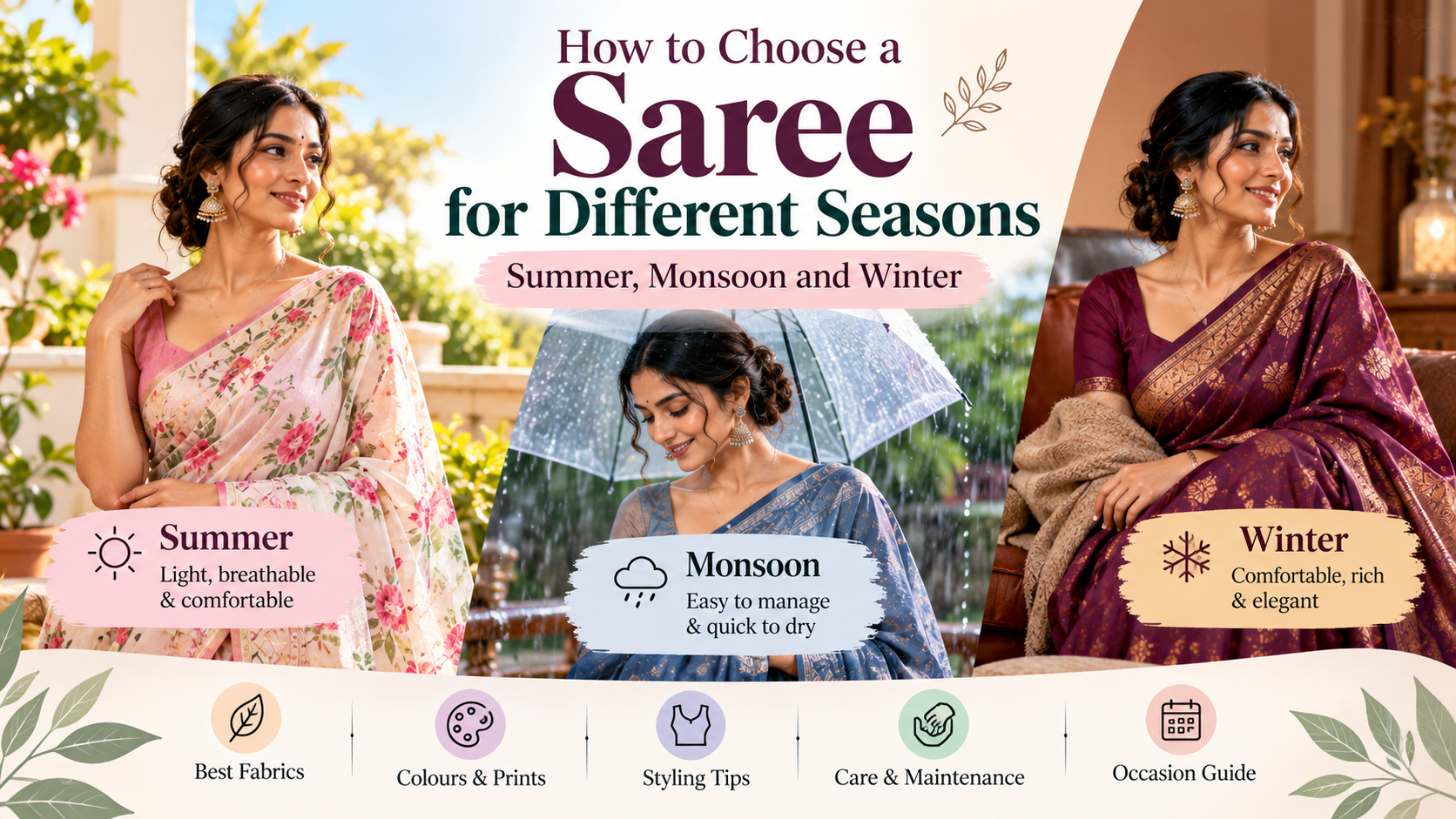
A saree can be worn throughout the year, but the most comfortable choice often depends on the weather. Heat, humidity, rain and cooler temperatures can affect how a fabric feels, how easily it drapes and how much care it needs. Choosing a saree for the season helps you feel comfortable while dressing for work, everyday activities, festivals, weddings and other occasions.
When shopping for sarees for different seasons, consider more than appearance. Think about breathability, weight, drying time, the type of blouse you plan to wear, and how much maintenance the saree requires. A lightweight cotton saree may be practical on a hot day, while a silk saree or a richer weave may feel more suitable for a winter celebration. During the monsoon, a saree that is easy to dry and manage can be a convenient option.
There is no single fabric that works best for everyone. Your local climate, commute, indoor air conditioning, personal comfort and the occasion all matter. This guide explains how to choose sarees for summer, monsoon and winter, along with seasonal styling and care tips.
1. Choosing the Best Sarees for Summer
Summer weather in many parts of India can be hot and humid. During this season, a saree that feels breathable, light and easy to move in can make a noticeable difference. Look for fabrics that suit your comfort preferences and the conditions in which you will wear the saree.
Cotton sarees for everyday comfort
Cotton is a popular option for warm weather because it is breathable and absorbs moisture. It can be a practical choice for everyday wear, office routines and daytime outings. Depending on the weave, cotton sarees can range from crisp and structured to soft and relaxed.
When choosing cotton, consider how the fabric feels against your skin and how much ironing it may need. Some cotton sarees crease easily, while others have a finish that helps them retain their shape. If you prefer a relaxed daily wardrobe, explore this guide to cotton sarees for daily wear.
Lightweight and airy fabrics
Lightweight sarees can be easier to carry through long, warm days. Depending on the weave and finish, options may include lightweight cotton, mulmul, linen blends, chiffon, georgette and other fine fabrics. The exact feel varies by construction, so check the fabric details rather than relying on the name alone.
- Lightweight cotton: A practical option for daily use and casual outings.
- Mulmul: Often soft and airy, making it worth considering for relaxed daytime wear.
- Linen and linen blends: Can offer a breathable feel with a distinctive texture, though creasing may be part of their appearance.
- Chiffon and georgette: Often drape fluidly and may feel less bulky than heavier fabrics.
- Lightweight blends: Can offer a balance of drape, texture and ease of care, depending on fibre content.
For summer, try the saree on or check reliable product information to understand its thickness, texture and drape. A fabric that looks light in a photograph may feel different in person.
Summer colours, prints and styling
Light shades, pastels, soft neutrals and fresh prints are popular choices for summer styling, but colour is a matter of personal taste. Florals, small motifs, stripes and understated patterns can work well for daytime wear. Bright colours can also be suitable if they match your style and the occasion.
For a more comfortable summer outfit:
- Choose a blouse in a fabric that feels comfortable against your skin.
- Avoid unnecessary layers when the weather is hot.
- Use lightweight accessories for everyday outings.
- Secure the pleats and pallu in a way that allows you to move easily.
- Consider the venue: an outdoor event may call for a different choice from an air-conditioned office.
Summer sarees for office wear and occasions
For office wear, cotton sarees, lightweight blends and easy-to-maintain fabrics can be useful choices. Select prints and colours that suit your workplace dress code. For weddings or festive events in warm weather, you may prefer a lightweight saree with a decorative border or detailed blouse instead of a heavy all-over design.
The best saree for summer is one that balances comfort with the look you want. Fabric weight, weave, blouse fit and the way you drape the saree all contribute to the overall experience.
2. How to Choose Sarees for Monsoon Weather
Monsoon conditions bring rain, humidity and slower drying in many regions. The practical challenge is not only staying comfortable but also keeping the saree clean and dry. Choose a saree based on your travel routine, the chance of getting caught in rain and the care instructions for its fabric.
Choose fabrics with practical drying and care needs
During the monsoon, consider sarees that are relatively easy to wash and dry according to their care labels. Lightweight cottons and some synthetic or blended fabrics may be practical for regular use, but their drying time depends on the weave, fibre content and local humidity. Do not assume that every synthetic fabric is quick-drying or that every cotton saree takes the same amount of time to dry.
For daily commutes, you may prefer a saree that does not require delicate handling. Keep expensive, heavily embellished or particularly delicate sarees for occasions when you can protect them from rain and damp conditions.
Colours and prints for rainy days
Medium and darker shades, prints and patterned designs may be practical choices when you are concerned about minor splashes or marks. However, no colour or print makes a saree waterproof. Check whether the dye is colourfast, especially before the first wash, and follow the manufacturer’s care instructions.
If you expect to walk outdoors, consider the length of the saree and how close the hem comes to the ground. A carefully arranged drape can reduce the chance of the fabric dragging through wet areas.
Monsoon draping and accessories
A manageable drape can help when walking through crowded streets or using public transport. Keep the pleats secure and arrange the pallu so it does not trail or become easily caught. Choose footwear with a stable grip and avoid accessories that are difficult to manage in wet weather.
Useful monsoon habits include:
- Carrying a compact umbrella or rain protection.
- Keeping a spare bag to protect the saree if necessary.
- Avoiding a drape that allows the hem to drag on wet ground.
- Allowing damp fabric to dry fully before storage.
- Checking metal embellishments and delicate trims for care requirements.
What to do if a saree gets wet
If your saree gets wet in the rain, do not leave it folded in a bag for a long period. Remove it from the bag when practical and allow it to air-dry in a well-ventilated place, away from harsh direct heat. Follow the fabric’s care label, and avoid ironing or storing the saree while it is still damp.
If the saree is made of delicate silk, has heavy embroidery or contains special embellishments, check its care instructions before attempting to clean it. For more guidance, see Mahavir Cloth Center’s article on washing and storing silk sarees at home without damage.
3. Choosing Sarees for Winter
Winter brings a different set of considerations. In cooler weather, you may be comfortable wearing fabrics with more body, richer textures or decorative detailing. However, the right choice depends on how cold it is, whether you will be outdoors and whether the venue is heated.
Silk sarees for festive and formal occasions
Silk sarees are often selected for weddings, festivals and formal events because of their lustre, texture and rich appearance. Some silk sarees have a substantial feel, while others are relatively light, so check the specific weave and weight before buying.
A silk saree can be styled with a suitable blouse and accessories for a winter celebration. Because silk types and finishes vary, follow the care instructions for the particular garment rather than assuming all silk sarees should be cleaned in the same way.
Richer weaves and textured fabrics
For winter events, you may also consider brocade, woven designs, textured fabrics and sarees with decorative borders. These can create a more layered or formal look. A heavier saree may be less convenient if you need to walk a long distance or attend an event in a warm indoor venue, so balance appearance with comfort.
Velvet or other plush details may suit certain occasion-wear designs, but the full outfit should still feel comfortable. If you are sensitive to cold, a suitable blouse, shawl or wrap may be more useful than choosing a very heavy saree alone.
Winter colours and styling
Deep jewel tones, earthy shades, metallic details and rich contrasts are common winter styling choices, especially for evening functions. These are suggestions rather than rules: pastels, bright colours and minimal designs can also work beautifully in winter.
For colder weather:
- Consider a blouse with sleeves if that suits your preference and the occasion.
- Add a coordinated shawl or wrap when needed.
- Choose footwear that suits the venue and weather.
- Keep jewellery balanced with the saree’s border and embellishments.
- Check whether the saree is comfortable to sit, walk and move in for several hours.
Sarees for winter weddings and festivals
For winter weddings, a silk or richly woven saree can provide a formal look. For smaller gatherings, a lighter saree with a statement blouse may be easier to manage. If you will spend much of the event outdoors, plan for warmth with layers that complement the saree without making the drape difficult.
A seasonal purchase should still be versatile enough to wear again. Think about whether the saree can be restyled with a different blouse, jewellery or draping approach for another occasion.
4. Seasonal Colours, Prints and Occasion Recommendations
Fabric is important, but colour, print and design also influence how a saree works for a particular season and occasion. Use these ideas as a starting point, not strict rules.
Summer
- Colours: Pastels, white, cream, soft blue, green, yellow and bright shades.
- Prints: Florals, small motifs, stripes and understated patterns.
- Occasions: Daily wear, daytime gatherings, office wear and outdoor events.
- Design approach: Lightweight fabrics, comfortable blouses and uncomplicated accessories.
Monsoon
- Colours: Mid-tones, deeper shades and prints that fit your personal style.
- Prints: Patterns that make minor everyday marks less noticeable may be practical.
- Occasions: Commuting, routine errands and casual gatherings.
- Design approach: Easy-care fabrics, secure pleats and a drape that stays clear of wet ground.
Winter
- Colours: Jewel tones, deeper reds, navy, emerald, burgundy, metallic accents and neutrals.
- Prints and details: Woven motifs, rich borders, brocade-style detailing and embroidery.
- Occasions: Weddings, evening celebrations, festivals and formal events.
- Design approach: Rich textures, coordinated layers and accessories suited to the event.
The season should guide your choice, but the occasion, your personal style and the actual fabric are just as important.
5. Blouse Fabrics and Accessories for Different Weather
A saree’s comfort depends on the whole outfit, not just the main fabric. Blouse material, fit, lining, jewellery and footwear can affect how comfortable you feel throughout the day.
Blouses for summer
Choose a blouse that feels breathable and allows comfortable movement. Cotton and other lightweight fabrics may be suitable for everyday wear. Make sure the fit is comfortable around the shoulders, arms and waist, and consider how the blouse lining affects airflow.
Blouses for monsoon
For regular rainy-season use, prioritise practical care and a comfortable fit. If your blouse becomes damp, let it dry properly before storing it. Avoid leaving wet garments bundled together for long periods, as moisture can cause unpleasant odours and may damage some fabrics.
Blouses for winter
Depending on the occasion, you may choose a blouse with sleeves or a more structured fabric. A coordinated shawl or wrap can add warmth without requiring a heavier saree. Ensure that layers do not pull at the blouse or disturb the pleats.
Accessories throughout the year
- Summer: Lightweight jewellery, comfortable footwear and minimal layers.
- Monsoon: Secure accessories, a practical bag and footwear with suitable grip.
- Winter: Shawls, wraps, richer jewellery and footwear appropriate for the venue.
Always consider the event and your own comfort. A simple accessory change can help adapt the same saree to different settings.
6. How to Care for Sarees Throughout the Year
Seasonal weather affects not only what you wear but also how you maintain your sarees. Correct care can help preserve colour, texture, embroidery and the overall drape.
Read the care label first
Sarees may contain cotton, silk, synthetic fibres, blends, zari, embroidery or other embellishments. These materials do not all respond to washing, heat and detergents in the same way. Follow the care label or the seller’s instructions, especially for delicate or expensive sarees.
Wash and dry carefully
- Separate colours when washing garments that may bleed dye.
- Avoid aggressive scrubbing on delicate weaves and embellished areas.
- Do not expose delicate fabrics to harsh direct heat unless their care instructions allow it.
- Make sure the saree is fully dry before folding it for storage.
- For garments requiring specialist care, use a suitable professional cleaner.
Store sarees in a dry, clean place
Keep sarees away from damp walls, direct sunlight and areas with poor ventilation. Avoid packing a saree away while it is damp from rain or perspiration. For silk and other delicate sarees, use storage methods suited to the fabric and periodically check the garment for signs of moisture or damage.
Adjust care to the season
In summer, let sarees worn in hot weather air out before storage, especially if they have absorbed perspiration. During the monsoon, pay extra attention to humidity and complete drying. In winter, continue to store sarees in a clean, dry place and check garments before wearing them after a long period in storage.
For additional shopping advice, consult the complete saree buying guide to help you consider fabric, use and care before choosing a new saree.
7. Seasonal Saree Fabric Comparison
The following table offers a general starting point. Comfort and maintenance vary by weave, fibre blend, garment construction and local weather, so check the details of each saree before purchasing.
| Season | Fabrics to consider | Why they may work | What to check |
|---|---|---|---|
| Summer | Cotton, lightweight cotton, mulmul, linen blends, chiffon and georgette | Can offer a lighter feel or fluid drape | Breathability, thickness, creasing and blouse comfort |
| Monsoon | Easy-care cottons and suitable synthetic or blended fabrics | May be practical for routine wear when care needs are manageable | Drying time, colourfastness, care label and humidity |
| Winter | Silk, brocade, richer weaves and textured fabrics | Can create a rich look for cooler-weather events | Weight, ease of movement, warmth and cleaning requirements |
| Year-round | Lightweight blends and versatile designs | May be restyled for different occasions | Fabric quality, versatility, comfort and care needs |
No fabric is automatically ideal for every climate. For example, a tightly woven cotton may feel different from a lightweight cotton, and two sarees made from the same fibre can have different weights and drapes.
8. Common Mistakes to Avoid When Buying Seasonal Sarees
Choosing only by appearance
A saree may look beautiful online but feel heavier, stiffer or more delicate than expected. Check the fabric description, weave, lining and care requirements before buying.
Assuming every fabric behaves the same way
Cotton, silk, chiffon, georgette and blended fabrics have different properties. Even within one category, construction can change the feel and maintenance needs. Avoid making a decision based on the fabric name alone.
Ignoring the occasion and travel
A saree that works for a seated indoor event may not be the most practical option for a long commute in rainy weather. Think about where you will wear it, how long you will wear it and how much walking is involved.
Forgetting blouse comfort
A saree can feel uncomfortable if the blouse is too tight, the lining is unsuitable or the fabric does not work well in the weather. Consider the entire outfit before making your choice.
Neglecting care and storage
Delicate sarees may need special cleaning or careful storage. Before buying, make sure you understand how to maintain the garment and whether you can follow those instructions.
Buying a saree for only one very specific use
If versatility matters to you, consider whether you can wear the saree with different blouses, accessories or draping styles. A versatile design can be useful across more than one occasion or season, depending on its fabric and weight.
9. Frequently Asked Questions
Which saree fabric is best for summer?
Cotton and lightweight fabrics are common choices for summer because they can feel breathable and easy to wear. Mulmul, some linen blends, chiffon and georgette may also suit particular preferences. The best choice depends on the weave, fabric weight, humidity and your comfort.
Which sarees are suitable for the monsoon?
For monsoon use, look for sarees that suit your routine and have manageable care requirements. Lightweight or easy-care options may be practical, but drying time varies with the fabric and humidity. Always dry a wet saree fully before storing it.
Can I wear silk sarees in winter?
Yes. Silk sarees are popular for winter weddings, festivals and formal occasions. Their weight and warmth vary, so check the specific saree and plan suitable layers if you expect to spend time outdoors in cold weather.
Are dark-coloured sarees better for the monsoon?
Darker colours and prints may make minor splashes or everyday marks less noticeable, but they do not protect a saree from water. Choose a colour you like and focus on practical draping, care and drying.
How should I dry a saree that gets wet in the rain?
Remove it from any closed bag when practical and let it air-dry in a well-ventilated place. Avoid storing it while damp, and follow the garment’s care instructions. Delicate or embellished sarees may require specialist care.
Can one saree be worn in every season?
Some versatile sarees can be worn throughout the year, particularly when the fabric and weight suit the weather and the occasion. You can adapt the look with different blouses, accessories and layers, but very lightweight or heavy fabrics may be more comfortable in particular conditions.
What should I check before buying a saree online?
Review the fabric composition, length, colour description, weave, care instructions and product images. Check the seller’s return policy and product details, and use a reliable buying guide to compare your options. You can start with Mahavir Cloth Center’s saree buying guide.
Conclusion
Choosing sarees for different seasons is about balancing comfort, fabric, occasion and care. Cotton and lightweight options may be suitable for hot summer days, practical easy-care choices can help during the monsoon, and silk or richer weaves can work well for winter celebrations. These are starting points rather than fixed rules: the weave, weight, local weather and your personal preferences all matter.
Before buying, consider where you will wear the saree, how it will feel throughout the day and how it should be maintained. Explore the saree collections and helpful buying resources at Mahavir Cloth Center to find options that suit your style and seasonal needs.
