
Blog
How to Choose the Right Saree for Office Wear: Fabrics, Colours and Styling Tips

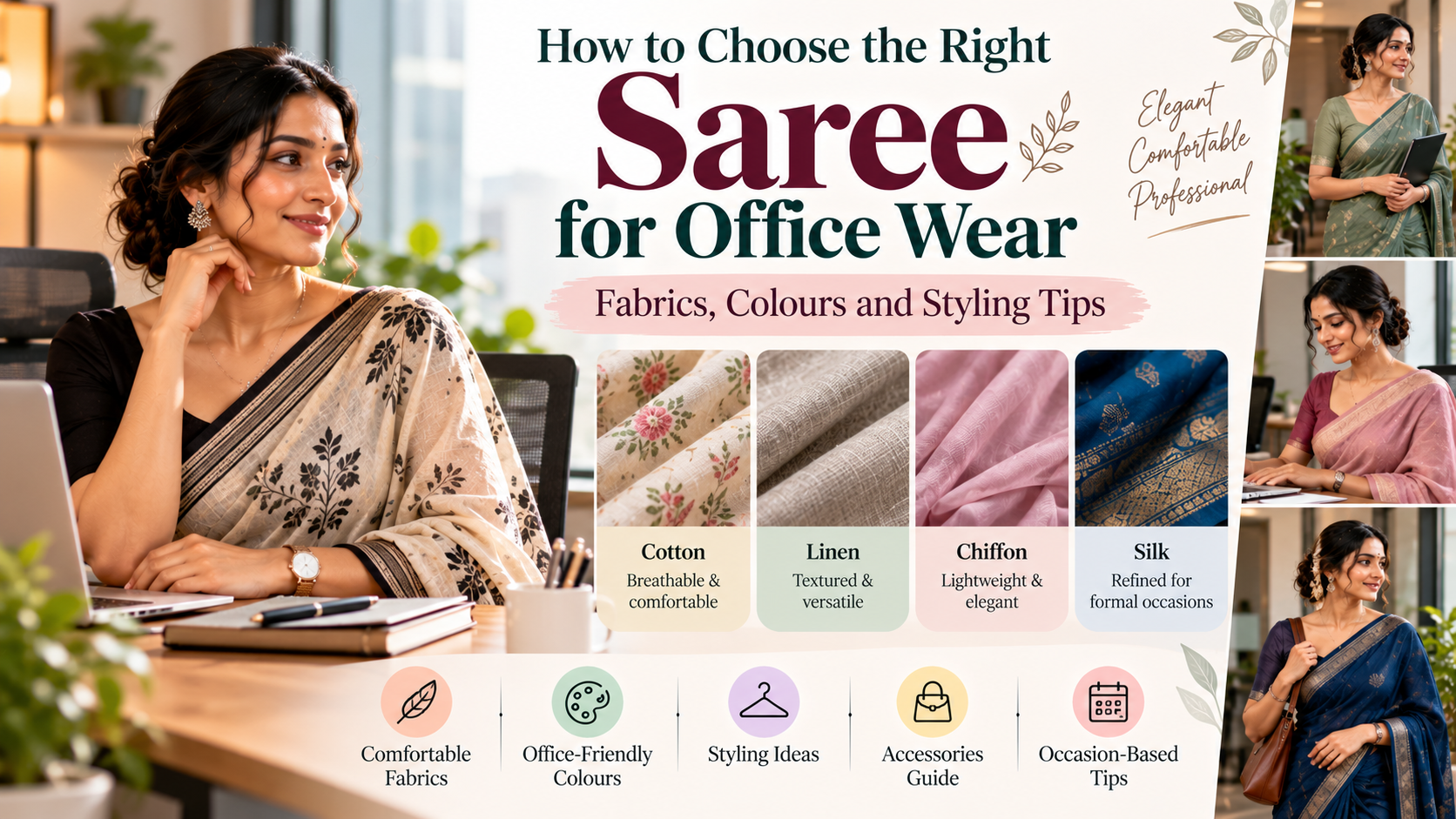
A saree can be a comfortable, versatile and polished choice for a professional wardrobe. Whether you are going to the office every day, attending a client meeting, giving a presentation or joining a workplace celebration, the right saree can help you feel confident while reflecting your personal style.
Choosing sarees for office wear is not simply about selecting a formal colour or a particular fabric. Comfort, movement, maintenance, the workplace dress code and the length of your workday all matter. A saree that looks elegant but needs constant adjustment may not be the most practical option for a busy schedule. Similarly, a fabric that works well in an air-conditioned office may feel different during a long commute in hot weather.
There is no single office-saree style that suits every person or workplace. Some professionals prefer crisp cotton sarees, while others choose lightweight blends, subtle prints or contemporary designs. The aim is to find sarees that work for your routine and help you feel comfortable and appropriately dressed.
This guide covers practical fabric choices, colours, prints, blouses, accessories, draping tips and care advice to help you build a useful collection of sarees for work.
1. What Makes a Good Office Saree?
A practical office saree should fit your daily routine as well as your style preferences. Before choosing a design, consider how the saree will feel during a full day of commuting, sitting, walking and working.
Comfort throughout the day
Look for a fabric that feels comfortable against your skin and suits the weather. Consider whether it feels too heavy, stiff, slippery or warm for your routine. If you spend time travelling by public transport or walking between meetings, a manageable drape may be especially helpful.
Ease of movement
You should be able to walk, sit, stand and use stairs without repeatedly adjusting the saree. Check the length of the pallu, the security of the pleats and the fit of the blouse. A well-arranged drape can help you move confidently through your workday.
Manageable maintenance
Some sarees crease easily, require careful washing or need professional cleaning. Others may be simpler to maintain. Think about how often you plan to wear the saree and whether you have time to iron or care for it between workdays.
A look that suits your workplace
Workplace expectations differ. A formal corporate office, a creative studio, a client-facing role and a business-casual environment may have different dress codes. If your organisation has guidelines, use them as the starting point. You can then choose colours, prints and accessories that express your personal style within those expectations.
Versatility
A versatile saree can be styled in different ways with changes to the blouse, jewellery or accessories. If you are building a workwear collection, consider designs that coordinate with blouses and footwear you already own.
2. Best Fabrics for Sarees for Office Wear
The fabric affects how a saree drapes, feels, creases and needs to be maintained. The best choice depends on the climate, the weave, your commute and how formal your workplace is.
Cotton sarees for work
Cotton is a popular option for everyday office wear because it is breathable and can feel comfortable in warm weather. Cotton sarees come in a range of weaves and finishes, from crisp and structured to softer, more relaxed styles.
Some cotton sarees crease during the day and may need ironing, so consider the level of maintenance you prefer. A neat drape and suitable blouse can make cotton a practical choice for regular office routines.
If you are exploring everyday options, read this guide to cotton sarees for daily wear.
Linen and linen blends
Linen and linen-blend sarees can offer a textured, understated look that suits a professional wardrobe. Their appearance may feel relaxed or structured depending on the weave and blend. Linen can crease, which some people enjoy as part of its natural character, while others may prefer a fabric that stays smoother throughout the day.
Check the fibre composition and care details before buying, especially if the saree will be worn frequently.
Lightweight cotton blends
Blended fabrics can combine different qualities, such as drape, texture and ease of care. However, performance varies by fibre content and construction. Review the product details rather than assuming every blend is wrinkle-resistant or easy to wash.
Chiffon and georgette
Chiffon and georgette sarees often have a fluid drape and may feel less bulky than heavier fabrics. They can work for office settings when the print, transparency, embellishment and overall styling suit the workplace. Some styles may require careful pinning or a little more attention to pleats.
Silk and silk blends
Silk and silk-blend sarees can be suitable for important meetings, office celebrations and formal events. Lighter designs with restrained borders or subtle motifs may be easier to wear during a full workday than heavily embellished versions. Care requirements vary, so check the label before cleaning.
Choosing by your routine
Long commute: Prioritise a secure, manageable drape and a fabric that suits your travel conditions.
Warm weather: Consider breathable, lightweight options and a comfortable blouse.
Air-conditioned office: Choose a fabric that remains comfortable indoors and during travel to and from work.
Frequent wear: Check how easy the saree is to wash, dry, iron and store.
Client meetings or formal events: Consider the expected dress code, the finish of the fabric and the level of decoration.
3. Office-Friendly Colours and Prints
Colour can influence the overall impression of an outfit, but there are no universal rules about which colours are professional. Choose shades that you enjoy wearing and that fit your workplace, the occasion and your personal style.
Solid colours
Solid-colour sarees can be easy to coordinate with blouses and accessories. Neutral shades, deep colours, pastels and brighter hues can all work, depending on the setting. A solid saree can also be a useful foundation for a patterned blouse or a simple statement accessory.
Subtle prints
Small florals, fine geometric patterns, stripes and understated motifs can add interest without overwhelming the outfit. If your workplace is more formal, you may prefer a print with a restrained scale or a limited colour palette. In a more relaxed environment, larger prints or bolder combinations may suit your style.
Stripes and geometric designs
Stripes and geometric patterns can create a clean, contemporary look. Consider how the pattern aligns with the border and pallu, and whether the overall design feels comfortable for everyday use.
Choosing colours for different work settings
Everyday office wear: Choose colours and prints that are easy for you to style repeatedly.
Presentations: A coordinated outfit can help you feel prepared and confident; choose a design that does not distract you or require frequent adjustment.
Client meetings: Follow the expectations of your workplace and the client-facing setting.
Office celebrations: You may choose brighter colours, richer borders or more decorative details while remaining comfortable.
Formal events: A refined weave, subtle sheen or coordinated accessories can create a polished look.
For ideas on coordinating colours, see the guide to saree colour combinations for different occasions.
4. Simple Saree Styling for a Professional Look
Professional styling does not need to be complicated. Often, a balanced combination of fabric, blouse, drape and accessories is enough.
Minimal styling
A solid or subtly patterned saree paired with a well-fitted blouse and a few accessories can create a clean look. Choose details that suit your work environment and that you can comfortably wear for several hours.
Contemporary styling
If your workplace allows more flexibility, you can experiment with modern blouse cuts, colour-blocked combinations, simple belts or contemporary jewellery. Keep comfort and ease of movement in mind, particularly if you will be sitting or walking for much of the day.
Traditional styling
A classic drape, a coordinated blouse and understated jewellery can work well in workplaces where traditional attire is common or preferred. You do not need elaborate embellishments for a saree to look polished.
Balancing the overall outfit
If the saree has a bold print or decorative border, you may prefer simpler accessories. If the saree is minimal, a more distinctive blouse or a carefully chosen accessory can add interest. The aim is not to follow a rigid formula but to create an outfit that feels cohesive and appropriate to the setting.
5. Choosing a Practical Blouse and Neckline
The blouse affects comfort, fit and the overall finish of a saree. Even a beautiful saree may be difficult to wear through a workday if the blouse restricts movement or requires constant adjustment.
Prioritise fit and movement
Check that the blouse allows comfortable movement through the shoulders and arms. The neckline, sleeve length, fastening and lining should feel secure without being restrictive. If you spend much of the day at a desk, make sure the blouse remains comfortable when sitting.
Choose fabric for the weather
Cotton and other breathable fabrics may suit warm weather and frequent use. Depending on the saree, a coordinated blend or another fabric may work better for a formal look. Consider how the blouse fabric feels against your skin and whether its lining adds unnecessary warmth.
Necklines and sleeve styles
A simple round, square, boat or modest V-shaped neckline can work in many professional settings, depending on your preference and workplace guidelines. Sleeves may be short, elbow-length or longer. Choose a design that makes you feel comfortable and allows you to move freely.
For more ideas, explore blouse neckline designs for sarees.
Build a versatile blouse collection
If you wear sarees frequently, a few well-fitting blouses in coordinating colours can make styling easier. Neutral shades may work with several sarees, while a blouse that matches a border can help create a coordinated outfit. Before buying, consider the sarees you already own and how often you will use the blouse.
6. Footwear, Bags, Jewellery and Accessories
Accessories should complement the saree while remaining practical for your workday. Consider your commute, the amount of walking you do and whether your role involves meetings, presentations or frequent movement.
Footwear
Choose footwear that feels stable and comfortable for the length of your day. If you walk between buildings or commute by public transport, comfort and grip may be more important than height. Make sure the saree length works with the footwear you plan to wear so that the hem does not drag on the ground.
Bags
A structured handbag, tote or work bag can complement an office saree while carrying everyday essentials. Choose a size and style that fit your routine. If you carry a laptop or documents, make sure the bag is practical rather than selecting it only for appearance.
Jewellery
Small earrings, studs, simple hoops, a watch or a modest necklace can work well for everyday office wear. For a saree with a decorative border, you may prefer accessories that do not compete with the design. For office celebrations, you can choose more noticeable jewellery if it suits the occasion.
Belts, pins and other practical details
A saree pin can help secure the pallu, while discreet safety pins may keep pleats in place. Use pins carefully to avoid damaging delicate fabrics. A belt may suit some contemporary looks, but it is optional and should not restrict movement.
7. Easy Draping and Pleating Tips for Busy Workdays
A practical drape can save time and help you feel more comfortable at work. If you wear sarees often, developing a repeatable routine can make getting ready easier.
Prepare the outfit in advance
If possible, check the saree, blouse and accessories the night before. Make sure the saree is clean, dry and ironed if needed. Confirm that the blouse fits comfortably and that the footwear works with the saree length.
Secure the pleats
Neat, secure pleats help the saree sit comfortably while walking and sitting. Arrange them so they do not restrict your stride. Use pins where necessary, taking care not to pull or puncture delicate fabric unnecessarily.
Keep the pallu manageable
Choose a pallu length and arrangement that suit your routine. If you need to move between meetings or commute, secure it so it does not trail or require frequent adjustment. A shoulder pin can help keep it in place when appropriate for the fabric.
Test the drape before leaving
Before heading out, walk, sit down and stand up to check that the saree remains secure. Make small adjustments at home rather than discovering an issue during the commute. Keep a spare pin in your bag if you find it useful.
Choose a drape that suits your day
A more structured drape may work well for a formal presentation, while a relaxed but secure drape may suit an ordinary workday. There is no single correct way to drape a saree for work; choose the approach that feels secure and appropriate for you.
8. Sarees for Meetings, Presentations and Office Celebrations
Different work events may call for different levels of formality. You can adapt the saree, blouse and accessories rather than buying a separate outfit for every occasion.
Everyday office wear
For daily use, consider cotton sarees, lightweight blends, subtle prints and manageable borders. A practical choice is one that feels comfortable throughout your commute and can be cared for without too much effort.
Meetings and client-facing work
Choose an outfit that aligns with your organisation’s dress code and the meeting context. A solid colour, a subtle print or a refined border can be a useful option. Make sure the saree is secure and comfortable so that you can focus on the conversation rather than adjusting your outfit.
Presentations and important workdays
Select a saree that helps you feel confident and prepared. Consider the room temperature, how long you will stand and whether you will move around while presenting. Keep accessories manageable and test the drape before leaving.
Office celebrations and festive events
You may choose brighter colours, a decorative border or a silk-blend saree for a workplace celebration. Check the event’s dress expectations and consider how much time you will spend travelling or standing. A festive look can still be comfortable and practical.
Formal dinners and professional events
For a formal evening event, a refined saree with a subtle sheen, elegant border or coordinated blouse may be suitable. Let the occasion guide the level of embellishment, and choose footwear that will remain comfortable for the duration of the event.
9. Comparison Table: Fabrics for Office Sarees
Fabric performance varies by weave, fibre content, finish and construction. Use this table as a starting point and check the specific garment before buying.
| Fabric | General feel and drape | Maintenance considerations | Potential workwear use |
| Cotton | Often breathable; can range from crisp to soft | May crease and need ironing; care varies by weave | Everyday office wear, warm weather, regular use |
| Linen and linen blends | Textured, often structured or relaxed | Creasing may be noticeable; check fibre composition | Smart-casual offices, daytime workwear |
| Lightweight cotton blends | Can balance softness and drape | Depends on the blend; review washing and ironing guidance | Everyday wear and longer workdays |
| Chiffon | Usually light with a fluid drape | May need careful pinning and handling | Office wear when design and transparency suit the setting |
| Georgette | Fluid drape with some texture | Care and snag resistance vary by construction | Everyday or semi-formal workwear, depending on design |
| Silk and silk blends | Can range from light to substantial, with varied sheen | May need careful or specialist cleaning | Meetings, celebrations and formal work events |
| Printed lightweight fabrics | Feel and drape depend on the base fabric | Follow the base fabric’s care instructions; check colourfastness | Everyday wear and workplaces with flexible dress codes |
No fabric is automatically best for every office. The weave, local weather, commute, dress code and your own comfort should guide the choice.
10. Caring for Sarees You Wear Frequently
Regular care helps keep office sarees presentable and can extend their useful life. The correct method depends on the fibre, weave, dye, border and embellishments.
Follow the care label
Check the seller’s instructions before washing or ironing. Cotton, silk, blends and embellished fabrics can have different care needs. Do not assume that all sarees can be machine-washed or ironed at the same temperature.
Air out and store properly
After wearing a saree, let it air out if needed before folding it away. Store it in a clean, dry place away from dampness and direct sunlight. Make sure it is fully dry before storage, especially after rain or perspiration.
Manage creases
Iron or steam the saree only according to its care instructions. Use appropriate heat for the fabric, and take extra care with metallic-looking details, embroidery and delicate finishes. If unsure, consult the seller or a professional cleaner.
Rotate your workwear
If you wear sarees several days a week, rotating between a few options can reduce repeated wear on one garment and give each saree time to air out. Keep a simple record of care needs for delicate pieces so you know which ones require extra attention.
Check before wearing
Before leaving for work, look for loose threads, stains, missing hooks or a blouse fastening that needs attention. Small checks can prevent last-minute inconvenience.
11. Common Office Saree Styling Mistakes to Avoid
Choosing a saree that needs constant adjustment
If the fabric slips, the pleats loosen or the pallu repeatedly falls out of place, the outfit may distract you during the day. Test the drape and use appropriate pins where suitable.
Ignoring the weather and commute
A saree that feels comfortable in an air-conditioned room may be less practical during a hot commute. Think about the full day, including travel, outdoor time and the temperature at your workplace.
Overlooking blouse fit
A tight or poorly fitted blouse can affect movement and comfort. Try the complete outfit before wearing it for a long workday, especially if the blouse is new.
Treating professional style as one fixed look
There is no single colour, print or sleeve length that defines professional dressing for everyone. Follow your workplace expectations while choosing an outfit that suits your taste and feels comfortable.
Wearing accessories that interfere with movement
Long jewellery, unsecured pallu ends or footwear that is difficult to walk in can become inconvenient. Choose accessories based on your routine and the work you need to do.
Forgetting maintenance requirements
A saree that requires more care may still be worth owning, but consider how often you plan to wear it. Choose practical options for frequent use and reserve delicate pieces for days when you can manage their care.
12. Frequently Asked Questions
Which saree fabric is best for office wear?
Cotton, linen blends and lightweight fabrics are common options for office wear, but the best choice depends on your climate, commute, workplace dress code and care preferences. Check the fabric’s weight, drape and maintenance needs before buying.
Are cotton sarees suitable for formal offices?
Yes, cotton sarees can be suitable for many formal workplaces when the design, colour and styling align with the dress code. A neat drape and coordinated blouse can create a polished look.
Which colours are appropriate for office sarees?
There are no universal rules. Neutrals, pastels, deep shades, solid colours and subtle prints can all work depending on the workplace and your personal style. Choose colours that make you feel comfortable and confident.
Can I wear a printed saree to a client meeting?
Often, yes, if the print and overall outfit suit the meeting and workplace expectations. If you are unsure, choose a print and colour combination that feels balanced and easy to style.
How can I keep saree pleats in place all day?
Arrange the pleats neatly, secure them with suitable pins where appropriate and test the drape by walking and sitting before leaving. The fabric and draping method affect how well pleats stay in place.
What blouse style works best for office wear?
Choose a blouse that fits comfortably, allows movement and suits your workplace. Simple necklines and practical sleeve lengths can be useful, but the right style depends on personal preference and dress-code expectations.
Are silk sarees appropriate for office wear?
Silk and silk-blend sarees can be suitable for formal meetings, celebrations and professional events. For everyday use, consider the weight, care requirements and level of embellishment.
How many sarees do I need for an office wardrobe?
There is no fixed number. Start with a few sarees that suit your work routine and can be styled with the blouses and accessories you already own. Add more based on how often you wear sarees and the variety your workplace requires.
How do I choose an office saree online?
Review the fabric composition, measurements, product images, care instructions and return policy. Look for clear information about the border, transparency and embellishments, and consider how the saree will work with your existing blouses.
Conclusion
Choosing sarees for office wear is about finding the right balance between comfort, practicality and personal style. Cotton, linen blends and lightweight fabrics can be useful for everyday work, while silk blends or more decorative designs may suit meetings and office celebrations. The most suitable option depends on your workplace, weather, commute and care preferences.
Before buying, consider how the saree will feel throughout a full day, whether it is easy to maintain and how it will coordinate with your blouses and accessories. Explore saree options and practical styling resources at Mahavir Cloth Center to find pieces that fit your work wardrobe.
