
Blog
Best Lightweight Sarees for Summer: Fabrics, Draping and Everyday Comfort

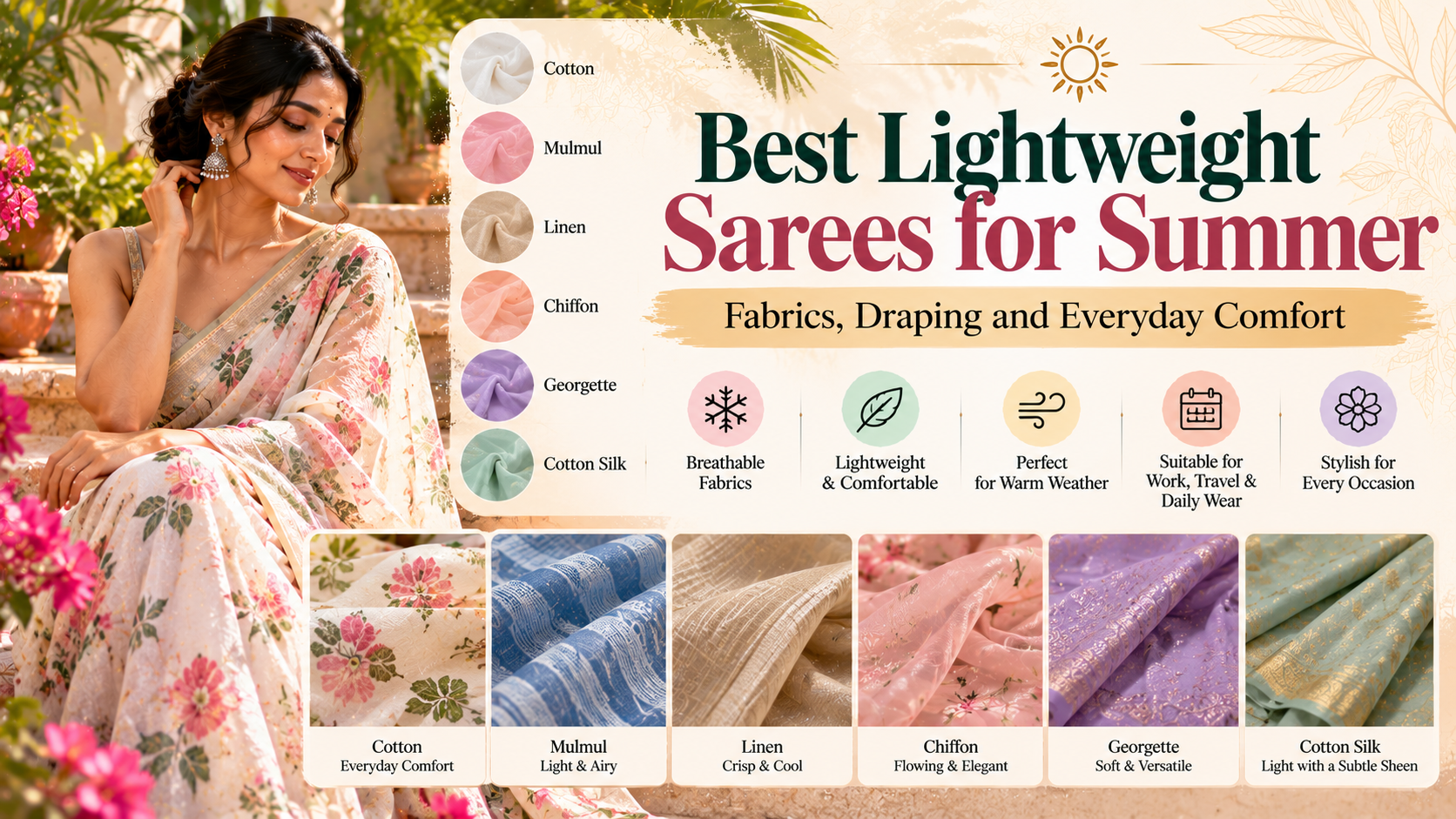
When the temperature climbs, a heavy saree can turn a short outing into an uncomfortable afternoon. Pleats stick, the pallu feels warm on the shoulder and a dense fabric traps heat against the skin. Yet many women wear sarees every day through Indian summers, for work, errands, pujas and family visits, so the question is not whether to wear a saree in the heat but which one.
Lightweight sarees for summer make that easier. The right fibre, weave and drape can keep you more comfortable through long, warm days. Comfort is personal, though. It depends on the fibre, how tightly the fabric is woven, how it is finished, how well the blouse and petticoat fit, and what you personally find cool. This guide compares common summer saree fabrics, explains how to choose for different settings and shares practical draping and care tips.
Why lightweight, breathable fabrics help in warm weather
In hot and humid weather, the body cools itself through sweat evaporating from the skin. Fabrics that allow air to pass through and handle moisture well can support that process. Breathable sarees usually have one or more of these qualities:
- Natural fibres such as cotton and linen, which tend to absorb moisture.
- Open or loose weaves that let air move through.
- Light weight, so less fabric sits against the body.
- Soft finishing, without heavy coatings or dense embellishment.
Synthetic fabrics can be very light and easy to care for, but some people find they feel warmer or less absorbent in humid conditions. This varies by fibre, weave and personal preference.
Summer saree fabrics to consider
Cotton
Cotton is the most familiar choice among cotton sarees for summer. It is generally absorbent and breathable, and comes in many weights, from fine handloom cotton to crisper, heavier weaves.
- Good for: daily wear, office, pujas, daytime events.
- Keep in mind: heavily starched or dense cotton can feel stiffer and warmer; cotton may crease and fade over time.
For everyday ideas, see our guide to the best cotton sarees for daily wear.
Mulmul (muslin cotton)
Mulmul is a very fine, soft cotton with a light, airy weave.
- Good for: hot days, home wear, relaxed outings, daytime functions.
- Keep in mind: it can be quite sheer and may need a matching petticoat; it is delicate and can tear more easily than heavier cottons.
Linen and linen blends
Linen is made from flax fibre and is often described as cool and crisp.
- Good for: office wear, daytime events, a polished but relaxed look.
- Keep in mind: linen creases easily; pure linen can feel slightly stiff at first and softens with washing; blends vary in feel and breathability.
Chiffon
Chiffon is a very light, sheer fabric with a fluid drape. Most chiffon sarees are made from synthetic fibres, though silk chiffon also exists.
- Good for: evening events, parties, occasions where a light, flowing look is wanted.
- Keep in mind: synthetic chiffon may feel less breathable to some wearers; it is sheer and slippery, so it may need pins.
Georgette
Georgette is lightweight, slightly grainy and drapes softly. Most georgette sarees are polyester or blends.
- Good for: office, travel, festivals, daytime events.
- Keep in mind: easy to care for and resists creasing, but breathability depends on the fibre.
Lightweight blends
- Cotton silk: combines cotton’s breathability with a subtle sheen, suited to office and festive daywear.
- Chanderi: a light, slightly sheer weave, often in cotton-silk blends, suited to festive daytime events.
- Khadi: handspun and handwoven, often in cotton; texture and breathability vary.
- Cotton-linen blends: combine cotton’s softness with linen’s crispness.
For a comparison of cotton with silk fabrics, read our guide to cotton vs silk sarees.
Summer saree fabric comparison table
These are general tendencies. Actual sarees vary by fibre, weave density and finishing.
| Fabric | Breathability | Drape | Transparency | Care | Best uses |
| Cotton | Generally high | Structured to soft depending on finish | Low to medium | Often washable at home; may crease and fade | Daily wear, office, pujas |
| Mulmul | Generally high | Very soft, light | Medium to high | Gentle washing; delicate | Hot days, home wear, relaxed outings |
| Linen | Generally high | Crisp, structured | Low to medium | Washable; creases easily | Office, daytime events |
| Linen blends | Varies by blend | Varies | Low to medium | Usually easy care | Office, travel |
| Chiffon | Varies; synthetic may feel warmer | Fluid | High | Delicate; snags easily | Evening, parties |
| Georgette | Varies; synthetic may feel warmer | Soft, flowing | Medium | Fairly easy; resists creases | Office, travel, festivals |
| Cotton silk | Generally good | Light, holds pleats | Low to medium | Gentle hand wash or dry clean; check label | Office, festive daywear |
| Chanderi | Generally good | Light, slightly crisp | Medium | Gentle handling | Festive daytime events |
How to choose a saree for different settings
Office wear
Choose fabrics that look neat through the day: cotton, linen, cotton blends, cotton silk or georgette. Linen and cotton may crease, so consider blends if you prefer a crisper look all day.
Daily use
Comfortable sarees for daily wear should be easy to wash, soft to wear and simple to drape. Soft cotton, mulmul and cotton blends are practical options.
Travel
Georgette, crepe and cotton blends resist creasing better than pure cotton or linen and pack easily.
Festivals
For summer festivals, consider cotton silk, chanderi, light handloom cotton or georgette with a festive border or print. These can look celebratory without the weight of heavy silks.
Daytime events
Light cotton silk, chanderi, linen and printed georgette suit daytime weddings, brunches and family functions.
For a wider view of fabrics and selection tips, see our complete guide to buying sarees for women.
Colours, prints, blouses and accessories
Colours
Lighter colours such as white, ivory, pastels, mint, peach, sky blue and lavender reflect more light and many people find them feel cooler. Earthy tones such as indigo, olive, rust and mustard are also popular for summer and hide stains better. Choose what you enjoy wearing.
For pairing ideas across occasions, see our guide to saree colour combinations.
Prints
- Block prints and dabu prints suit cotton and mulmul.
- Small florals and checks suit office wear.
- Ikat and stripes give a handloom look.
- Digital prints on georgette offer modern designs.
Blouses
- Fabric: cotton or cotton-blend blouses are usually more comfortable than synthetic or heavily lined ones.
- Lining: a light cotton lining can feel cooler than synthetic lining.
- Sleeves: sleeveless, cap or short sleeves allow more airflow; elbow-length sleeves in light fabric also work.
- Necklines: boat, round and collar necks suit everyday summer looks.
- Fit: a slightly relaxed fit can feel cooler than a very tight one.
Accessories
- Lightweight jewellery such as small studs, thin chains, oxidised silver or wooden pieces.
- Breathable footwear such as kolhapuris, juttis or sandals.
- A cotton tote or a light fabric bag.
- Sunglasses and a light stole for outdoor sun.
Draping tips for easier, cooler wear
- Fewer pleats: use fewer, slightly wider pleats to reduce layers at the waist.
- Pinned pallu: a neatly pinned pallu stays in place and keeps fabric off your arms.
- Open pallu for air: for short outings, a loosely draped pallu can feel airier.
- Comfortable tying height: avoid tying the saree too tightly.
- Lightweight petticoat: a cotton petticoat that fits well can feel cooler than synthetic or heavy ones.
- Pre-stitched sarees: a quicker option on busy, hot mornings.
- Pins: use a few safety pins on slippery fabrics like chiffon and georgette.
Washing and storage considerations
Always follow the care label. These are general guidelines.
Cotton and mulmul
- Often washable at home in cold or lukewarm water with mild detergent.
- Wash dark colours separately, especially the first few times.
- Dry in shade to reduce fading.
- Iron while slightly damp for smoother results.
- Some cotton sarees are starched; re-starching is optional.
Linen
- Usually washable; follow the label.
- Expect creasing; iron while damp or embrace a relaxed look.
- Avoid harsh wringing.
Chiffon and georgette
- Hand wash gently or dry clean if the saree is embellished.
- Avoid wringing; roll in a towel to remove water.
- Dry in shade.
- Iron on low heat if needed.
Blends
- Follow the label; blends may need care suited to the most delicate fibre.
Storage
- Store clean and fully dry.
- Fold loosely and refold occasionally.
- Use cotton or muslin covers rather than plastic.
- Keep away from damp areas.
Common mistakes when buying summer sarees
- Choosing by look alone. A light-looking fabric may still be synthetic and feel warm.
- Ignoring transparency. Mulmul, chiffon and some cottons can be sheer; plan a matching petticoat.
- Forgetting the blouse. A heavy or tightly lined blouse can undo the comfort of a light saree.
- Overlooking creasing. Linen and cotton crease; consider blends for long days.
- Not checking care needs. Choose easy-care fabrics for daily wear.
- Skipping fibre details. Read whether the saree is cotton, a blend or synthetic.
- Assuming all summer fabrics feel the same. Comfort varies by weave and finishing as well as fibre.
Frequently asked questions
1. What are the best lightweight sarees for summer? Cotton, mulmul, linen and lightweight blends such as cotton silk and chanderi are popular. Comfort depends on the fibre, weave and finishing.
2. Are georgette sarees good for summer? Georgette is light and easy to care for, but most georgette is synthetic, and some people find it feels warmer in humid weather. Breathability varies by fibre.
3. Is linen comfortable for summer sarees? Many people find linen cool and airy, though it creases easily.
4. Which colours are best for summer sarees? Light colours and pastels are popular because they reflect more light, but choose colours you enjoy.
5. How can I make a saree more comfortable in summer? Choose breathable fabric, wear a cotton blouse and petticoat, use fewer pleats and pin the pallu neatly.
6. Are mulmul sarees transparent? Many mulmul sarees are light and somewhat sheer. A matching petticoat helps.
7. Which summer saree is best for travel? Georgette, crepe and cotton blends usually resist creasing and pack easily.
Conclusion
The best lightweight sarees for summer are the ones that suit both the weather and your day. Cotton, mulmul and linen offer natural breathability for everyday wear; cotton silk and chanderi bring a festive touch without heavy weight; georgette and chiffon offer easy care and flowing drape for travel and evenings. Remember that comfort depends on fibre, weave, finishing, fit and personal preference, so read fabric details carefully and pair your saree with a breathable blouse and petticoat.
Explore lightweight sarees for women at Mahavir Cloth Center and find options that keep you comfortable through warm days.
