
Blog
Organza vs Georgette Sarees: Differences in Fabric, Drape, Transparency and Styling

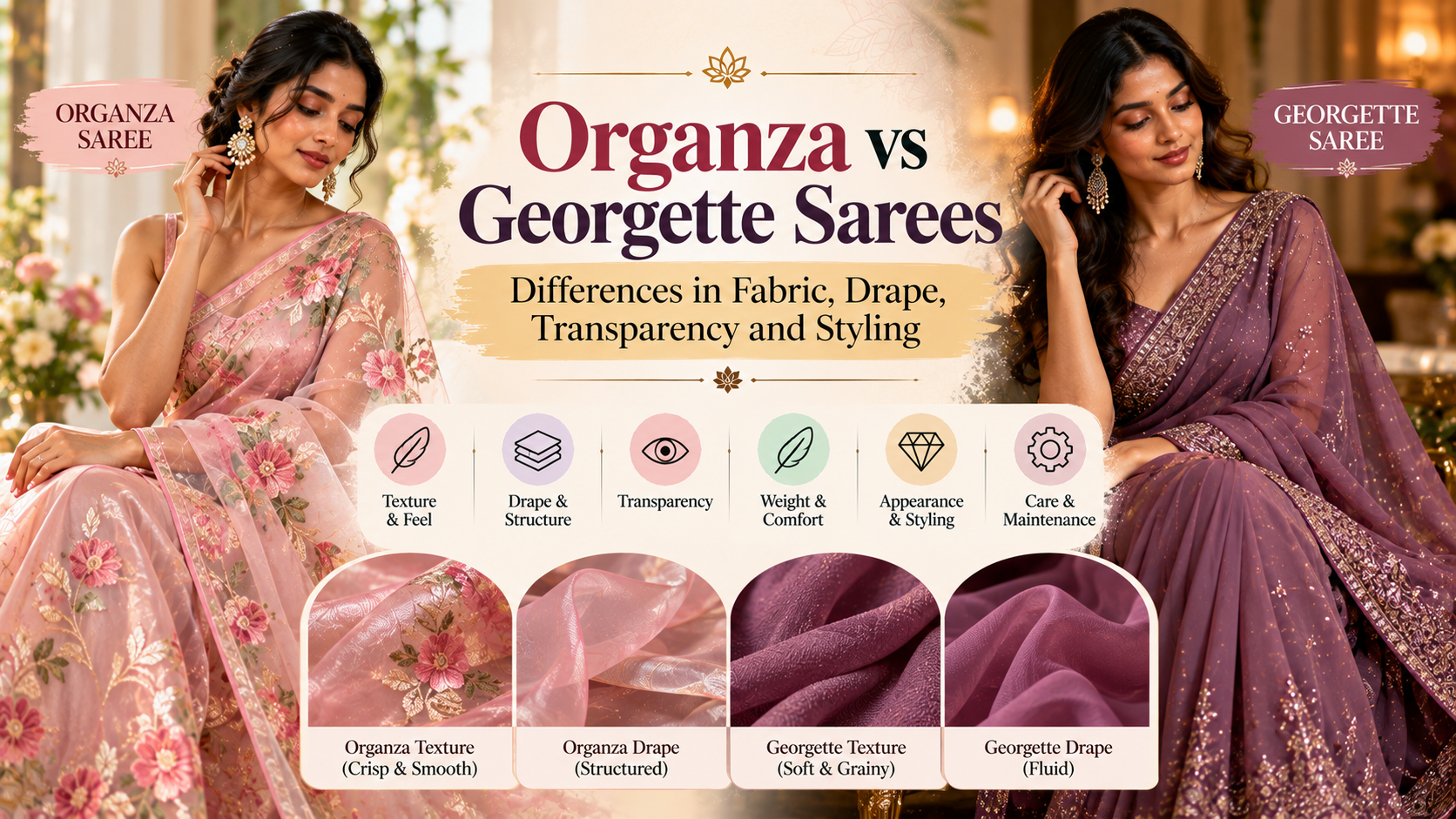
Both are light. Both can be sheer. Both turn up in festive and party collections, often in similar colours and with similar embroidery. So when you are standing between an organza saree and a georgette saree, the choice can feel like guesswork.
The two fabrics actually behave very differently. Organza is crisp and holds its shape; georgette is soft and flows with you. That one difference changes how each saree drapes, how see-through it looks, how comfortable it feels over a long evening and how you style it. This organza vs georgette saree guide explains those differences in practical terms so you can choose the one that suits your occasion, climate and personal style.
What is an organza saree?
Organza is a thin, plain-woven fabric made from tightly twisted yarns. Traditionally it was made from silk; today it is also widely made from synthetic fibres such as polyester or nylon, or from blends. The twisted yarns and tight weave give organza its characteristic crispness.
Typical characteristics of an organza saree:
- Crisp, slightly stiff texture that holds folds and pleats in a defined shape.
- Sheer, airy appearance with a subtle sheen.
- Lightweight, despite looking structured.
- Sculpted drape that stands slightly away from the body rather than clinging.
Organza sarees are often plain, printed, hand-painted or embroidered, and they are popular for parties, receptions and daytime festive events.
What is a georgette saree?
Georgette is a lightweight fabric woven from highly twisted yarns that create a slightly grainy, crinkled surface. It was traditionally made from silk, but most georgette sarees today are made from polyester or blends. Pure silk georgette is also available but is less common.
Typical characteristics of a georgette saree:
- Soft, slightly textured feel with a matte or subtle sheen.
- Fluid drape that follows the body.
- Semi-sheer to sheer, depending on weight and fibre.
- Light and easy to move in.
Georgette sarees come in solid colours, prints, embroidery, sequins and many other finishes, making them one of the most versatile lightweight sarees for women.
Organza vs georgette fabric: key differences
Texture
Organza feels crisp and smooth, almost papery, with a noticeable stiffness. Georgette feels soft and slightly grainy, with a gentle bounce.
Stiffness and structure
Organza holds its shape. Pleats stay sharp and the pallu can stand out slightly from the body. Georgette has very little structure and falls into soft folds.
Drape
- Organza creates a sculpted, slightly voluminous drape. It suits a defined, elegant look.
- Georgette drapes closely and fluidly, following the body’s movement.
Transparency
Organza is usually quite sheer, so the petticoat and blouse show through clearly. Georgette is often semi-sheer; transparency depends on its weight. Heavier georgettes are more opaque.
Weight
Both are lightweight. Organza can feel even lighter because of its fine weave, but heavy embroidery on either fabric adds weight.
Comfort
Georgette usually feels softer against the skin and moves easily, which many people find comfortable for long events. Organza’s crispness can feel slightly scratchy at edges for some wearers, especially synthetic organza, though this varies by fibre and finishing.
Appearance
Organza has a luminous, airy look with a soft shine, which suits elegant and contemporary styling. Georgette has a softer, flowing look that suits both traditional and modern styling.
Creasing
Organza can crease and hold creases, especially if folded tightly. Georgette usually resists wrinkles better.
Maintenance
Both often need gentle handling. Organza can snag and show creases; georgette can snag and fray at cut edges. Many embellished organza and georgette sarees are dry-clean only. Always follow the care label.
Organza vs georgette saree: comparison table
| Feature | Organza | Georgette |
| Texture | Crisp, smooth, slightly stiff | Soft, slightly grainy |
| Structure | Holds shape and pleats sharply | Little structure, falls softly |
| Drape | Sculpted, stands slightly away | Fluid, follows the body |
| Transparency | Usually very sheer | Semi-sheer to sheer, varies by weight |
| Weight | Very light | Light |
| Comfort | Airy; edges may feel crisp | Soft and easy to move in |
| Appearance | Luminous, elegant, contemporary | Flowing, versatile |
| Creasing | Prone to creases | Generally resists creasing |
| Ease of draping | Pleats hold well but fabric is less forgiving | Easy to drape, may need pins |
| Common fibres | Silk, polyester, nylon, blends | Polyester, silk, blends |
| Typical occasions | Parties, receptions, daytime festive events | Parties, festivals, office, travel |
How to choose between organza and georgette
By personal preference
- If you like a defined, sculpted look, organza may suit you.
- If you prefer a soft, flowing silhouette, georgette is likely a better match.
By occasion
- Sarees for parties and receptions: both work. Organza gives an airy, elegant effect; embellished georgette gives a fluid, glamorous one.
- Daytime functions and festive brunches: organza in pastels or florals can look fresh; printed georgette is a comfortable alternative.
- Festivals with lots of movement: georgette is often easier to move and sit in.
- Office or regular wear: georgette tends to be more practical because it resists creasing.
- Travel: georgette usually packs better.
By climate
Both fabrics are light. Breathability depends heavily on the fibre: silk versions may feel more comfortable in warm weather than synthetic ones. Georgette’s fluid drape can feel cooler in humid conditions because it moves with you; organza’s airy weave can feel light, but its structure can trap warmth for some wearers.
By ease of draping
- Georgette is generally easy for beginners to drape, though it may slip, so pins help.
- Organza holds pleats beautifully once in place, but its crispness can make it less forgiving if pleats are uneven. A little practice helps.
For a broader look at fabrics and how to choose a saree, see our complete guide to buying sarees for women.
Styling organza and georgette sarees
Styling an organza saree
- Drape: a neatly pleated, pinned pallu shows off organza’s structure. An open pallu can look dramatic and airy.
- Petticoat: because organza is sheer, choose a petticoat in a closely matched colour.
- Colours: pastels, ivory, blush, mint and powder blue look soft and luminous; deeper shades with embroidery suit evening events.
- Blouse: structured or embellished blouses balance organza’s crispness. High necks, sweetheart necklines and puff or sheer sleeves are popular choices.
- Jewellery: statement earrings, pearl sets and delicate chokers often complement organza’s elegant look.
Styling a georgette saree
- Drape: georgette suits the classic Nivi drape, a pinned pallu or contemporary styles like a belted drape.
- Petticoat: a fitted or A-line petticoat helps georgette fall smoothly.
- Colours: georgette carries both bright and deep colours well; prints and embellishment show off its fluid movement.
- Blouse: V-necks, sweetheart necklines, halter necks and sleeveless styles suit georgette’s soft drape. Velvet or brocade blouses add contrast for evening wear.
- Jewellery: long necklaces, layered chains or bold earrings work well, depending on the neckline.
For help choosing a blouse shape, see our guide to blouse neckline designs for sarees. For colour ideas, our article on saree colour combinations for different occasions has pairing suggestions for borders, blouses and jewellery.
Common buying mistakes
- Not checking the fibre. Organza and georgette describe the weave; the fibre may be silk, polyester or a blend. Read the description.
- Ignoring transparency. Both can be sheer. Check how see-through the saree is, and plan a matching petticoat.
- Assuming organza drapes like georgette. Organza is stiffer; if you want a fluid drape, it may not meet your expectation.
- Overlooking creasing. Organza can crease easily, which matters for travel or long events.
- Skipping a close look at embellishments. Embroidery and sequins add weight and need secure attachment. Our guide on how to identify a good-quality saree explains what to inspect.
- Not checking care instructions. Many embellished sarees need dry cleaning.
- Choosing only from photographs. Sheen and transparency can look different in person.
Frequently asked questions
1. What is the main difference between organza and georgette sarees? Organza is crisp and structured with a sculpted drape, while georgette is soft and fluid with a draping style that follows the body.
2. Which is more transparent, organza or georgette? Organza is usually more sheer. Georgette ranges from semi-sheer to sheer, depending on its weight.
3. Which is easier to drape for beginners? Georgette is often easier to drape because it is soft and forgiving, though it may need pins to stay in place.
4. Are organza sarees comfortable? Many people find them light and airy. Some may notice the crisp edges, depending on fibre and finishing.
5. Which is better for parties? Both are popular sarees for parties. Choose organza for an airy, elegant look and georgette for a fluid, glamorous one.
6. Do organza sarees crease easily? Yes, organza can crease and hold folds. Store it carefully and avoid tight folding.
7. Are georgette sarees always synthetic? No. Many are polyester or blends, but silk georgette is also available. Check the description for fibre content.
Conclusion
The organza vs georgette saree choice comes down to the look and feel you want. Organza offers crisp structure, a luminous sheen and a sculpted drape that suits elegant parties and daytime celebrations. Georgette offers soft, fluid movement, easy draping and versatility across festivals, evenings and everyday wear. Check the fibre, transparency, care needs and finishing before you buy, and choose the fabric that matches your occasion, your climate and your own sense of style.
Explore organza, georgette and other lightweight sarees at Mahavir Cloth Center, and find a drape that feels right for your next occasion.
