
Blog
Best Saree Colours for Different Occasions: Weddings, Festivals, Parties and Everyday Wear

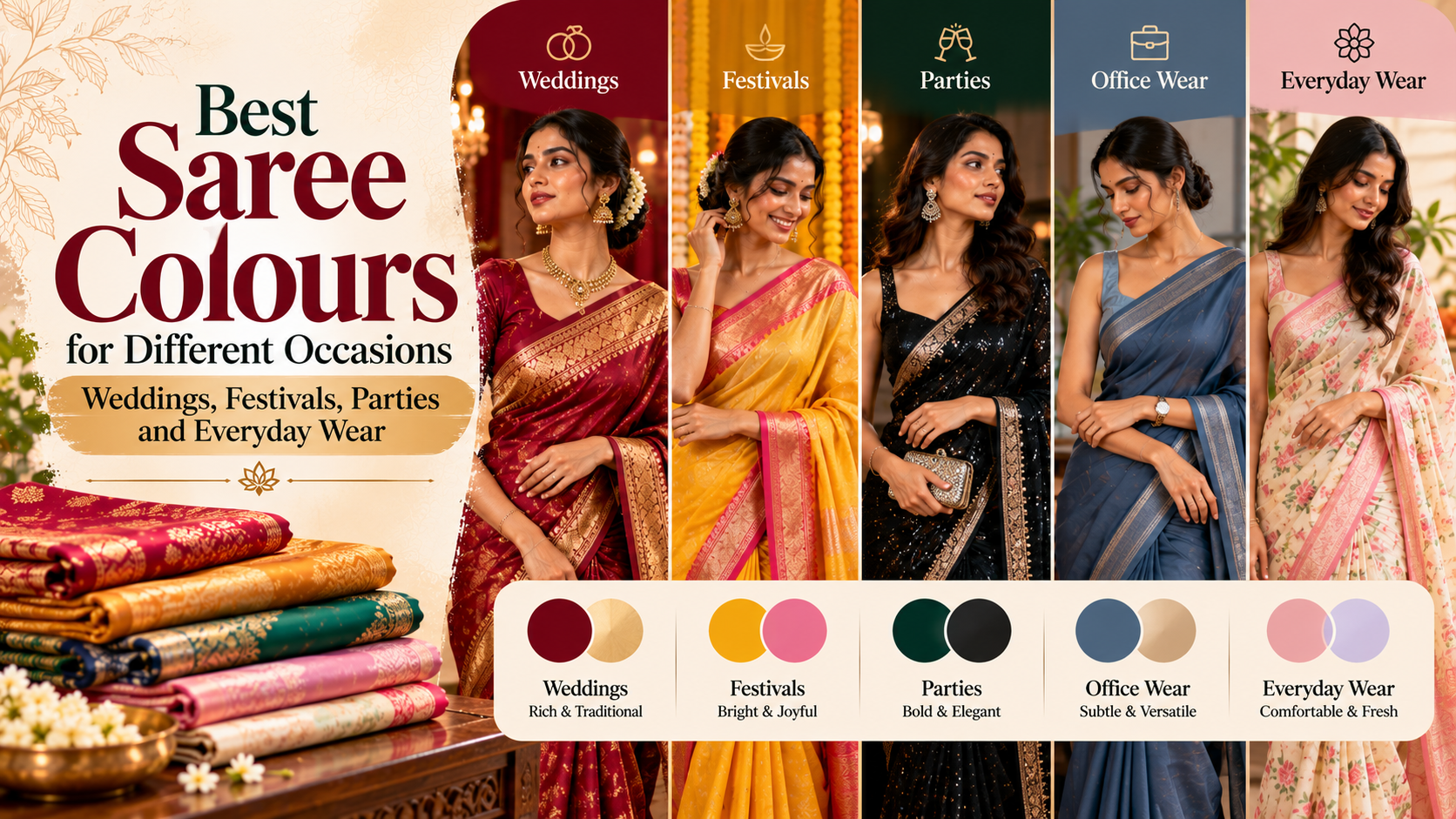
Colour is usually the first thing anyone notices about a saree, and often the first thing you decide. Yet choosing it can feel surprisingly hard. Should a wedding saree be traditional or something unexpected? What looks good under evening lights? Which colours are easy to wear to work every week?
This guide offers saree colour combinations as inspiration, not rules. Colour choices vary by community, region, family custom and personal taste, and no colour is compulsory for any occasion. The ideas below are grouped by setting, with practical notes on borders, blouses, jewellery, lighting and building around the sarees you already own.
Saree colours for weddings and related functions
Weddings usually include several functions, each with its own mood. Many families follow customs for certain ceremonies; check with the hosts or elders if you are unsure.
Main ceremony
Rich, deep shades are popular for many main ceremonies: maroon, crimson, wine, emerald, royal blue, deep purple and mustard. Gold or silver zari borders add a festive finish. Many brides and guests also choose ivory, cream, soft pink or pastel shades with gold.
Combination ideas:
- Wine body with an antique gold border
- Emerald body with a magenta border
- Royal blue with a silver zari border
- Ivory with a red or gold border
Haldi
Haldi is often associated with yellow, but many people also wear orange, lime green, pastel yellow, peach or white with a yellow border. Light, cheerful colours suit the daytime setting.
Mehendi and sangeet
These functions tend to be lively and colourful. Greens, pinks, oranges, teal, fuchsia and multicolour prints or bandhani work well.
Reception
Evening receptions suit jewel tones, metallics and deep neutrals: navy, black, charcoal, champagne gold, bottle green, deep plum or silver.
Colour combinations for festivals and family celebrations
Festivals invite bright, joyful colours, though many people also enjoy softer pastels.
- Red and gold: a classic festive pairing.
- Mustard and maroon: warm and traditional.
- Green and pink: bright and celebratory.
- Orange and purple: a bold contrast.
- Turquoise and orange: fresh and lively.
- Peach and green: soft yet festive.
Some festivals have colour customs, such as the daily colours many people follow during Navratri. Our Navratri colour guide lists those for this year. For family gatherings where you want something warm but not too bright, mustard is a versatile option; see our guide to mustard yellow ethnic wear for styling ideas.
Saree colour ideas for parties and evening events
Evening lighting is usually warmer and dimmer, so colours with depth and shine often stand out.
- Black with silver, gold or sequin detailing
- Navy with silver or rose gold
- Bottle green with gold
- Wine or burgundy with antique gold
- Metallics such as gold, silver, bronze or champagne
- Deep teal with copper accents
- Jewel-toned ombré sarees that shift from one shade to another
A single-colour look can also feel striking at evening events. Our guide to monochrome ethnic outfits shows how to build depth with texture rather than contrast.
Saree colours for office wear and everyday use
For work and daily wear, colours that are easy to pair and suit daylight are practical.
Office wear
- Navy, grey, charcoal, olive, beige, ivory and soft pastels
- Small borders in a contrasting but muted colour, such as navy with maroon or grey with mustard
- Subtle prints or checks
Everyday wear
- Soft blues, mint, peach, lavender, light pink and off-white
- Earthy shades such as rust, terracotta, indigo and olive
- Handloom-style colour pairs, such as indigo with white or rust with black
Saree colour combination table
| Occasion | Body colour | Border or accent | Blouse idea | Effect |
| Wedding ceremony | Wine | Antique gold zari | Gold or matching wine | Rich, traditional |
| Wedding ceremony | Emerald | Magenta | Magenta | Bold contrast |
| Wedding guest | Ivory | Red | Red | Classic, elegant |
| Haldi | Lemon yellow | Green | Green or white | Fresh, cheerful |
| Mehendi | Parrot green | Pink | Pink | Playful |
| Reception | Navy | Silver | Silver or navy | Sleek, evening |
| Festival | Mustard | Maroon | Maroon | Warm, festive |
| Festival | Orange | Purple | Purple | Bold, vibrant |
| Family puja | Peach | Green | Green | Soft, festive |
| Party | Black | Gold sequins | Gold | Dramatic |
| Party | Bottle green | Copper | Copper or black | Rich, modern |
| Office | Grey | Mustard | Mustard | Polished |
| Office | Navy | Maroon | Maroon or white | Classic |
| Everyday | Indigo | White | White | Fresh, handloom feel |
| Everyday | Lavender | Silver | White | Soft, easy |
These are starting points. Swap any colour for one you prefer.
Pairing saree body colours with borders
The border shapes how the whole saree reads.
Contrasting borders
Colours from opposite sides of the colour wheel, or simply very different shades, create energy and make the border stand out. Examples: green with pink, yellow with purple, blue with orange.
Complementary or tonal borders
A border in a deeper or lighter shade of the body colour looks refined and calm. Examples: light pink with rose, sky blue with navy, beige with brown.
Metallic borders
Gold and silver act almost as neutrals and work with most colours. Gold tends to look warm; silver looks cool.
Neutral borders
Black, white, cream or grey borders give a crisp frame to bright or printed sarees.
Tips
- A wide contrasting border makes a strong statement; a narrow one is subtler.
- Repeat the border colour in the blouse for a pulled-together look.
How blouse colour, jewellery and accessories influence the look
Blouse
- Matching the body: creates a long, continuous line.
- Matching the border: links the outfit together.
- Contrasting: adds a third colour and a modern feel.
- Metallic: suits festive and evening looks.
- Neutral (black, white, beige): quick to pair with many sarees.
Jewellery
- Gold pairs warmly with reds, maroons, yellows, greens and earthy shades.
- Silver and oxidised silver suit blues, greys, purples, black and many handloom sarees.
- Pearls work with pastels, ivory and soft colours.
- Coloured stones can repeat a colour from the border or motifs.
Accessories
Potlis, clutches, footwear and bangles can pick up an accent colour. For a balanced look, choose one or two accent colours rather than many.
How lighting, fabric and photography affect colour
Lighting
- Daylight shows colours most accurately.
- Warm indoor lighting makes colours look warmer and can deepen reds and golds.
- Cool white lighting can make colours look flatter or bluer.
- Coloured stage or decorative lighting at events can change colours dramatically.
If possible, check your saree in the type of light you will be wearing it in.
Fabric texture
- Silk reflects light, making colours look richer and shifting with movement.
- Matte fabrics such as cotton and crepe show colours more flatly and evenly.
- Sheer fabrics like chiffon and organza can look lighter, because the petticoat and skin show through.
- Embellishment adds sparkle, which can change how a colour reads from a distance.
Photography
- Very bright, saturated colours can look harsher in photos.
- Very pale colours may appear washed out in strong light or flash.
- Mid-tones and jewel tones often photograph well.
- Phone screens vary, so colours in online photos may differ from the real saree.
Saree colour selection based on preferences and wardrobe
Start with what you love
Think about colours you reach for, and those that make you feel confident. Popular saree colours can be a helpful guide, but your own preference matters more.
Look at your wardrobe
- Blouses: choose saree colours that work with blouses you already own.
- Jewellery: consider whether your jewellery is mostly gold, silver or oxidised.
- Gaps: if most of your sarees are bright, a neutral or pastel may add variety, and vice versa.
Build versatile combinations
A few neutral or metallic blouses, such as gold, black and white, can pair with many sarees and make each new colour easier to wear.
Consider the season
Many people enjoy lighter shades in warm months and deeper colours in cooler months, but this is entirely a preference.
Frequently asked questions
1. Which saree colours suit weddings? Many people choose rich shades such as maroon, wine, emerald and royal blue, as well as ivory and pastels with gold. Check for family customs.
2. What colours work best for evening parties? Black, navy, bottle green, wine and metallics often stand out under evening lighting.
3. Which colours are good for office sarees? Navy, grey, olive, beige, ivory and soft pastels are easy to wear and pair.
4. How do I choose a blouse colour for my saree? Match the body for a seamless look, match the border to tie it together, or choose a contrast or metallic for a bolder effect.
5. Do saree colours look different in photos? Yes. Lighting, fabric and camera settings all affect how colours appear.
6. Are there colours I should avoid at certain events? Some communities and ceremonies have colour customs. When unsure, ask the hosts or family.
Conclusion
The best saree colour combinations are the ones that suit the occasion, the lighting and, above all, you. Use rich jewel tones and metallics for celebrations, bright pairings for festivals, deep shades for evenings and easy neutrals or soft colours for work and daily wear. Play with borders, blouses and jewellery to make each saree feel new, and treat every suggestion here as a starting point.
For more on fabrics, styles and choosing sarees, read our complete guide to buying sarees for women. Explore saree colours and designs at Mahavir Cloth Center.
