
Blog
Best Sarees to Wear for Navratri 2026: Red, Party Wear and Traditional Styles

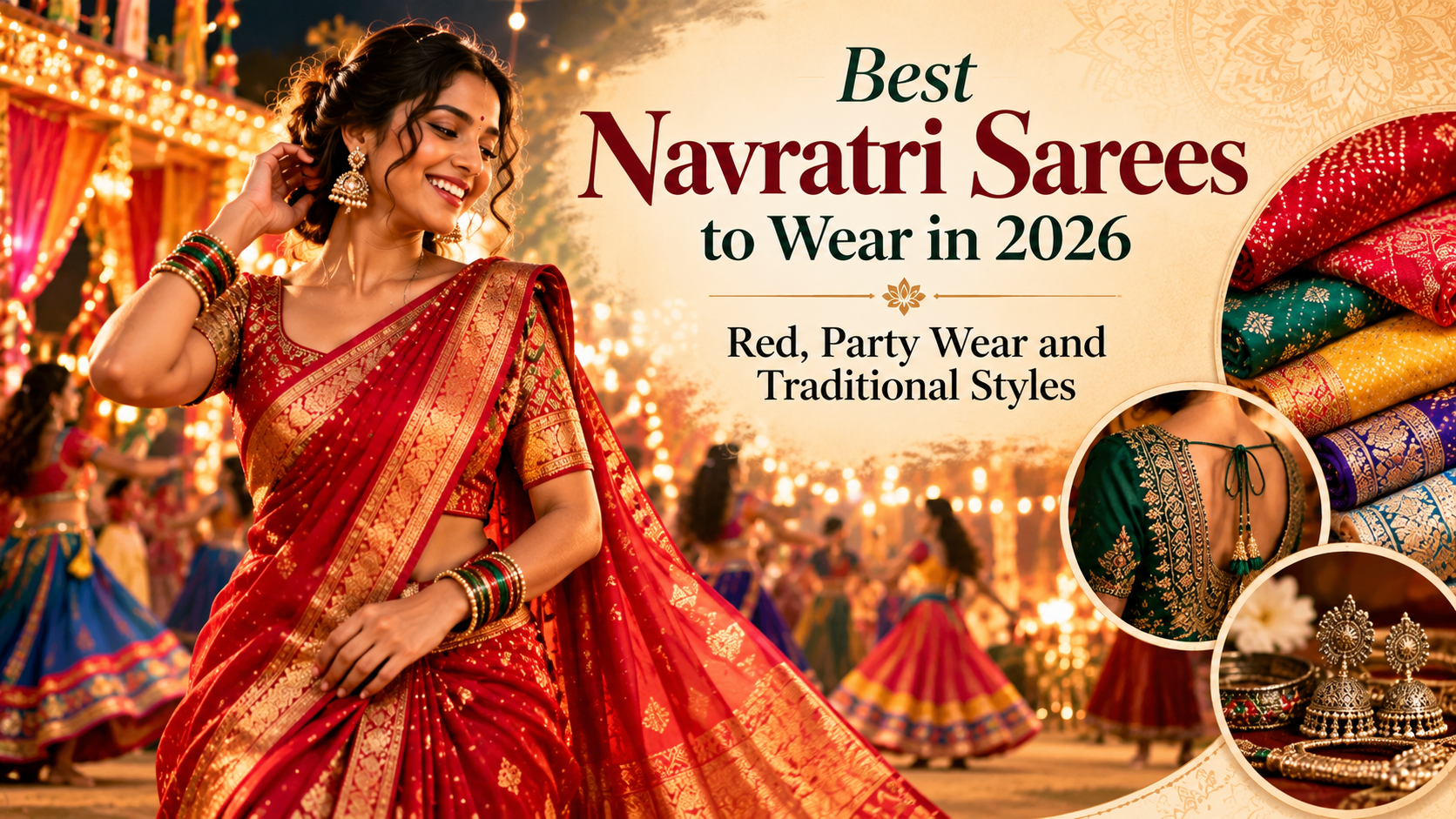
Choosing among Navratri sarees is harder than it looks. The same nine nights can include a quiet puja, a family dinner and a crowded Garba ground, and a saree that suits one may be miserable in another. The right pick depends on what you will be doing and how long you will be on your feet.
This guide covers traditional styles, red and other festive colours, party-wear versus traditional sarees, fabrics, blouses and accessories, and how to make a saree work for dancing, with budget ideas that quote no prices. For suits, kids’ outfits and family looks, see our pillar guide to Navratri outfit ideas 2026.
Traditional saree styles for festive occasions
Traditional sarees carry weaves and motifs tied to particular regions. These are well-known festive options, though quality varies, so check what you are buying.
- Bandhani. A tie-dye technique closely associated with Gujarat and Rajasthan. The dotted patterns suit Navratri naturally, and lighter versions in cotton, silk or georgette work for dancing.
- Gharchola. A traditional Gujarati style, often in red with a distinctive grid-like pattern, associated with auspicious occasions.
- Patola. A woven textile from Patan in Gujarat, known for intricate geometric patterns. Buy only from a source you trust.
- Paithani. A Maharashtrian silk saree known for its woven borders and peacock-style motifs, popular for puja and family functions.
- Kanjivaram. A silk saree from Tamil Nadu, valued for rich colour and zari borders. A puja classic, though heavy for dancing.
- Banarasi. A silk or silk-blend weave from Varanasi, often with brocade, suited to puja and gatherings.
- Tant and Garad. Bengali weaves, often in white with red borders. Red-bordered white sarees are strongly linked with Durga Puja in Bengal, so ask someone from the community how they are worn.
- Cotton silk and chanderi. Lighter weaves that balance sheen with comfort.
If you wear a style from a community you do not belong to, do so respectfully and ask how it is traditionally worn.
How to style red sarees and other festive colours
Red is among the most popular festive colours. It photographs well and pairs naturally with gold, green and contrast blouses. A red saree is also associated with auspicious occasions in many communities, though customs differ.
Styling a red saree:
- Choose a blouse contrast that suits you, such as gold, green, black or a deeper red.
- Oxidised silver jewellery gives a bold, modern look, while gold suits richer silk and zari.
- Balance jewellery with the saree: a heavily worked one needs simpler pieces, a plain one can carry more.
Other festive colours. Orange, yellow, green, royal blue, pink, purple and white are common across the nine days, and many people follow a daily colour scheme tied to the weekday. These schemes vary by region, community and family, and the weekdays change each year. Check your tradition and the colour calendar for 2026, and see our Navratri colour guide 2026 for more.
If you do not want nine sarees, rotate a few with different blouses and stoles in the day’s colours.
Party-wear sarees versus traditional sarees
A party wear saree is built for evening events, with lighter fabrics, sequins, shimmer or modern cuts. Traditional sarees draw on woven or dyed craft and suit puja and family gatherings. Neither is better. The choice depends on the setting.
| Traditional sarees | Party-wear sarees | |
| Typical fabrics | Silk, cotton silk, cotton, handloom weaves | Georgette, chiffon, net, organza, satin blends |
| Best for | Puja, temple visits, family functions | Evening events, dinners, some Garba nights |
| Feel | Often heavier, richer, with woven borders | Often lighter, with shimmer or embellishment |
| Dancing | Choose lighter versions | Easier in lightweight fabrics, but may slip |
| Styling | Classic blouses, temple or gold jewellery | Contemporary blouses, oxidised or statement jewellery |
If you can only buy one, choose a medium-weight fabric with a modest border in a colour you can restyle.
Fabric selection for comfort, weather and movement
Navratri evenings can be warm and crowded, so fabric matters.
- Cotton and cotton silk. Breathable, easy to manage and comfortable for long hours.
- Georgette and chiffon. Light and flowing, but they can slip and may need extra pins.
- Silk. Elegant and rich, though heavy and warm for dancing. Better for puja and family occasions.
- Crepe. Drapes smoothly and resists creasing, but may feel warm.
- Net and organza. Festive and light, but delicate, and embellishment can scratch.
Check the lining and weight of any embellishment, try the saree on and move in it, and follow the care label, especially for bandhani and hand-dyed pieces.
Blouse designs, jewellery, footwear and accessories
Blouse. The blouse often matters more for comfort than the saree. Choose sleeves that let your arms move freely, such as elbow-length or cap sleeves, and a secure back closure. Mirror work or embroidery adds festival flair, but heavy work can scratch and weigh on the shoulders.
Jewellery. Oxidised silver and German silver are long-time Garba favourites. Choose pieces that will not catch on the pallu, and keep valuables to a minimum at crowded events.
Waist and bag. A kamarbandh, or waist belt, holds pleats in place and adds shape. A potli or small crossbody bag carries essentials.
Footwear. Flat, comfortable and secure options work best, such as juttis, kolhapuris or flat sandals. Some Garba venues expect bare feet or restrict footwear on the dance floor, so check with the organisers.
Styling a saree for Garba or Dandiya without losing comfort
The chaniya choli is the classic Garba outfit in Gujarat, but many people wear sarees, and a few adjustments make it practical.
- Consider a pre-draped saree or practise the drape beforehand, so you are not adjusting it all night.
- Secure the pleats and pallu with pins, and tuck the pallu firmly or pin it to the blouse.
- Pick an ankle-length hem, and wear a petticoat or shapewear that stays put.
- Add a kamarbandh to hold the drape in place.
- Keep the pallu manageable. A very long trailing pallu catches on dandiya sticks and other dancers.
- Wear flat, secure footwear, or go barefoot if the venue allows.
- Try the full outfit at home, dance steps included, before the event.
Many people carry a second outfit in case the saree stops working late in the evening.
Saree selection tips for different budgets
We do not quote prices, because they vary widely by fibre, weave, brand and region. These strategies apply at any budget.
- Decide how often you will wear it. A saree you can reuse for other festivals and family functions offers more value than one for a single night.
- Spend on the fabric and fit, not on heavy embellishment, which adds cost and weight.
- Restyle what you own. A new blouse or jewellery can refresh an old saree.
- Compare fibre content, weave and finish carefully, and read product descriptions for details. Where claims such as handloom or pure silk are made, ask about labels or certification and verify them with the seller.
- Check return, exchange and alteration policies before you buy.
- Consider borrowing, or hiring where available, for occasions you will not repeat.
If you also need suits or other festive options, our guide to Navratri suit designs for women covers alternatives.
Frequently asked questions
Which saree is best for Navratri?
It depends on the occasion. Silk or cotton silk suits puja and family functions, and lighter bandhani, cotton silk or georgette suit Garba and Dandiya.
Can I wear a red saree every day of Navratri?
There is no universal rule. Colour customs vary by region and family, so check your tradition.
What is the most comfortable saree fabric for Garba?
Cotton, cotton silk and light blends are comfortable for long dance nights. Georgette and chiffon are light but may need extra pinning.
How do I keep a saree secure while dancing?
Use a pre-draped saree or well-practised drape, pin pleats and pallu, add a kamarbandh, choose an ankle-length hem and wear flat footwear.
What footwear should I wear with a saree for Garba?
Flat, comfortable and secure footwear, or bare feet where the venue expects it. Avoid heels, and check the venue’s rules.
Conclusion
The best Navratri sarees are the ones that fit the occasion and let you enjoy it. A traditional silk or cotton silk saree suits puja, a lighter bandhani or georgette works for dancing, and a red saree with the right blouse and jewellery is a festive classic. Whatever you choose, comfort, a secure drape and fabrics that breathe matter more than any single trend.
Check your family’s colour customs, try your outfit in motion and plan your budget around pieces you will wear again. For more ideas across suits, kids’ wear and family looks, return to our Navratri outfit ideas guide, and browse festive saree collections when you are ready to choose.
