
Blog
How to Choose a Saree Based on Body Type, Height and Comfort

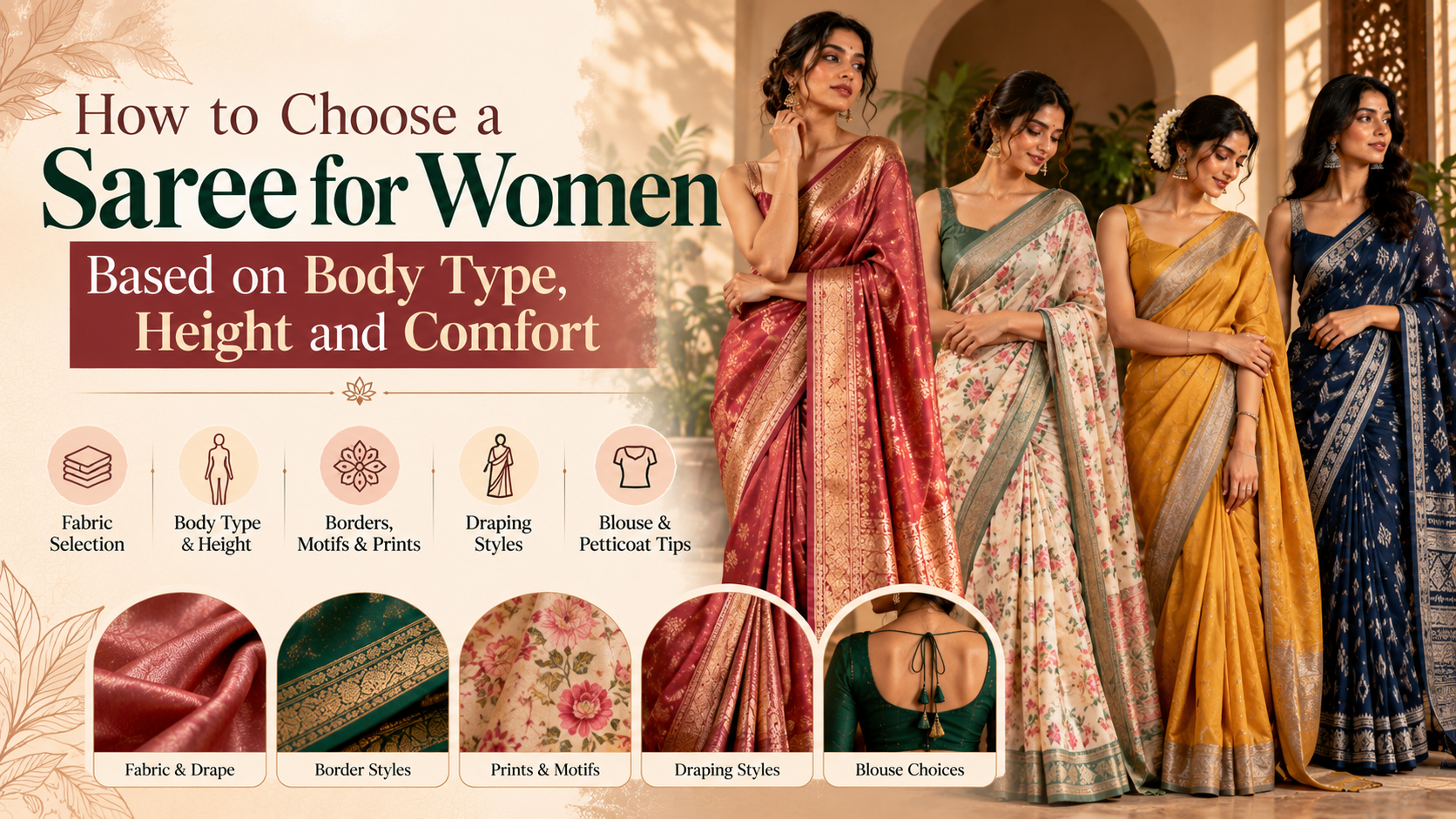
There is no single “right” saree for any body. The same chiffon saree can look fluid and relaxed on one person and feel too slippery for another. A heavy silk can feel regal to one wearer and tiring to the next. What matters is how a saree feels when you wear it, how it moves with you, and whether it creates the look you want.
This guide treats choosing a saree for women as a set of practical options rather than rules. It covers how fabric affects drape and comfort, what to consider at different heights, how borders and prints change the overall look, and how draping, blouse cuts and petticoats help a saree sit comfortably. Use whichever suggestions match your preferences and ignore the rest.
How fabric affects drape, movement and comfort
Fabric decides how close a saree sits to the body, how much volume it creates and how easy it is to move in.
| Fabric | How it drapes | Movement and comfort | Things to know |
| Chiffon and georgette | Soft, fluid, follows the body | Light and easy to move in | Can be slippery; pleats may need pins |
| Crepe | Smooth, slightly weighted fall | Comfortable, resists creasing | Good for long days and travel |
| Cotton and mulmul | Crisp or soft depending on finish | Breathable; starched cotton adds volume | Starch makes pleats sharper but stiffer |
| Linen | Structured, slightly textured | Airy in heat | Creases easily |
| Light silk and silk blends | Smooth with gentle structure | Comfortable for many occasions | Holds pleats reasonably well |
| Heavy silk and brocade | Structured, holds its shape | Rich look but heavier to wear | Adds volume; can feel warm |
| Organza and tissue | Crisp and slightly stiff | Light but less fluid | Creates a sculpted, airy look |
Matching fabric to how you want to feel
- If you want ease and freedom: chiffon, georgette, crepe and soft cotton are light and move with you.
- If you want structure and a defined shape: silk, starched cotton, organza and brocade hold pleats and borders crisply.
- If you run warm: cotton, linen and mulmul are usually more breathable.
- If you are new to draping: crepe, georgette and soft cotton are often easier to handle than very slippery or very stiff fabrics.
Saree selection considerations for different heights
Height affects how much of the saree is visible, how the pleats fall and how the pallu sits. These are options to experiment with, not requirements.
If you are on the shorter side
- Border width: narrow to medium borders keep more of the saree body visible. Wide borders can work beautifully too; just try the drape before deciding.
- Pallu length: a slightly shorter pallu can feel easier to manage.
- Pleats: fewer, slightly narrower pleats can look neater.
- Footwear: if you plan to wear heels, drape with them on so the hem falls correctly.
- Saree length: a standard saree length usually leaves plenty to work with; you can tuck in extra fabric at the waist.
If you are taller
- Border width: wider borders and heavier pallus have more room to show.
- Saree length: check the length, since some sarees may feel short for a full drape with a long pallu. Measure a saree you already wear comfortably.
- Pleats: you may prefer more pleats or a wider pleat width for a fuller look.
- Petticoat length: make sure the petticoat reaches close to the floor so the saree hem sits evenly.
At any height
What looks right depends on proportion, the drape you choose and your own taste. A quick mirror check with the saree pinned in place tells you more than any rule.
How borders, motifs, prints and patterns affect the look
Design choices change where the eye goes and how busy or calm a saree feels.
Borders
- Narrow borders look delicate and keep attention on the saree body.
- Wide borders create a strong frame and a traditional look.
- Contrast borders draw attention to the hem and pallu.
- Tonal borders blend in for a softer effect.
Motifs and prints
- Small, scattered motifs look subtle and work across many occasions.
- Large motifs make a bold statement.
- All-over prints create a lively, continuous look.
- Vertical stripes and lines follow the length of the drape.
- Horizontal patterns draw the eye across the body.
Colour
- Solid colours look clean and let the drape and border lead.
- Two-tone or ombré sarees add movement.
- Darker shades and lighter shades both work for any body; choose what you enjoy wearing and what suits the occasion and lighting.
None of these are rules. If you love a large print or a wide border, wear it.
Choosing a saree for women by personal style and silhouette
Think about the overall shape you want the saree to create.
Close, fluid silhouette
Soft fabrics such as chiffon, georgette and crepe, with neat, pinned pleats and a fitted or shapewear-style petticoat, create a sleek line that follows the body.
Structured, defined silhouette
Silks, starched cottons and organza with crisp pleats hold their shape and create a more sculpted look.
Relaxed, easy silhouette
Soft cotton or mulmul with a loosely draped pallu feels comfortable and casual.
Contemporary silhouette
Belted drapes, pre-stitched sarees and sarees worn with jackets or capes give a modern shape. Our comparison of pre-stitched sarees and traditional draping explains how ready-made drapes differ.
Saree draping styles and pleating techniques to consider
Draping changes the look of the same saree considerably.
Common saree draping styles
- Nivi drape: the familiar style with front pleats and a pallu over the left shoulder. It adapts well to most fabrics.
- Open pallu: the pallu falls loosely over the shoulder and arm, showing more of the saree’s design.
- Pinned pallu: the pallu is pleated and pinned for a neat, secure look, useful for long events.
- Gujarati or seedha pallu: the pallu comes over the right shoulder and spreads across the front, showing off the pallu design.
- Belted drape: a belt at the waist secures the pleats and pallu for a modern, defined look.
- Regional drapes: styles such as the Nauvari, Bengali and others each create a distinct shape and are worth exploring.
Pleating tips
- Pleat width: narrow pleats look neat and compact; wider pleats create more volume.
- Number of pleats: fewer pleats reduce bulk at the waist; more pleats add fullness.
- Pleat placement: tucking pleats slightly to the left of centre is common, but adjust for comfort.
- Securing pleats: a safety pin at the top of the pleats helps them stay in place.
- Pallu pleats: pleating and pinning the pallu keeps it tidy; leaving it open gives a softer look.
Comfort-focused draping
- Tie the saree at a height that feels comfortable around your waist.
- Avoid wrapping too tightly around the hips if you plan to sit or walk a lot.
- Use pins where needed, but not so many that the saree feels restrictive.
Blouse cuts and petticoats for a comfortable fit
The blouse and petticoat are the foundation of saree fitting tips.
Blouse
- Fit: the blouse should allow you to raise your arms and breathe comfortably.
- Length: choose a length that feels comfortable for the amount of midriff you prefer to show.
- Sleeves: sleeveless, short, elbow-length or full sleeves are all valid; choose by comfort and occasion.
- Neckline: choose one that works with your drape and jewellery. Our guide to blouse neckline designs for sarees covers the options in detail.
Petticoat
- Waist fit: snug enough to hold pleats but comfortable all day.
- Length: close to the floor with your footwear on.
- Shape: straight or panelled petticoats give a relaxed fall; A-line, mermaid and shapewear styles give a closer silhouette.
- Colour: match the saree, especially for sheer fabrics.
For a detailed look at fabrics, shapes and sizing, see our guide on how to choose a saree petticoat.
Common saree styling mistakes and how to avoid them
- Choosing a fabric that does not suit the event length or weather. A heavy silk at a long summer event can be tiring. Consider comfort first.
- Drape too tight or too loose. Tight drapes restrict movement; loose ones slip. Pin key points.
- Petticoat too long or too short. Measure with your footwear.
- Too many pleats for the fabric. Thick fabrics add bulk quickly. Use fewer pleats.
- Ill-fitting blouse. It affects comfort and the whole look. Get a trial fitting.
- Following rules that do not suit you. Advice is a starting point. Trust what feels comfortable.
- Not trying the drape before the event. Practise once, especially with a new fabric.
Practical saree selection checklist
- How long will I wear it, and in what weather?
- Do I want a fluid, structured, relaxed or contemporary silhouette?
- Which fabric gives the drape and comfort I want?
- Does the saree length suit my height and preferred drape?
- Do I like the border width, motifs and colour?
- Which draping style will I use?
- Does my blouse fit comfortably?
- Is my petticoat the right length, shape and colour?
- Have I tried the full drape with my footwear?
Frequently asked questions
1. Is there a best saree for a particular body type? No single saree suits a body type. Fabric, drape and personal preference matter more than any rule.
2. Which saree fabric is easiest to drape? Many people find crepe, georgette and soft cotton easier to handle than very slippery chiffon or stiff silk.
3. Can shorter women wear wide borders? Yes. Try the drape to see how you like it; adjusting pleats and pallu length can help.
4. What saree fitting tips help with comfort? A well-fitted blouse, a correctly sized petticoat, comfortable tying height and secure pinning make the biggest difference.
5. How many pleats should a saree have? It depends on the fabric and the look you want. Fewer pleats reduce bulk; more pleats add fullness.
6. Which draping style is most comfortable for long events? A Nivi drape with a pinned pallu is secure and practical, but comfort depends on your preference and the saree.
Conclusion
Choosing a saree for women is ultimately personal. Start with how you want to feel and look, pick a fabric that gives you that drape and comfort, consider how height and design details work together, and use draping, a well-fitted blouse and the right petticoat to bring it all together. Treat every suggestion here as an option to try, not a rule to follow.
For a broader overview of fabrics, styles and buying tips, read our complete guide to buying sarees for women. When you are ready, explore sarees at Mahavir Cloth Center.
