
Blog
Saree Draping Styles for Beginners: Easy Methods for Different Occasions

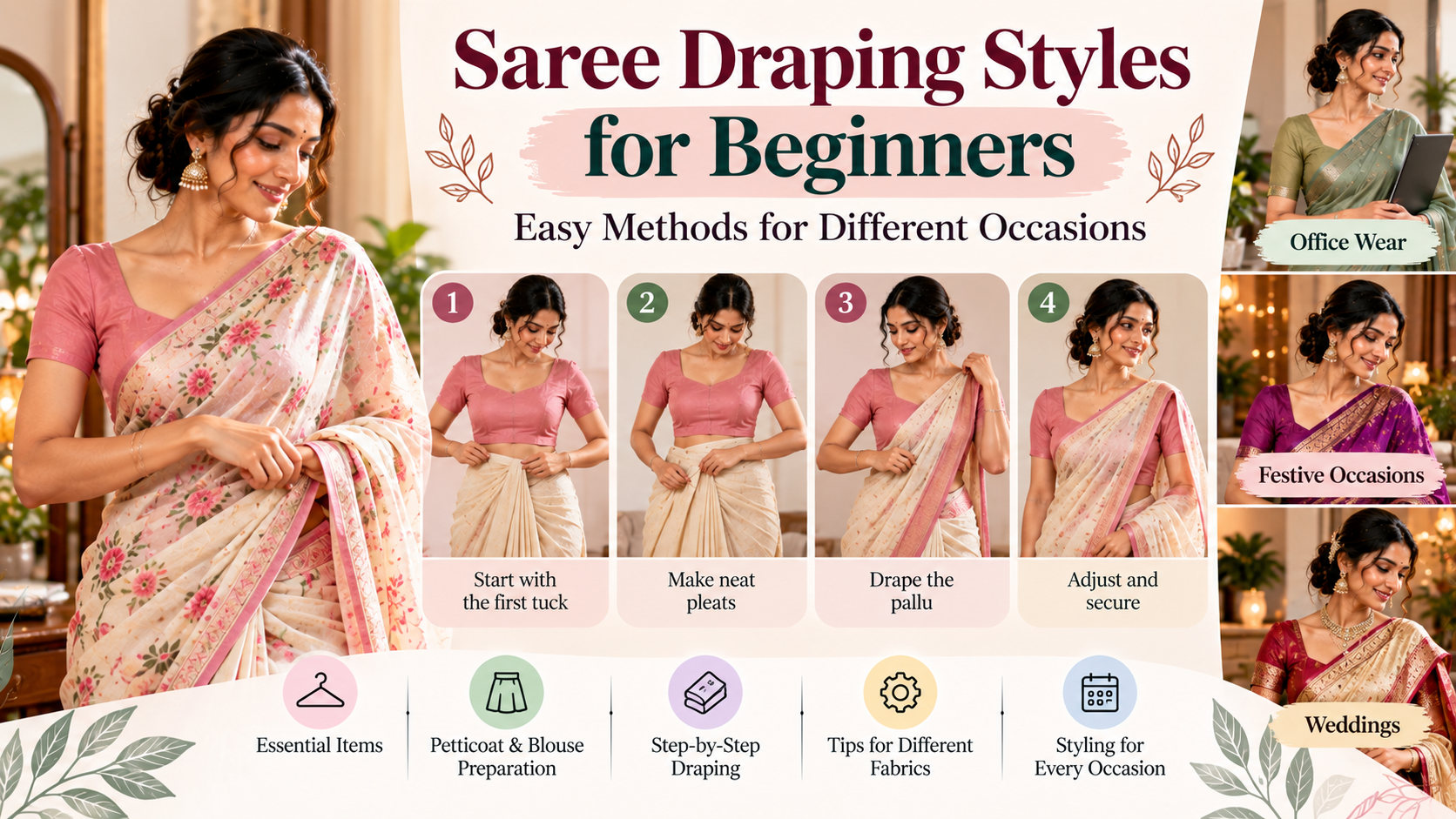
Learning to wear a saree can feel challenging at first, especially when you are trying to manage the length of the fabric, create neat pleats and keep the pallu in place. The good news is that you do not need to master every draping style at once. Start with a basic drape, practise each step at a comfortable pace and make small adjustments until the saree feels secure.
This guide to saree draping styles for beginners explains how to prepare your outfit, arrange the main pleats, drape the pallu and make practical adjustments for walking and sitting. It also covers simple variations for office wear, casual outings, festivals and weddings.
Sarees differ in length, width, fabric, border design and construction. A lightweight, fluid saree may behave differently from a crisp cotton saree or a heavily embellished silk saree. The steps below describe a common basic drape, but you may need to adapt the tuck, pleats or pallu according to the saree and the style you want to wear.
1. Essential Items to Gather Before You Start
Having your outfit and accessories ready makes the process easier. Before you begin, gather:
Saree: Choose one that is manageable for practice. A lightweight cotton or a fabric with some structure can be easier for learning than a very slippery or heavily embellished saree.
Blouse: Make sure it fits comfortably and allows you to lift your arms and move your shoulders.
Petticoat or suitable underskirt: It should fit securely at the waist and allow you to tuck the saree in without slipping.
Safety pins or saree pins: Use a few suitable pins to secure the waist tuck, pleats or pallu where needed. Handle delicate fabric carefully.
Footwear: Wear the shoes or sandals you plan to use with the saree before deciding the final hem position.
Full-length mirror: A mirror helps you check the front, sides and back of the drape.
Clips, if helpful: Clips can temporarily hold pleats while you arrange them. Remove them when they are no longer needed.
A little time and patience: Your first attempt may take longer. Practising without rushing makes it easier to learn.
2. Prepare the Petticoat, Blouse and Saree
Preparation helps the saree stay in place and makes the final drape more comfortable.
Check the petticoat
Wear the petticoat at the waist position where you want the saree to sit. Fasten it securely, but not so tightly that it becomes uncomfortable when you sit or breathe. The waistband should hold the saree without sliding down during movement.
If you need help choosing one, read Mahavir Cloth Center’s guide on how to choose a saree petticoat.
Check the blouse
Put on the blouse and make sure the hooks, seams and sleeves feel secure. Raise your arms, turn your shoulders and sit briefly to check that the blouse does not pinch or restrict movement. The neckline and sleeve design are a matter of preference, comfort and occasion. For ideas, explore blouse neckline designs for sarees.
Prepare the saree
If the saree is creased, iron or steam it only according to its care instructions. Lay it out and identify the decorative end or pallu, the border and the section you will tuck at the waist. If the saree has a clearly decorated pallu, decide which shoulder you want it to fall over before you begin.
Put on your footwear
Wear the footwear you intend to use for the occasion. This helps you judge how close the saree hem comes to the floor. If you change shoes after draping, you may need to adjust the length.
3. How to Wear a Saree: A Basic Step-by-Step Drape
The following method describes a common basic drape with front pleats and a pallu over the shoulder. Draping conventions and personal preferences vary, so use it as a starting point rather than a rule for every saree.
Step 1: Find the inner end
Hold the plain or inner end of the saree, rather than starting with the decorative pallu. Stand straight with the fabric behind or beside you, depending on what feels easiest to manage.
Step 2: Make the first tuck
Starting near your waist, tuck a short section of the inner end into the petticoat. Continue wrapping the saree around your waist, keeping the top edge roughly level. Avoid pulling it so tightly that you cannot move comfortably.
Step 3: Complete the first wrap
Bring the fabric around your body until it returns toward the front. Keep the lower edge at a consistent height and check that the saree is not twisted. Tuck the fabric securely into the waistband as you go, leaving the pallu section free.
Step 4: Check the hem
Look at the saree from the front and side. The hem should be high enough that you can walk without stepping on it, but not so high that it looks unintentionally short. Your footwear affects the final length, so check it while wearing the shoes you selected.
Step 5: Create the front pleats
Gather a section of fabric at the front and make several folds of similar width. Smooth each fold with your fingers so the edges line up. Keep the top edges together and adjust the number and width of pleats to suit the fabric and the amount of fabric available.
Step 6: Align and tuck the pleats
Hold the pleats together, check that their lower edges are even, and place them neatly at the front waist. Tuck them into the petticoat so they sit comfortably and point downward. Make sure the pleats do not pull to one side when you take a step.
Step 7: Bring the remaining fabric around
Bring the remaining saree around your body toward the pallu end. Smooth the fabric over the hip and check that the border follows a neat line. The amount of fabric left for the pallu depends on the saree’s length and the size of your pleats.
Step 8: Drape the pallu over your shoulder
Bring the decorative end over your chosen shoulder. Adjust the length so it falls where you want it to. You can leave it loose for a flowing look or make pallu pleats for a more structured finish.
Step 9: Secure the pallu if needed
If the fabric slips or you want a more fixed arrangement, use a suitable pin near the shoulder. Pin through a secure section of fabric without pulling delicate threads or embellishments. The pin should hold the drape without being uncomfortable.
Step 10: Do a movement check
Walk a few steps, sit down and stand up again. Check the waist tuck, front pleats, hem and pallu. Make small adjustments before adding jewellery or other accessories.
4. How to Make Neat Saree Pleats
Pleats can look complicated when you first try them, but they become easier with practice. Consistency matters more than making every fold perfectly on the first attempt.
Use a consistent fold width
Hold the fabric at the top edge and fold it back and forth in a regular pattern. The pleats do not need to be extremely narrow; choose a width that suits the saree and your comfort. Wider pleats may be easier to handle with some fabrics, while others look better with narrower folds.
Smooth each fold
Run your fingers down each fold to remove twists and bumps. Keep the top edges aligned as you work. If a fold slips out of place, open that section and make it again instead of trying to hide a twisted pleat.
Keep the pleats together
Once you have formed the pleats, hold them firmly at the top. A temporary clip can help while you align the lower edges. Before tucking them in, check that the border, if present, runs neatly along the bottom of the pleats.
Adjust the number of pleats to the fabric
Not every saree needs the same number of pleats. A stiff fabric may form fewer, more structured folds, while a fluid fabric may create more folds with less bulk. The goal is a comfortable, balanced front rather than a fixed number.
5. How to Arrange and Secure the Pallu
The pallu is the section that often draws attention, so its arrangement can change the overall look of the saree.
A simple open pallu
For an open pallu, bring the decorative end over the shoulder and let it fall naturally. Smooth it so the border is visible and the fabric does not twist. This option can be relatively quick, though fluid fabrics may need a pin to stay in place.
A pleated pallu
To make a pleated pallu, fold the fabric lengthwise into even folds, keeping the decorative edge aligned. Hold the pleats together, place them over the shoulder and adjust the length. A discreet pin can help secure the pleats if the fabric and design allow it.
Choosing the pallu length
A longer pallu may create a flowing look but can be harder to manage when walking or working. A shorter, securely arranged pallu may be more practical for busy days. Choose a length that suits the occasion and does not get caught under your arm or drag against surfaces.
6. Adjust the Drape for Walking, Sitting and Comfort
A saree should allow you to move naturally. Before leaving home, test the drape rather than judging it only while standing in front of a mirror.
Walking
Take several normal steps and turn in both directions. If the hem catches under your feet, adjust the length or tuck. Check that the pleats allow a comfortable stride and that the pallu does not fall forward unexpectedly.
Sitting
Sit on a chair and stand up again. The waist tuck should remain secure without pulling uncomfortably. If the saree becomes tight across the knees or hips, loosen and rearrange the drape so there is enough room to move.
Using stairs
Try a few steps if your day will involve stairs. Keep the hem clear of your feet and hold the fabric lightly if necessary. Avoid making the drape so tight that climbing becomes difficult.
Staying comfortable for several hours
Make sure the petticoat waistband and blouse are comfortable. Pins should not poke your skin, and no section of the saree should pull sharply when you move. A secure drape should feel stable without restricting your movement.
For more guidance on choosing a saree that suits comfort and personal preferences, read how to choose a saree based on body type, height and comfort.
7. Easy Saree Draping Variations for Different Occasions
You do not need to learn a completely new drape for every event. Small changes to the pallu, pleats, blouse and accessories can adapt a basic drape to different settings.
Office wear
For work, prioritise a secure drape that stays in place while walking, sitting and moving between tasks. Neat front pleats and a pallu secured at the shoulder can help reduce the need for adjustments. Choose accessories that do not interfere with movement.
Casual outings
For casual wear, you may prefer a softer, less structured look. Keep the waist tuck secure but allow the pallu to fall naturally if the fabric permits. Choose comfortable footwear and avoid a hem that drags on the ground.
Festivals
For festivals, the saree’s border and pallu may be key design features. Take time to align the border and make the pleats neat. You can add jewellery or a more decorative blouse while keeping the basic drape secure.
Weddings and formal occasions
For a wedding or formal event, a pleated pallu or carefully arranged border can create a more structured appearance. If the saree is heavy or embellished, practise the drape before the event and use pins carefully. Make sure the outfit remains comfortable enough for sitting, walking and standing for long periods.
A note on regional and traditional drapes
There are many regional and community-specific saree draping styles, and the basic method described in this guide is only one common approach. If you want to learn a specific traditional style, follow instructions intended for that drape rather than assuming the same tuck and pleats apply to every saree.
8. Tips for Different Saree Fabrics
Fabric changes how easily a saree folds, holds pleats and stays in place. Take a moment to understand the fabric before choosing your draping approach.
Cotton sarees
Cotton can offer enough structure to help beginners form defined pleats, although the feel depends on the weave and finish. Some cotton sarees crease easily. Smooth the pleats carefully and iron the saree only according to its care instructions.
Silk sarees
Silk sarees vary in weight, texture and stiffness. Some hold pleats well, while others require careful handling. If the saree is valuable or delicate, avoid excessive pinning and practise with a similar fabric first.
Chiffon and georgette
These fabrics often drape fluidly and may slip more easily than a crisp cotton. Form pleats on a flat surface if that helps, hold the folds firmly and use suitable pins where appropriate. Avoid pulling the fabric sharply, as delicate material may snag or stretch.
Linen and textured fabrics
Textured fabrics may feel more structured, but they can also crease. Smooth each fold and check that the border lines up as you tuck the pleats. Follow the care label when ironing.
Heavily embellished sarees
Embroidery, beads, sequins or metallic-looking details can add weight and may catch on pins or other fabric. Handle the saree gently, avoid placing pins through delicate embellishments and check whether professional care is recommended.
9. Common Saree Draping Mistakes and How to Fix Them
The saree is too long or drags on the floor
Why it happens: The hem was set before putting on the intended footwear, or the tuck has loosened.
How to fix it: Wear your chosen shoes and adjust the initial wrap or tuck so the hem clears your feet. Walk a few steps to confirm the length.
The front pleats look uneven
Why it happens: The folds have different widths, the fabric is twisted or the lower edges were not aligned.
How to fix it: Open the pleats and start again. Fold the fabric on a flat surface if helpful, smooth each fold and hold the top edges together before tucking.
The pleats pull to one side
Why it happens: The pleats were tucked at an angle or the fabric around the waist is uneven.
How to fix it: Untuck the pleats, straighten the top edge and reposition them at the front. Check the drape from the side before securing it.
The pallu keeps slipping
Why it happens: The fabric is fluid, the shoulder arrangement is too loose or the pallu is carrying too much weight.
How to fix it: Adjust the pallu length, arrange the folds more securely or use a suitable pin through a stable section of fabric. Avoid pinning through fragile embroidery.
The saree feels too tight
Why it happens: The waist tuck is too firm or the pleats leave too little room for movement.
How to fix it: Loosen and rearrange the tuck. Sit down and take a few steps to confirm that you can move comfortably.
The border twists or looks uneven
Why it happens: The saree was wrapped with a twist or the edge was not kept level.
How to fix it: Smooth the fabric as you wrap and check the border in the mirror before making the pleats. If necessary, adjust the initial tuck instead of trying to correct the twist at the end.
10. Keeping Pleats Secure Throughout the Day
A few practical habits can help your saree stay in place without making it uncomfortable.
Start with a secure base: The petticoat should fit properly and stay in place as you move.
Use pins selectively: Secure the pleats or pallu where necessary, but avoid excessive pinning that could damage the fabric.
Check before leaving: Walk, sit and stand to test the drape.
Carry a spare pin: A spare saree pin can be useful if a tuck loosens during the day.
Be careful with delicate fabrics: Pins can snag fine or embellished material, so choose their placement carefully.
Make small adjustments early: If the pleats begin to loosen, fix them when convenient rather than waiting until the drape becomes difficult to manage.
If the saree is very slippery or heavy, it may take a different securing method from a lightweight cotton saree. The aim is a stable drape that does not pull on the fabric or your body.
11. Choosing Footwear and Accessories
Footwear and accessories complete the outfit, but they can also affect how comfortably you wear the saree.
Footwear
Choose shoes or sandals that suit the occasion and allow you to walk confidently. Put them on before setting the hem length. If you will be walking a lot, prioritise comfort and stability.
Jewellery
Choose jewellery that complements the saree’s design and feels comfortable for the time you will wear it. For a saree with a detailed border or pallu, simpler jewellery may help balance the look. For a minimal saree, you may choose a more noticeable accessory.
Bags and practical items
For work or travel, use a bag that suits your routine. You may wish to carry a spare pin, tissues and any small items you need during the day. Keep the pallu and loose fabric clear of bag straps so they do not become caught.
Hair and final checks
Style your hair in a way that feels secure and comfortable with the pallu. Before leaving, check that pins are secure, the border is visible as intended and the saree hem is not caught under your footwear.
12. Quick Checklist Before You Leave
Use this short checklist after draping:
Petticoat and blouse feel secure and comfortable.
Saree hem clears the floor and does not catch underfoot.
Front pleats are aligned and tucked securely.
Border is straight and the fabric is not twisted.
Pallu is arranged at the preferred length and secured if needed.
You can walk, sit, stand and use stairs comfortably.
Pins are secure and not poking your skin.
Footwear and accessories suit the occasion.
Saree and blouse are clean and ready for the day.
A spare pin is packed if you think you may need one.
13. Frequently Asked Questions
What is the easiest saree draping style for beginners?
A basic drape with a waist tuck, front pleats and a pallu over one shoulder is a useful starting point. Practise with a manageable fabric and adjust the steps to suit the saree’s length, width and texture.
How long does it take to learn how to wear a saree?
It varies from person to person. Your first attempt may take some time, but repeating the same steps can make the process faster. Practise when you are not in a hurry and try the full outfit before wearing it to an important event.
Which saree fabric is easiest for beginners?
A fabric with some structure, such as many cotton sarees, may be easier for some beginners because it can help the pleats stay defined. However, cotton weaves vary, and personal preference matters. Very slippery or heavily embellished fabrics may require more practice.
How many pleats should a beginner make?
There is no fixed number. The number and width depend on the saree, the amount of fabric available and the look you want. Aim for folds of similar width that sit comfortably and allow you to walk.
How do I stop my pallu from slipping?
Arrange the pallu so it sits securely on the shoulder, adjust its length and use a suitable pin if needed. Handle delicate fabrics carefully and avoid pinning through fragile embellishments.
Should I wear footwear before draping the saree?
Yes, it is helpful to wear the footwear you intend to use before setting the hem length. This helps you avoid making the saree too long or too short.
Can I use safety pins on every saree?
Not necessarily. Pins may snag or damage delicate, sheer or embellished fabrics. Check the material and use pins only where appropriate. For valuable or fragile sarees, seek fabric-specific advice.
How can I sit comfortably while wearing a saree?
Avoid making the waist tuck too tight, and ensure the pleats leave enough room for movement. Practise sitting down and standing up before leaving so you can adjust any pulling or tightness.
Is the same draping method suitable for every saree?
No. Saree length, width, fabric, border and traditional draping style can all affect the method. The basic drape in this guide is a starting point; some sarees and regional styles need different techniques.
Where can I learn more before buying a saree?
For help comparing styles and practical considerations, read the Mahavir Cloth Center saree buying guide. You can also explore guidance on choosing a saree for body type, height and comfort.
Conclusion
Learning to drape a saree becomes easier when you break the process into manageable steps: prepare the outfit, make a secure first tuck, arrange the pleats, position the pallu and test your movement. With practice, you can adapt the basic drape for work, casual outings, festivals and weddings.
Remember that every saree behaves differently, so adjust the method to suit its fabric and construction. Choose a comfortable blouse and footwear, secure the drape without damaging the fabric, and give yourself time to practise. Explore saree styles and helpful buying resources at Mahavir Cloth Center as you build confidence in your saree styling.
