
Blog
Silk Saree vs Silk Blend Saree: Differences, Price, Quality and How to Choose

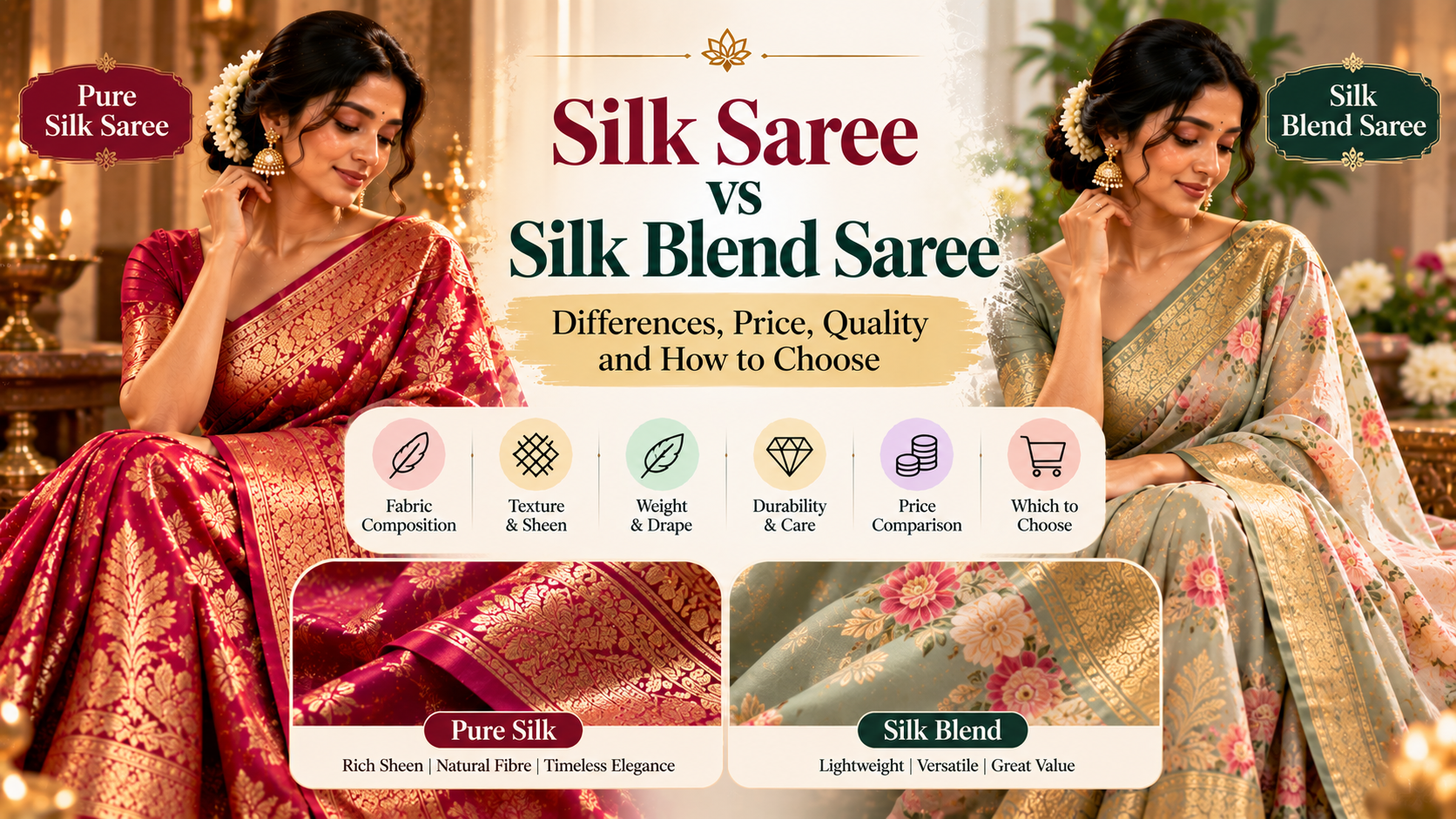
You have found two sarees you love. Both shimmer in the light, both have a beautiful zari border, and both are described as “silk”. Then you notice one label says pure silk and the other says silk blend, and the prices are noticeably different. Which one is worth buying?
The silk saree vs silk blend saree decision is common, and the answer is not always “go for pure silk”. Each has real strengths. The right choice depends on how you plan to wear the saree, how much care you can give it, your budget and what the fabric is actually made of. This guide explains the differences clearly so you can buy with confidence.
What is a pure silk saree?
A pure silk saree is woven from natural silk fibre produced by silkworms. Common types used in Indian sarees include mulberry silk and non-mulberry silks such as tussar, eri and muga, each with its own texture and sheen.
Pure silk sarees are known for:
- A natural, soft lustre that shifts with light
- A smooth, rich hand-feel
- Good structure that holds pleats and borders well
- Breathability, as with many natural fibres
“Pure silk” usually refers to the main fabric. The border, zari, blouse piece or other details may use different materials, so it is worth reading the full description.
What is a silk blend saree?
A silk blend saree combines silk with one or more other fibres. Common blends include:
- Silk and cotton (often called cotton silk)
- Silk and viscose
- Silk and polyester
- Silk with other natural or synthetic fibres
The proportion of silk varies widely from one saree to another. Some blends contain a high share of silk; others contain only a small amount. This is why two sarees both labelled “silk blend” can look and feel quite different.
A silk blend is not the same as art silk. Art silk generally refers to manufactured silk-like fibres and may contain no natural silk at all. For that comparison, see our guide to pure silk vs art silk sarees.
Key differences between pure silk and silk blend sarees
Fibre composition
Pure silk is made mainly from natural silk fibre. A silk blend mixes silk with other fibres, and the exact composition depends on the product.
Texture
Pure silk typically feels smooth and slightly dry to the touch. Silk blends vary: cotton silk may feel crisper, while silk-viscose or silk-polyester blends may feel smoother or more slippery.
Sheen
Pure silk usually has a soft, natural lustre. Blends may have a softer matte sheen (with cotton) or a brighter, more uniform shine (with some synthetics).
Weight
Pure silk sarees range from light to heavy depending on the weave. Many silk blends are lighter, though heavy blends with dense zari also exist.
Drape
Pure silk often holds a structured, defined drape. Blends can drape more softly or more crisply, depending on the other fibres.
Durability
With proper care, a well-made pure silk saree can last a long time, though it can be sensitive to moisture, sunlight and pests. Some blends resist creasing or everyday wear better; others may pill or lose sheen over time. Quality of weaving and finishing matters as much as the fibre.
Maintenance
Pure silk sarees often need dry cleaning or very gentle handling. Some silk blends are easier to maintain, but care still depends on the specific fibres and label.
Price
Pure silk sarees generally cost more than silk blends of a similar design, because of fibre cost, weaving and finishing. But price varies with weave, zari, design complexity and seller, so price alone cannot confirm fibre content.
Comparison table
These are general tendencies. Individual sarees vary by fibre proportion, weave and finishing.
| Feature | Pure silk saree | Silk blend saree |
| Fibre | Mainly natural silk | Silk mixed with cotton, viscose, polyester or others |
| Texture | Smooth, rich, slightly dry | Varies: crisp, soft or smooth |
| Sheen | Soft, natural lustre | Soft matte to bright, depending on blend |
| Weight | Light to heavy | Often lighter; varies |
| Drape | Structured, defined | Soft to crisp, depending on blend |
| Durability | Long-lasting with good care | Varies; some resist creasing better |
| Maintenance | Usually dry clean or gentle care | Varies by fibre; check label |
| Relative price | Generally higher | Generally lower; varies widely |
How to identify pure silk without unreliable home tests
Read the label carefully
Look for clear wording such as “pure mulberry silk”, “pure tussar silk” or “silk blend (silk/cotton)”. Vague phrases such as “silk feel” or “silky finish” describe appearance, not fibre content.
Check for Silk Mark documentation
The Silk Mark is a quality-assurance label for natural silk products, run under India’s Central Silk Board through the Silk Mark Organisation of India. If a saree carries a Silk Mark label, check the details on the tag. It is a useful indicator, but not every genuine silk saree carries one, so absence does not automatically mean the saree is not silk.
Ask the seller for specifics
A reliable seller should be able to tell you:
- The fibre content of the body, border and blouse piece
- The silk proportion, if it is a blend
- The type of zari used
- Whether the saree is handloom or powerloom
- Care instructions
Inspect the fabric
Check for even weaving, consistent texture, secure zari and clean finishing. Our guide on how to identify a good-quality saree walks through these checks step by step.
Avoid destructive tests
Burn tests and similar checks can damage the saree and are not reliable for blends. Never test a saree you have not bought.
Which should you choose?
Weddings
Many brides and close family members choose pure silk for its richness and traditional value. Silk blends can be a practical choice for guests, for multiple functions, or for warm-weather ceremonies where lighter fabric feels more comfortable.
Festivals
Both work well. Pure silk suits major festivals and pujas; silk blends offer festive sheen with easier care for frequent wear.
Gifting
Pure silk is a popular choice for significant gifts. A good-quality silk blend can be a thoughtful option when the recipient prefers lighter, easier-care sarees, or when gifting several people. Describe the fabric accurately to the recipient.
Regular wear
Silk blends, especially cotton silk, are often more practical for office functions and regular use. Lightweight pure silks can also work if you are comfortable with their care.
Silk saree buying checklist
- Fibre content clearly stated (pure silk or blend with proportions)
- Silk Mark or other labels checked, where available
- Seller has confirmed fibre, zari and weave details
- Weave and texture inspected for consistency
- Zari and border checked for breaks or tarnish
- Weight and drape suit the occasion
- Care requirements understood
- Price compared with sarees of similar fibre and design
- Invoice and product details saved
- Return and exchange policy confirmed
For a broader look at fabrics, styles and silk saree price factors, see our complete saree buying guide.
Fabric care tips
Pure silk
- Dry cleaning is commonly recommended, especially for zari-heavy sarees.
- Iron on low heat, on the reverse side.
- Store wrapped in cotton or muslin, away from damp and direct sunlight.
- Refold periodically to avoid weakening at fold lines.
Silk blends
- Follow the care label; some blends allow gentle hand washing.
- Use cold water and mild detergent if hand washing is allowed.
- Avoid wringing and dry in shade.
- Iron on a setting suited to the most delicate fibre in the blend.
For detailed advice, read our guide on how to wash and store silk sarees.
Frequently asked questions
What is the difference between a silk saree and a silk blend saree?
A pure silk saree is made mainly from natural silk fibre. A silk blend saree mixes silk with other fibres such as cotton, viscose or polyester.
Is a silk blend saree good quality?
It can be. Quality depends on the fibre proportion, weave, finishing and craftsmanship, not only on whether the saree is pure silk.
How can I identify pure silk?
Read the fibre label, check for Silk Mark details where available and ask the seller for specifics. Home tests are not reliable proof.
Why is pure silk more expensive than a silk blend?
Natural silk fibre generally costs more, and weave, zari and design complexity also add to the price.
Can silk blend sarees be washed at home?
Some can, but it depends on the fibres. Always follow the care label.
Which is better for a wedding, pure silk or silk blend?
Pure silk is a popular choice for brides and close family. Silk blends can suit guests, multiple functions or warm weather.
Does every pure silk saree have a Silk Mark?
No. The Silk Mark is voluntary, so not every genuine silk saree carries it.
Conclusion
The silk saree vs silk blend saree choice comes down to what you need. Pure silk offers natural lustre, structure and traditional value, while silk blends can offer lighter weight, easier care and good value. Read labels carefully, check Silk Mark details where available, ask clear questions and choose based on your budget, occasion and comfort.
Explore silk and silk blend sarees at Mahavir Cloth Center and find the one that suits your next occasion.
