
Blog
Bridal Saree Buying Checklist: Designs, Fabrics, Budget and Wedding-Day Comfort

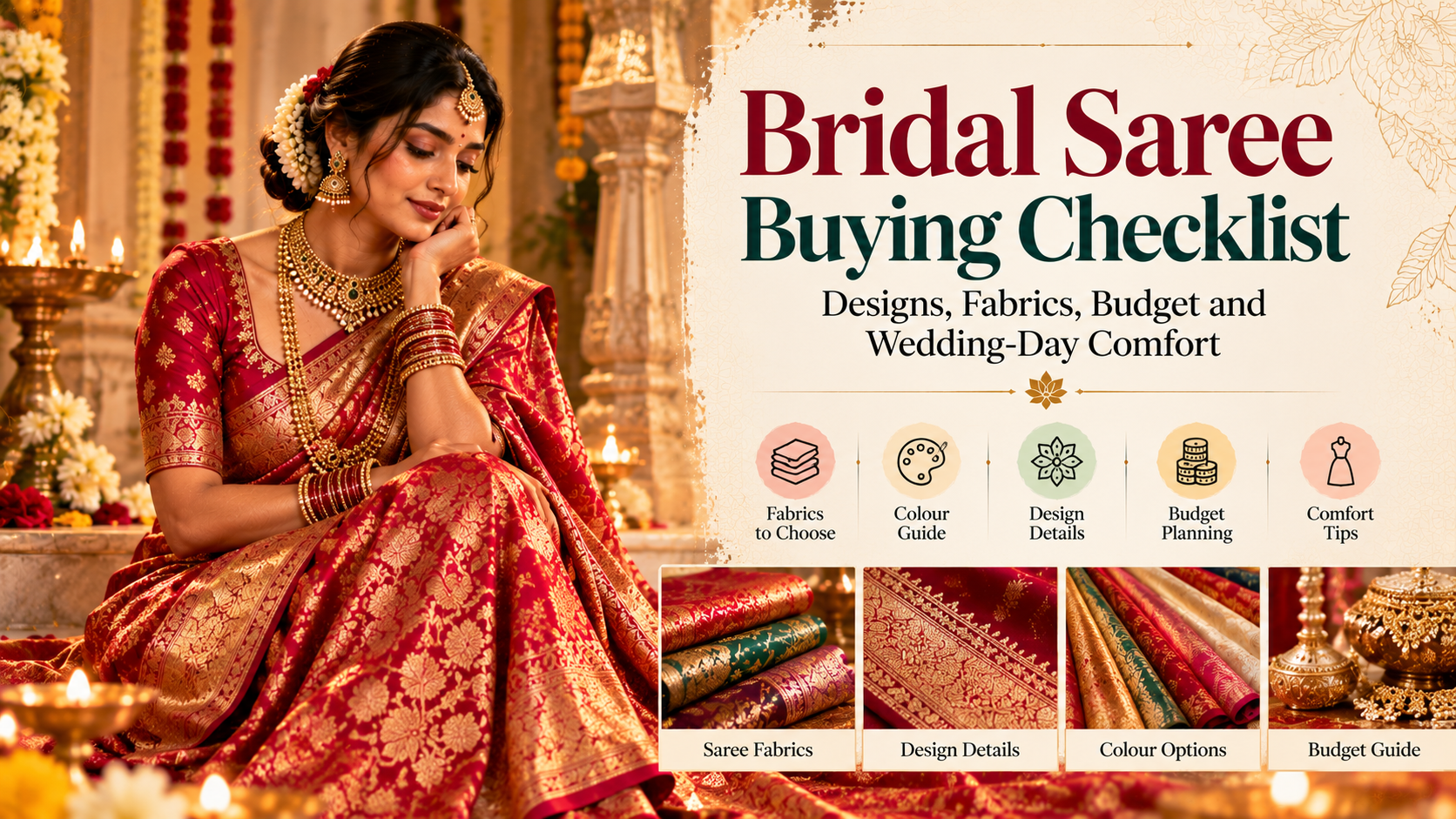
A bridal saree is often the most carefully chosen garment a woman buys. It will be photographed from every angle, worn through long rituals and, for many families, kept for years afterwards. It also has to work on the day itself: through hours of standing, sitting, walking, heat and emotion.
That combination of meaning and practicality is what makes the decision feel heavy. This guide breaks it into clear steps, from the questions to answer before you shop to the details to inspect at the counter, so you can choose a bridal saree that looks right and feels comfortable from the first ritual to the last photograph.
Questions to answer before you shop
Write down your answers before visiting any store or browsing online. They will save time and help family members stay aligned.
Which function is this saree for?
Many weddings have several ceremonies. The main wedding ritual, the reception, the haldi, mehendi, sangeet and post-wedding functions may each call for a different saree. Decide which ceremony you are shopping for first, since the main ceremony saree often sets the tone for the others.
What is the budget?
Set a range for the saree itself, then a separate amount for blouse stitching, fall and pico, alterations and any accessories bought to match. Agreeing on this early avoids pressure later.
What is the venue?
An outdoor daytime venue, a temple, a banquet hall and a home ceremony each affect comfort. Consider temperature, ventilation, floor seating and how much walking you will do.
What season is the wedding?
Heavy silks and dense embellishment can feel warm in summer or humid weather. Lighter weaves may suit warmer months, while richer fabrics may feel comfortable in cooler weather.
What do you like?
Your preference matters most. Look at saved images, family photographs and sarees you have worn before. Note colours, borders and styles you are drawn to, and those you are sure you do not want.
Bridal saree fabrics and how to compare them
Fabric decides how the saree drapes, how heavy it feels and how it photographs. Traditional bridal choices vary widely across regions and communities, so treat the table below as a general comparison rather than a rule.
| Fabric | Look and feel | Weight | Comfort considerations | Care |
| Pure silk weaves (e.g. Kanjivaram, Banarasi, Paithani) | Rich, structured, traditional | Medium to heavy | Can feel warm; holds pleats well | Usually dry clean; careful storage |
| Silk blends | Silk-like sheen, often lighter | Light to medium | Often easier for long wear | Depends on blend |
| Art silk | Silk-like shine, wide design range | Light to medium | Varies by fibre; check breathability | Varies; follow label |
| Georgette (embellished) | Fluid drape, works well with embroidery | Light, heavier with work | Comfortable movement; embellishment adds weight | Often dry clean |
| Organza and tissue | Sheer, crisp, luminous | Light | Lightweight but may crease | Gentle handling |
| Velvet or velvet-border sarees | Rich, deep colour | Heavy | Better for cooler weather | Dry clean |
If you are deciding between traditional silk weaves, our comparison of Chanderi vs Banarasi vs Kanjivaram explains how these differ.
Pure silk or alternatives?
Many brides choose pure silk for the main ceremony because of its traditional value. Others choose blends or embellished georgettes for lighter weight, a contemporary look or budget reasons. Ask the seller for the exact fibre content, and read the label carefully rather than relying on appearance.
Choosing a colour
There is no single correct bridal colour. Red, maroon and gold are traditional in many communities, but brides also wear ivory, cream, green, yellow, pink, orange, purple, blue and many other shades, depending on family custom, ceremony and personal taste.
Questions to guide colour choice
- Is there a family or community custom for the main ceremony colour? Ask elders early.
- What colour suits you in natural light? Drape the saree near a window and look at it against your face.
- How will it look in photographs? Very light colours may appear washed out in some lighting; very dark colours may lose detail. Ask to see the saree in different light.
- How does it fit with the décor and the groom’s outfit? Coordination is optional, but some couples like a matching or complementary palette.
- Will you wear different colours for different functions? Lighter, brighter colours often suit daytime functions; richer colours may suit evening ones.
Design details to inspect
Bridal sarees are often richly decorated. Look at each element closely.
Zari
Zari may be real, tested or metallic, depending on the saree. Ask which is used. Check that the zari is evenly woven or stitched and that metallic threads are not broken or snagged.
Embroidery and embellishment
Hand embroidery, zardozi, sequins, stones, mirror work and gota may appear on bridal sarees. Run your hand over embellished areas to check that pieces are secure. Our guide to mirror work, gota patti and zari explains how these embellishments differ.
Motifs
Traditional motifs such as peacocks, elephants, temple borders, paisleys and florals carry different associations in different regions. Choose motifs you like; ask the seller if you want to know more about their background.
Borders and pallu
The border frames the saree and the pallu is the most visible part in photographs. Check that the border is even along its length and that the pallu design is complete and well finished.
Blouse piece
Check whether a blouse piece is included, whether it matches the saree and whether it is long enough for the blouse design you want.
Weight, comfort, drape and movement
A bridal saree is worn for many hours, often through rituals that involve sitting on the floor, standing for long periods and walking in a crowd.
Weight
Lift the saree and note how heavy it feels. Ask yourself whether you can wear it for the full duration of the ceremony. Remember that the blouse, jewellery and dupatta (if worn) add weight.
Drape
Ask the seller to drape the saree on you or a mannequin. Notice how the pleats fall, whether the pallu sits comfortably and whether the saree bunches at the waist.
Movement
Walk a few steps, sit down and stand up in a draped saree if possible. Heavy sarees can restrict movement; very slippery sarees may need more pins.
Breathability
In warm weather, consider fabrics and linings that allow airflow. Heavy embellishment on the back and shoulders can feel warm.
Comfort checklist
- Can I sit cross-legged in it?
- Can I walk confidently with the pleats?
- Will the pallu stay in place with pins?
- Is the fabric scratchy against the skin?
Matching the saree with blouse, jewellery, footwear and accessories
Blouse
The blouse affects comfort as much as appearance. Allow time for at least one trial fitting. Choose a neckline and sleeves that suit your jewellery and the ceremony, and make sure you can raise your arms comfortably.
Jewellery
Plan jewellery alongside the saree. A heavily embellished saree may look balanced with fewer, larger pieces; a simpler saree may allow layered jewellery. Check that the blouse neckline leaves room for necklaces.
Footwear
Wear the footwear you plan to use when deciding the drape length. Comfortable footwear matters for long ceremonies.
Accessories
Consider the veil or dupatta, hair accessories, bangles and a waist belt (kamarbandh), and how each sits with the saree. Plan for safety pins, a small emergency kit and someone who can help with re-draping.
For a broader view of everything to buy for a wedding, see our complete Indian wedding shopping checklist.
Bridal saree pre-purchase checklist
Use this list when shopping:
Planning
- Function and ceremony identified
- Budget range agreed, including extras
- Venue and season considered
- Family customs on colour discussed
- Reference images saved
Fabric and design
- Fibre content confirmed with the seller
- Zari type confirmed
- Embroidery and embellishments checked for security
- Border and pallu inspected along the full length
- Blouse piece included and suitable
Colour and fit
- Colour checked in natural light
- Draped and viewed in a mirror
- Weight tested for comfort
- Movement tested: walking and sitting
Practical
- Care instructions noted
- Fall, pico and blouse stitching time planned
- Return, exchange and alteration policies confirmed
- Receipt and product details kept safely
Common mistakes brides should avoid
- Shopping too late. Blouse stitching and alterations take time.
- Choosing only from photographs. Colour and texture can look different in person.
- Ignoring the weight. A beautiful saree that is too heavy can be tiring by mid-ceremony.
- Overlooking the climate. Dense silk in a hot outdoor venue can be uncomfortable.
- Letting too many opinions decide. Listen to family, but make sure you like the saree.
- Not confirming fabric details. Ask about fibre and zari rather than assuming.
- Skipping a drape trial. A trial reveals comfort and pinning needs before the day.
- Forgetting extras in the budget. Stitching, fall and pico, and accessories add up.
Frequently asked questions
1. How early should I buy my bridal saree? Buy early enough to allow time for blouse stitching, fittings, fall and pico and any alterations. Ask your tailor how long they need.
2. Does a bridal saree have to be red? No. Red is traditional in many communities, but brides wear a wide range of colours depending on custom and preference.
3. Which fabric is most comfortable for a long ceremony? It depends on the weather and the saree. Lighter silks, silk blends and georgette are often easier to wear for long periods than very heavy weaves.
4. How can I check the quality of a bridal saree? Confirm fibre content and zari type, inspect embroidery and borders, check the colour in natural light and drape it before buying.
5. Should I buy a pure silk bridal saree? Many brides do, especially for the main ceremony, but blends and other fabrics can also suit your needs and budget.
6. How do I plan a budget for a bridal saree? Set a range for the saree and a separate amount for stitching, finishing, accessories and care.
7. Can I wear my bridal saree again after the wedding? Yes. Choosing a design that can be restyled with different blouses and jewellery can make it easier to wear again.
Conclusion
Choosing a bridal saree is easier when you take it step by step: answer the planning questions, compare fabrics, choose a colour you love, inspect the details, test the weight and drape, and plan the blouse and accessories together. A traditional saree for women can be a meaningful bridal choice, and contemporary options can be just as beautiful; what matters is that it suits your ceremony, your comfort and your taste.
For a wider overview of fabrics, styles and budgeting, read our complete guide to buying sarees for women. When you are ready to explore, visit Mahavir Cloth Center to browse sarees for your wedding.
