Blog
Navratri Outfits for Kids: Traditional Dresses, Lehenga Choli and Festive Looks

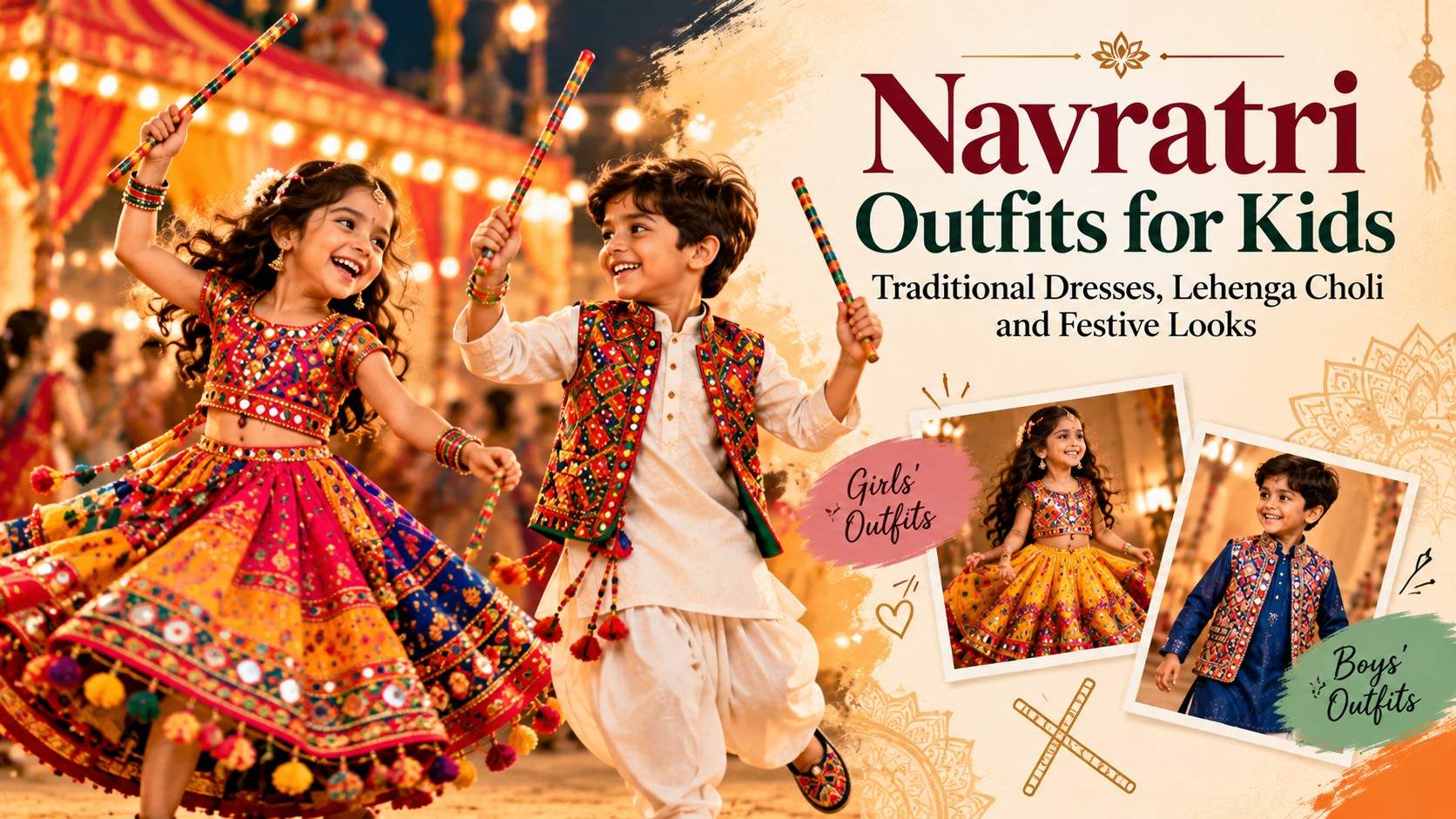
Children love Navratri for the music, the dancing and the chance to dress up. Parents love it too, until the outfit starts to itch, the dupatta trails on the floor or a small hand tugs at a stiff waistband in the middle of Garba. The best Navratri outfits for kids look good in photographs and still let a child run, spin, sit through a puja and visit the washroom without a fuss.
This guide covers outfit ideas for girls and boys, fabrics that suit small bodies, practical details such as closures and length, and ideas for different parts of the festival. If you are planning looks for the whole family, our Navratri Outfit Ideas 2026 pillar page brings everything together.
Navratri Outfits for Kids: Traditional Options for Girls and Boys
For Girls
- Lehenga choli. A kids’ lehenga choli, often called a chaniya choli in Gujarat, is the classic Garba outfit. Choose a lightweight skirt with a moderate flare, since a very heavy lehenga is tiring for a child to wear and dance in.
- Frock or Anarkali dress. A one-piece festive dress is easy to put on and works well for younger girls and for long family gatherings.
- Sharara or palazzo set. A short kurta with flared trousers lets a child move freely and suits girls who prefer trousers to a skirt.
- Kurta with a skirt or dhoti pants. This gives a traditional look with less weight than a full lehenga.
Girls’ festive dresses often come with a dupatta, but for toddlers and younger children, a dupatta is optional. Skip it if it gets in the way.
For Boys
- Kurta pyjama set. A simple, comfortable choice for puja, dancing and photographs.
- Kurta with dhoti pants or a dhoti-style bottom. A festive option that moves easily.
- Nehru jacket or waistcoat over a kurta. This adds a dressed-up feel for puja and photographs and can be taken off for dancing.
- Kediyu. This short, flared top is a traditional Gujarati style, usually worn with a dhoti or churidar, and suits boys for Garba. Ask the seller for the right pairing and fit.
Many of these traditional dresses for kids also work for other festive occasions, so you can wear them again after Navratri.
Choosing Comfortable, Skin-Friendly Fabrics
Children’s skin is usually more sensitive than adults’, and they sweat more when they dance. Fabric matters more than embroidery.
- Cotton and cotton blends are breathable and soft, and they are a safe default.
- Cotton silk and chanderi are light and have a festive sheen, without the weight of heavy silk.
- Soft georgette and crepe move well, though they can feel warm, so check the lining.
- Rayon and muslin are soft but may crease easily.
Check the inside of the garment. Scratchy zari, stiff lace, rough mirror work edges and stiff linings can irritate the skin, especially on the neck, waist and under the arms. Run your hand along the seams and ask whether the lining is soft cotton. If your child has sensitive skin, a cotton lining under any embellished fabric helps. It is also sensible to wash new clothes before wearing them, and to check labels for care instructions.
Age-Appropriate Styling, Closures and Movement
A good outfit should suit your child’s age and let them manage on their own as far as possible.
- Closures. Elastic waists, side zips, front buttons and drawstrings that sit inside are easier than hooks at the back. If your child will need to use the washroom alone, avoid tight, multi-layered or fiddly outfits.
- Length. The hem should clear the floor so that your child does not trip, especially on stairs and in crowds.
- Weight. A skirt with too many layers or heavy embroidery will tire a child quickly.
- Fit. Choose a size that fits now. An outfit that is too tight restricts movement, and one that is too big slips or drags.
- Movement. Ask your child to sit, squat, twirl and raise their arms in the outfit before you buy it.
- Age. Toddlers do better in simple, soft, one-piece or two-piece outfits. Older children can manage more layers and a dupatta, if they want one.
Outfit Ideas for Garba, Dandiya, Puja and Photographs
Garba and Dandiya
Choose light, flared outfits that allow movement, such as a lehenga choli with a light skirt, a sharara set, or a kurta with a flared skirt for girls, and a kurta with dhoti pants or a kediyu for boys. Dandiya involves sticks and quick turns, so avoid long dupattas, trailing fabric and anything that catches easily. Keep a spare dupatta or a clean outfit for the end of the night.
Puja
Think soft and easy. A cotton or chanderi kurta set, a simple frock or a lightweight lehenga in a softer shade works for sitting on the floor. Full-length sleeves and a longer hem give more coverage if your family prefers it.
Family Photographs
Plan photographs for the start of the evening, when the outfits are fresh and your child has energy. Coordinate colours across the family, bring a hairbrush and wet wipes, and let your child change into something more comfortable straight afterward.
Accessories, Footwear and Clothing Care
Accessories
Keep accessories light, soft and secure. Fabric hairbands, small clips, a simple pair of bangles and a light necklace are enough. For toddlers and younger children, avoid small beads, loose stones, tiny mirrors and detachable decorations, which can come off and become a choking hazard. Heavy jewellery is uncomfortable and can catch during dancing. Supervise young children with any jewellery, and remove it if it bothers them.
Footwear
Choose flat, cushioned shoes or sandals with a back strap and a non-slip sole. Some Garba venues ask guests to leave footwear outside or dance barefoot, so check the rules and carry a small bag for shoes and a pair of clean socks. Avoid new, stiff shoes on the night itself. Break them in first.
Clothing Care
- Wash new garments before wearing, as a general precaution, and follow the care label.
- Hand wash or use a gentle cycle for embroidered pieces, and dry in the shade.
- Press embroidered outfits on the reverse side, and keep the iron away from mirrors and beads.
- Check seams, buttons and any decorations before each wear, and fix loose parts.
- Store outfits in a breathable cotton bag, away from damp.
- Carry safety pins, wet wipes and a spare outfit if you will be out for a long time.
Coordinating Children’s Outfits with the Family
You do not need to match exactly. A shared colour palette looks more natural than identical outfits, and it is more comfortable for children, who often have strong opinions about what they wear.
- Pick one or two anchor colours for the family, and let each person wear a different outfit in those shades.
- Match a detail, such as the dupatta, the embroidery or the print, instead of the whole outfit.
- If an adult is wearing a bright suit or a sari, choose a plainer outfit for the child, or the other way round.
- Check the colour for the day. Our Navratri colour guide explains how families follow colours across the nine days, and the sequence varies by year and region.
For adult looks to coordinate with, see our guide to Navratri suits for women and our Navratri saree ideas. Both include tips on dupatta and fabric choices that you can echo in your child’s outfit.
Outfit Types, Occasions and Comfort at a Glance
| Outfit type | Best for | Comfort considerations |
| Lehenga choli | Garba, Dandiya, photographs | Choose a light skirt and soft lining, and check the hem and waistband |
| Frock or Anarkali dress | Puja, family gatherings, toddlers | Easy to wear, but check the length and the lining |
| Sharara or palazzo set | Garba, Dandiya | Good freedom of movement, with a soft waistband |
| Kurta pyjama set | Puja, Dandiya, all-day wear | Simple and breathable, and easy to change |
| Dhoti pants with kurta or kediyu | Garba, festive events | Check the fit at the waist, and secure the dhoti-style bottom |
| Nehru jacket over kurta | Puja, photographs | Remove the jacket for dancing, since it adds warmth |
Frequently Asked Questions
What is the best Navratri outfit for a young girl?
A light lehenga choli, a frock or a sharara set in cotton or cotton silk is a good choice. Pick a soft lining, an easy closure and a hem that clears the floor.
Which fabrics are best for children?
Cotton, cotton blends, cotton silk and soft georgette are comfortable and breathable. Check the inside of the garment for scratchy embroidery or stiff lining.
What should boys wear for Garba and Dandiya?
A kurta pyjama, a kurta with dhoti pants or a kediyu all work. A jacket can be added for puja and photographs and removed for dancing.
How do I keep my child comfortable during a long evening?
Choose breathable fabric, easy closures and flat footwear, and carry a spare outfit, wet wipes and water. Take breaks and let your child change when they are tired.
Should I buy a size up for my child to grow into?
Choose a size that fits comfortably now. A garment that is too large can slip, drag or trip your child, and one that is too tight restricts movement.
Conclusion
The best festive look for a child is one they forget they are wearing. Pick soft, breathable fabric, check the closures and hem, keep accessories light and let your child move before you buy. Add family colour coordination for photographs, and carry a spare outfit for the late hours. With that in place, your child can spend Navratri dancing instead of adjusting.
