
Blog
Best Sarees for Wedding Guests: Fabrics, Colours and Styling Tips

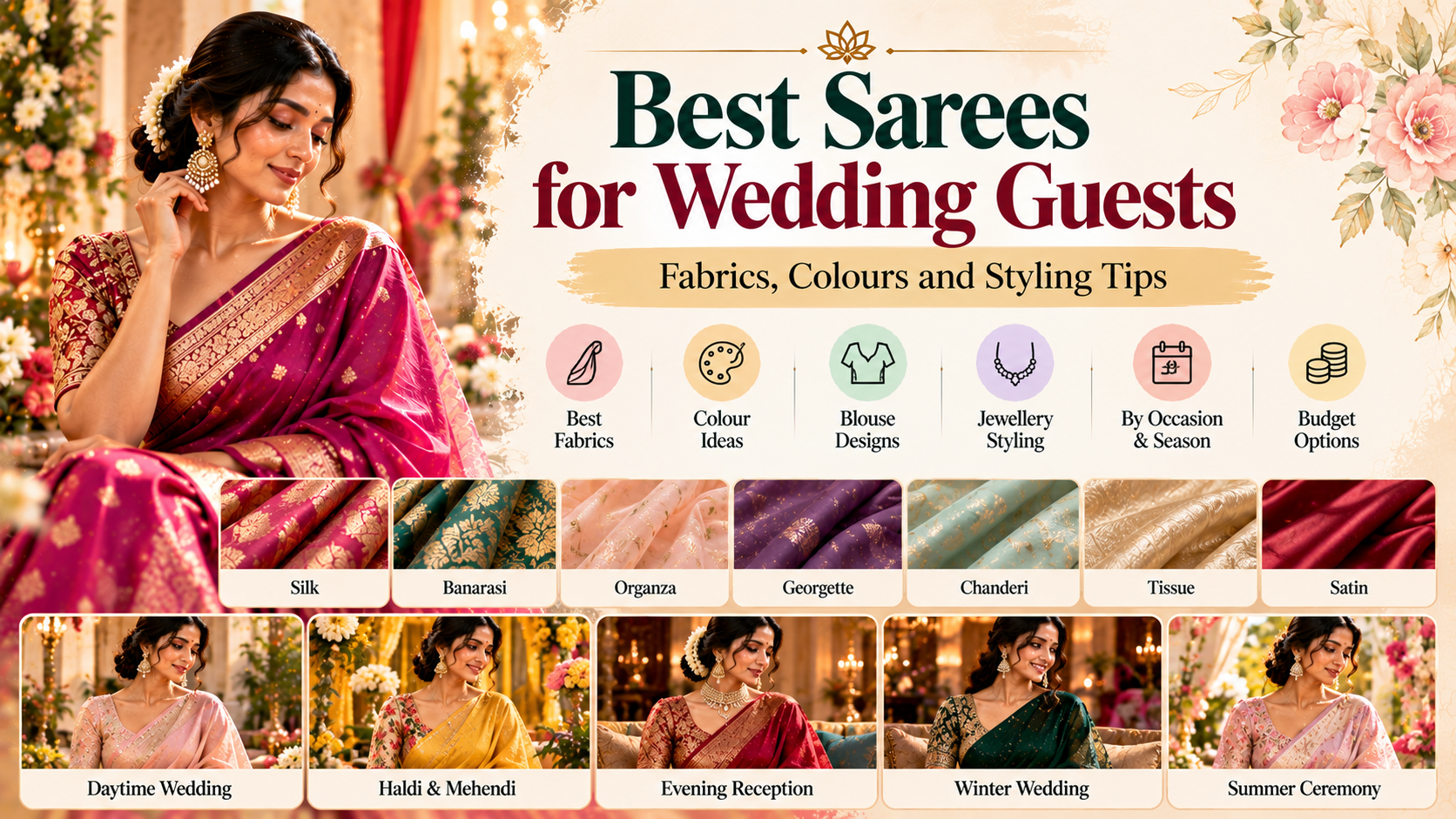
An invitation arrives, and with it the familiar question: what should I wear? Indian weddings often stretch across several functions, from a morning ceremony to an evening reception, sometimes in very different weather. A wedding guest saree has to look festive enough for the celebration, stay comfortable through long rituals and, ideally, not compete with the bride.
This guide covers the best sarees for wedding guests by fabric, time of day and season, along with colour choices, blouse and jewellery ideas, budget options and practical comfort tips. Use it as inspiration; the right choice ultimately depends on the wedding, the dress code and what you enjoy wearing.
Choosing a wedding guest saree by time and season
Daytime weddings
Daytime ceremonies often suit lighter fabrics and brighter or softer colours.
- Good options: Chanderi, cotton silk, light silk, organza, printed or lightly embellished georgette
- Why: these fabrics tend to feel lighter in daylight heat and photograph well in natural light
Evening receptions
A saree for reception wear can lean towards richer fabrics, deeper colours and more shine.
- Good options: silk, Banarasi, satin, embellished georgette or chiffon, tissue fabrics, velvet borders
- Why: evening lighting suits sheen, zari and sequins
Winter weddings
Cooler weather allows heavier fabrics and richer textures.
- Good options: heavy silk, Banarasi brocade, velvet blouses, silk with dense zari
- Why: these fabrics feel comfortable in cooler weather and look rich
Summer ceremonies
Lightweight sarees for weddings make long outdoor functions easier.
- Good options: Chanderi, cotton silk, linen blends, organza, georgette, light silk
- Why: lighter fabrics usually feel more comfortable in heat, though breathability depends on the fibre
Fabrics to consider
Silk
Silk sarees are a classic choice for many sarees for Indian weddings. They have a natural sheen and hold their shape well. Heavier silks can feel warm, so consider the season and venue.
Silk blends
Silk blends combine silk with other fibres such as cotton or viscose. They often offer a festive look with lighter weight. Check the label for the exact fibre mix.
Banarasi
Banarasi sarees are known for brocade weaving and zari motifs. They suit grand ceremonies and receptions. Banarasi sarees are made in several base fabrics, including silk, organza and georgette, so weight and price vary. For a comparison with other traditional weaves, see our guide to Chanderi vs Banarasi vs Kanjivaram.
Chanderi
Chanderi sarees are light, often slightly sheer, with a subtle sheen. Many are woven in cotton-silk blends. They suit daytime ceremonies and warm weather.
Organza
Organza is crisp, sheer and airy, with a soft glow. It suits daytime functions and receptions, especially with embroidery or hand-painted motifs.
Georgette
Georgette drapes softly and moves easily. Embellished georgette sarees work well for sangeet, reception and evening functions. Most georgette is synthetic, which can feel warmer to some people.
Other options
- Kanjivaram: rich silk associated with traditional ceremonies
- Tissue: shimmering, light and festive
- Satin: smooth and glossy for evening wear
- Crepe: fluid and wrinkle-resistant for travel-heavy weddings
Comparison table
These are general tendencies; individual sarees vary by fibre, weave and finishing.
| Fabric | Appearance | Comfort | Suitable occasions |
| Silk | Rich, natural sheen | Structured; can feel warm | Ceremonies, receptions, cooler weather |
| Silk blend | Festive sheen, often lighter | Usually lighter than heavy silk | Daytime and evening functions |
| Banarasi | Brocade, zari motifs | Weight varies by base fabric | Main ceremonies, receptions |
| Chanderi | Light, subtle sheen | Light and airy | Daytime ceremonies, summer weddings |
| Organza | Crisp, sheer, luminous | Light; may crease | Daytime events, receptions |
| Georgette | Fluid, often embellished | Easy to move in; fibre affects warmth | Sangeet, receptions, evening events |
| Tissue | Shimmering, metallic | Light | Receptions, festive evenings |
| Crepe | Smooth, soft drape | Wrinkle-resistant | Destination and travel-heavy weddings |
Choosing colours
By occasion
- Day ceremonies: pastels, bright festive shades, ivory with colourful borders
- Haldi and mehendi: yellows, greens, pinks and oranges are common choices, though not compulsory
- Receptions: jewel tones, metallics, deep shades such as navy, wine and emerald
By dress code
Some families request a colour theme for a function. Follow it where given. If there is no theme, consider the setting and the formality of the event.
By personal preference
Choose colours you feel confident in. Check them in natural light if possible.
Etiquette notes
Customs vary by community. In some families, guests avoid certain colours, such as the bride’s main colour or colours associated with mourning. When unsure, ask the hosts or family.
For pairing ideas, see our guide to saree colour combinations for different occasions.
Wedding saree styling: blouse, jewellery and footwear
Blouse designs
- Brocade or embroidered blouses add richness to plain or light sarees.
- Contrast blouses add a festive touch.
- High necks and boat necks look elegant with statement earrings.
- Sweetheart and V-necks suit pendants and chokers.
- Statement sleeves, such as puff, sheer or bell sleeves, add drama.
For more ideas, see our guide to blouse neckline designs for sarees.
Jewellery
- Traditional: temple, kundan or polki sets for ceremonies
- Statement: a bold choker or oversized earrings for receptions
- Minimal: pearls or delicate gold for daytime functions
Footwear
- Juttis and embellished flats: comfortable for long ceremonies
- Block heels: stable and dressy
- Heels: suitable for receptions if you are comfortable in them
Hair and accessories
- Low buns with flowers suit traditional ceremonies.
- Soft waves suit receptions.
- A potli or embellished clutch completes the look.
Options for different budgets
- Budget-friendly: silk blends, art silk, printed georgette and cotton silk can look festive when paired with a rich blouse and jewellery.
- Mid-range: Chanderi, light silk, organza and embellished georgette.
- Investment: pure silk, handwoven Banarasi or Kanjivaram and heavily embroidered sarees.
Tips for any budget:
- Restyle a saree you already own with a new blouse.
- Choose versatile colours you can wear to several weddings.
- Invest in a statement blouse or jewellery that works with multiple sarees.
Comfort tips for long ceremonies
- Choose the right weight for the season and the length of the function.
- Pin the pallu securely so it stays in place.
- Wear a well-fitted blouse with room to move your arms.
- Choose a comfortable petticoat in breathable fabric.
- Wear comfortable footwear, or carry a spare pair.
- Carry a small kit: safety pins, tissues and a small comb.
- Plan for sitting: some ceremonies involve floor seating, so choose a drape you can sit in comfortably.
Caring for embellished sarees
- Air the saree after the event before storing it.
- Spot-clean gently and avoid rubbing zari or sequins.
- Dry clean heavily embellished or silk sarees as recommended.
- Store flat or loosely folded in cotton or muslin.
- Keep embellished areas protected with tissue between folds.
- Refold periodically to avoid permanent creases.
For more detail, see our guide on how to wash and store silk sarees.
Frequently asked questions
What are the best sarees for wedding guests?
Silk, silk blends, Banarasi, Chanderi, organza and embellished georgette are popular. Choose based on the time of day, season and dress code.
What should I wear to a summer wedding?
Lightweight sarees for weddings, such as Chanderi, cotton silk, organza and light silk, are often more comfortable in heat.
What is a good saree for reception events?
Richer fabrics, deeper colours and sheen, such as silk, Banarasi, satin or embellished georgette, suit evening receptions.
Can I wear black to a wedding?
It depends on the family and community. Some consider it fine for receptions; others avoid it. Check with the hosts if unsure.
How can I look festive on a budget?
Pair an affordable silk blend or georgette saree with a rich blouse and statement jewellery.
How do I stay comfortable in a heavy saree?
Pin the pallu, wear a well-fitted blouse and comfortable petticoat and choose suitable footwear.
Conclusion
The best sarees for wedding guests balance celebration and comfort. Choose lighter fabrics like Chanderi, organza and cotton silk for daytime and summer functions, and richer silks, Banarasi and embellished georgettes for evening and winter events. Respect any dress code, choose colours you feel good in, and complete the look with a thoughtful blouse, jewellery and comfortable footwear.
Have a wedding coming up? Explore sarees for every function at Mahavir Cloth Center and find one that feels just right for the celebration.
