
Blog
How to Choose the Right Blouse Fabric for Different Saree Materials

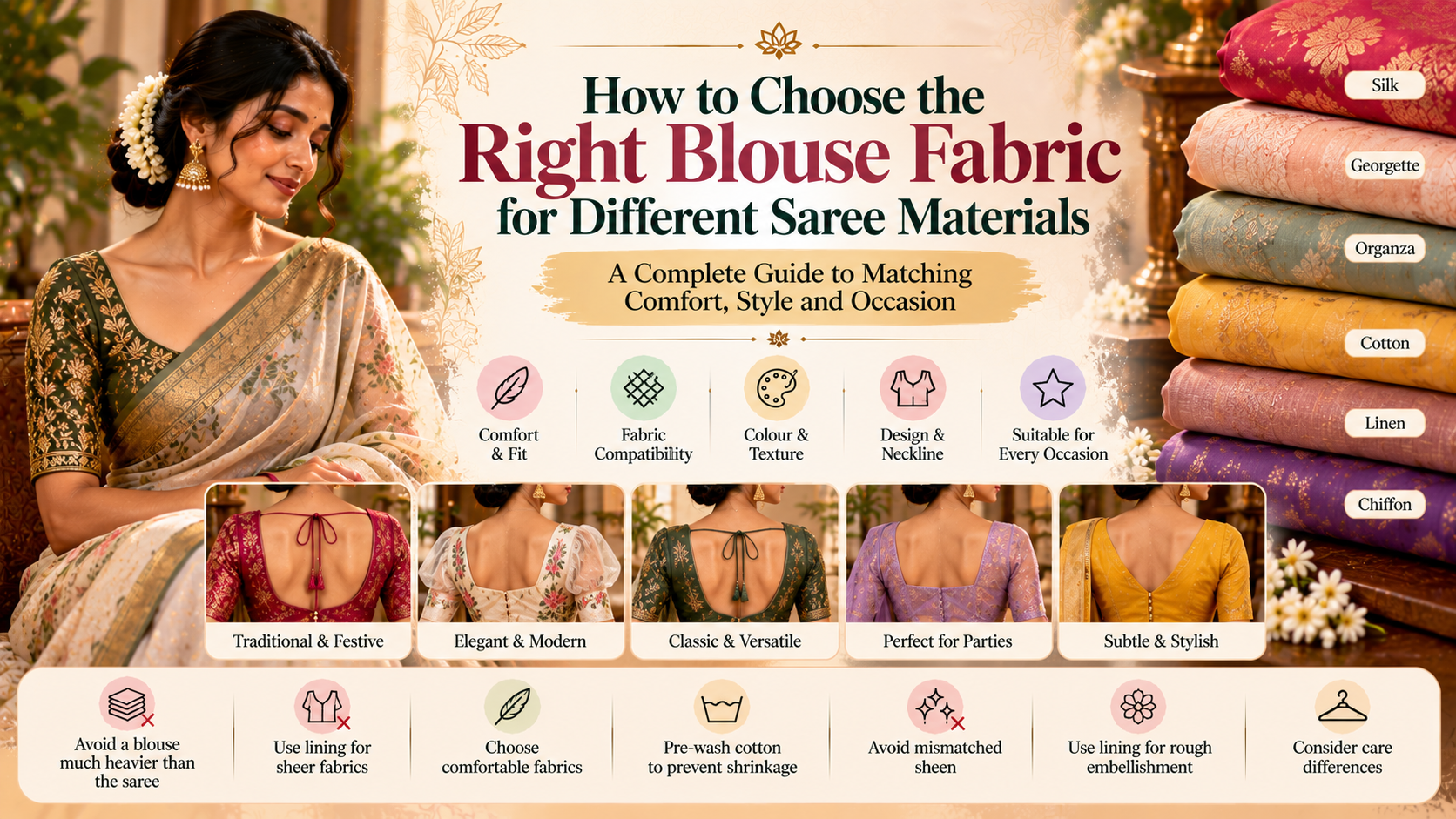
A saree blouse is small, but it carries a lot of weight in the overall look. It sits closest to your skin, holds the shape of the outfit and frames the neckline, sleeves and pallu. The right blouse fabric for a saree can make a simple drape look polished and a festive saree feel comfortable through a long day. The wrong one can make a light saree look heavy, a rich saree look underdressed or an otherwise lovely outfit feel itchy and warm.
There is no single blouse fabric that suits every saree. The right choice depends on the saree’s fabric and construction, the occasion, the weather and what feels comfortable to you. This guide explains how to think about weight, texture, colour, sheen and lining, then offers practical options for silk, cotton, chiffon, georgette, organza, linen and embellished sarees.
How blouse fabric affects comfort, fit and appearance
Comfort
The blouse is worn snugly and often for hours. Breathable fabrics such as cotton and cotton blends usually feel cooler, while synthetic fabrics and heavy brocades can feel warm. Scratchy embellishment, rough zari or stiff lining can also cause discomfort.
Fit
Different fabrics behave differently when stitched:
- Stable fabrics like cotton, raw silk and brocade hold darts and seams neatly.
- Fluid fabrics like georgette and chiffon need lining or careful tailoring to keep their shape.
- Stretch blends can be more forgiving but may lose shape over time.
- Heavy fabrics like velvet need accurate fitting to avoid bulk.
Appearance
The blouse fabric’s weight, texture and sheen affect how it sits next to the saree. A blouse that is much heavier or shinier than the saree can dominate; one that is too plain can make a rich saree look unfinished.
Overall look
The blouse links the saree, jewellery and drape together. Thoughtful fabric choice helps the whole outfit look balanced.
Coordinating weight, texture, colour and sheen
Weight
- Balanced weight: a blouse of similar or slightly heavier weight than the saree usually looks harmonious.
- Light sarees: chiffon and georgette can pair with light blouse fabrics or richer contrast fabrics such as velvet or brocade, depending on the look you want.
- Heavy sarees: heavy silks often pair with silk, raw silk or brocade blouses that can hold their own.
Texture
- Matching texture: a silk blouse with a silk saree, or cotton with cotton, looks cohesive.
- Contrasting texture: a velvet blouse with a chiffon saree, or a brocade blouse with a plain cotton silk saree, creates interest.
Colour
- Matching the body: a seamless look.
- Matching the border: ties the outfit together.
- Contrasting: adds a modern or festive feel.
For colour pairing ideas, see our guide to saree colour combinations for different occasions.
Sheen
- Similar sheen keeps the look unified.
- Matte blouse with shiny saree lets the saree stand out.
- Shiny or metallic blouse with matte saree adds festive glow.
Blouse fabric for different saree materials
Silk sarees
Silk sarees, especially heavier weaves, often look best with blouse fabrics that have some structure and richness.
- Matching silk: many silk sarees come with a matching blouse piece in the same fabric.
- Raw silk: adds texture and structure.
- Brocade: suits festive and wedding looks.
- Velvet: adds depth for evening and winter occasions.
Considerations: silk blouses often benefit from lining for comfort and shape. Check whether the saree is pure silk, a blend or art silk, since this can influence what pairs well. Our guide to pure silk vs art silk sarees explains the differences.
Cotton sarees
Cotton saree blouse material is usually chosen for comfort.
- Cotton or handloom cotton: breathable and easy to wash.
- Khadi: textured and comfortable.
- Cotton blends: a little more structure or stretch.
- Kalamkari or block-printed cotton: adds pattern to plain sarees.
Considerations: cotton may shrink; pre-wash the fabric if the label suggests it. Cotton blouses often need little or no lining in warm weather.
Chiffon sarees
Choosing a blouse fabric for a chiffon saree depends on the look you want.
- Satin or crepe: smooth and light, complementing chiffon’s flow.
- Georgette or chiffon with lining: a seamless, light look.
- Velvet: a rich contrast for evening wear.
- Sequinned or embroidered net with lining: suits parties.
Considerations: chiffon is sheer and light, so very heavy blouses can overpower it unless the contrast is intentional.
Georgette sarees
Blouse fabric for georgette sarees can range from light to rich.
- Georgette with lining: a matching, fluid look.
- Crepe or satin: smooth and comfortable.
- Raw silk or brocade: adds structure for festive wear.
- Velvet: for evening events.
Considerations: georgette blouses usually need lining to hold shape and reduce transparency.
Organza sarees
Organza is crisp and sheer, so the blouse is visible and becomes part of the look.
- Raw silk or dupion silk: complements organza’s structure.
- Satin: smooth and slightly shiny.
- Embroidered or sequinned fabric: adds detail visible through the saree.
- Organza with lining: creates a cohesive, airy look.
Considerations: organza sleeves may feel crisp against the skin; sheer sleeves can be lined or made in softer net.
Linen sarees
- Linen or cotton: breathable, matching the saree’s casual elegance.
- Khadi: textured, earthy look.
- Cotton silk: adds a subtle sheen.
Considerations: linen creases; that is part of its character. Choose a blouse fabric that matches the relaxed style.
Embellished sarees
For heavily embroidered or sequinned sarees:
- Plain silk or satin: lets the saree’s embellishment lead.
- Raw silk: adds structure without competing.
- Lightly embellished matching fabric: for a coordinated look.
Considerations: avoid very heavy embellishment on both saree and blouse unless you want a dramatic look. Consider comfort for long events.
Comparison table: saree fabric to blouse fabric
These are options, not rules. Choose based on the saree’s construction, the occasion and your comfort.
| Saree fabric | Blouse fabric options | Lining | Considerations |
| Silk (heavy) | Matching silk, raw silk, brocade, velvet | Often useful | Balance weight; consider warmth |
| Silk blend / art silk | Matching fabric, raw silk, satin, brocade | Often useful | Match sheen and weight |
| Cotton | Cotton, khadi, cotton blends, printed cotton | Optional | Breathable; pre-wash if needed |
| Chiffon | Satin, crepe, lined chiffon, velvet, embellished net | Usually needed for sheer fabrics | Avoid overpowering unless intended |
| Georgette | Lined georgette, crepe, satin, raw silk, velvet | Usually useful | Lining helps shape and opacity |
| Organza | Raw silk, satin, lined organza, embroidered fabric | Usually useful | Blouse is visible through saree |
| Linen | Linen, cotton, khadi, cotton silk | Optional | Keep the relaxed feel |
| Embellished | Plain silk, satin, raw silk, lightly embellished fabric | Often useful | Avoid competing embellishment |
When lining is useful
Lining is an extra layer stitched inside the blouse. It can:
- Make sheer fabrics such as chiffon, georgette, net and organza more opaque.
- Help fluid fabrics hold their shape.
- Protect skin from rough zari, embroidery or sequins.
- Add structure to the bust and back.
Choosing lining
- Cotton lining is breathable and suits warm weather.
- Satin or polyester lining is smooth but may feel warmer.
- Lightweight lining suits light sarees; heavier lining suits structured blouses.
When you might skip lining
Cotton, khadi and linen blouses in warm weather may not need lining, especially for casual wear. Your tailor can advise based on the fabric.
Blouse fabrics by occasion
Weddings
Silk, raw silk, brocade, velvet and embellished fabrics are popular. Choose lining for comfort and consider the length of the event.
Festivals
Raw silk, cotton silk, brocade and printed fabrics work well. Choose breathable options for daytime festivals.
Office wear
Cotton, cotton silk, linen and crepe look neat and feel comfortable. Simple textures and solid colours are easy to pair.
Everyday use
Cotton, khadi and cotton blends are practical, breathable and easy to wash.
Saree blouse matching tips: matching, contrasting or border-matched
Matching blouse
A blouse in the same colour and often the same fabric as the saree creates a seamless, elongated look. It suits elegant, minimal styling.
Contrasting blouse
A blouse in a different colour or fabric adds interest. Examples include a velvet blouse with a chiffon saree or a mustard brocade blouse with a teal cotton silk saree.
Border-matched blouse
A blouse in the border’s colour, or with border fabric on the sleeves or neckline, ties the saree together. This works especially well with sarees that have contrast borders.
How to decide
- Choose matching when the saree has rich detail you want to highlight.
- Choose contrasting when the saree is plain or when you want a modern look.
- Choose border-matched when the border is a key feature.
For neckline and sleeve ideas, see our guide to blouse neckline designs for sarees.
Common mistakes
- Choosing a blouse much heavier than the saree without meaning to create contrast.
- Skipping lining on sheer fabrics. The blouse may look transparent or lose shape.
- Ignoring comfort. Heavy brocade or synthetic fabric can feel warm at long events.
- Not pre-washing cotton. It may shrink after stitching.
- Mismatched sheen. A very shiny blouse may clash with a matte saree, unless intended.
- Rough embellishment against the skin. Use lining to protect sensitive areas.
- Overlooking care differences. A dry-clean-only blouse with a washable saree can be inconvenient.
Frequently asked questions
1. What is the best blouse fabric for a saree? There is no single best fabric. It depends on the saree material, the occasion and your comfort.
2. Which blouse fabric suits a silk saree? Matching silk, raw silk, brocade or velvet are common choices, often with lining.
3. What is the best cotton saree blouse material? Cotton, khadi and cotton blends are breathable and easy to care for.
4. Which blouse fabric goes with a chiffon saree? Satin, crepe, lined chiffon or velvet, depending on whether you want a seamless or contrasting look.
5. Do georgette blouses need lining? Usually, yes. Lining helps them hold shape and reduces transparency.
6. Should my blouse match my saree? Not necessarily. Matching, contrasting and border-matched blouses all work, depending on the look you want.
Conclusion
Choosing a blouse fabric for a saree comes down to balance: weight, texture, colour and sheen that complement the saree, with lining and fit that keep you comfortable. Silk sarees often pair with structured, rich blouses; cotton and linen with breathable, natural fabrics; chiffon, georgette and organza with lined or contrasting fabrics that suit their sheer, fluid nature. Consider the occasion and your comfort, and talk to your tailor about lining and fit.
For a broader view of fabrics and how to choose sarees, see our complete guide to buying sarees for women. Explore sarees and blouse pieces at Mahavir Cloth Center and find a combination that feels right for your occasion.
