
Blog
Pure Silk vs Art Silk Sarees: Differences in Fabric, Quality and Price

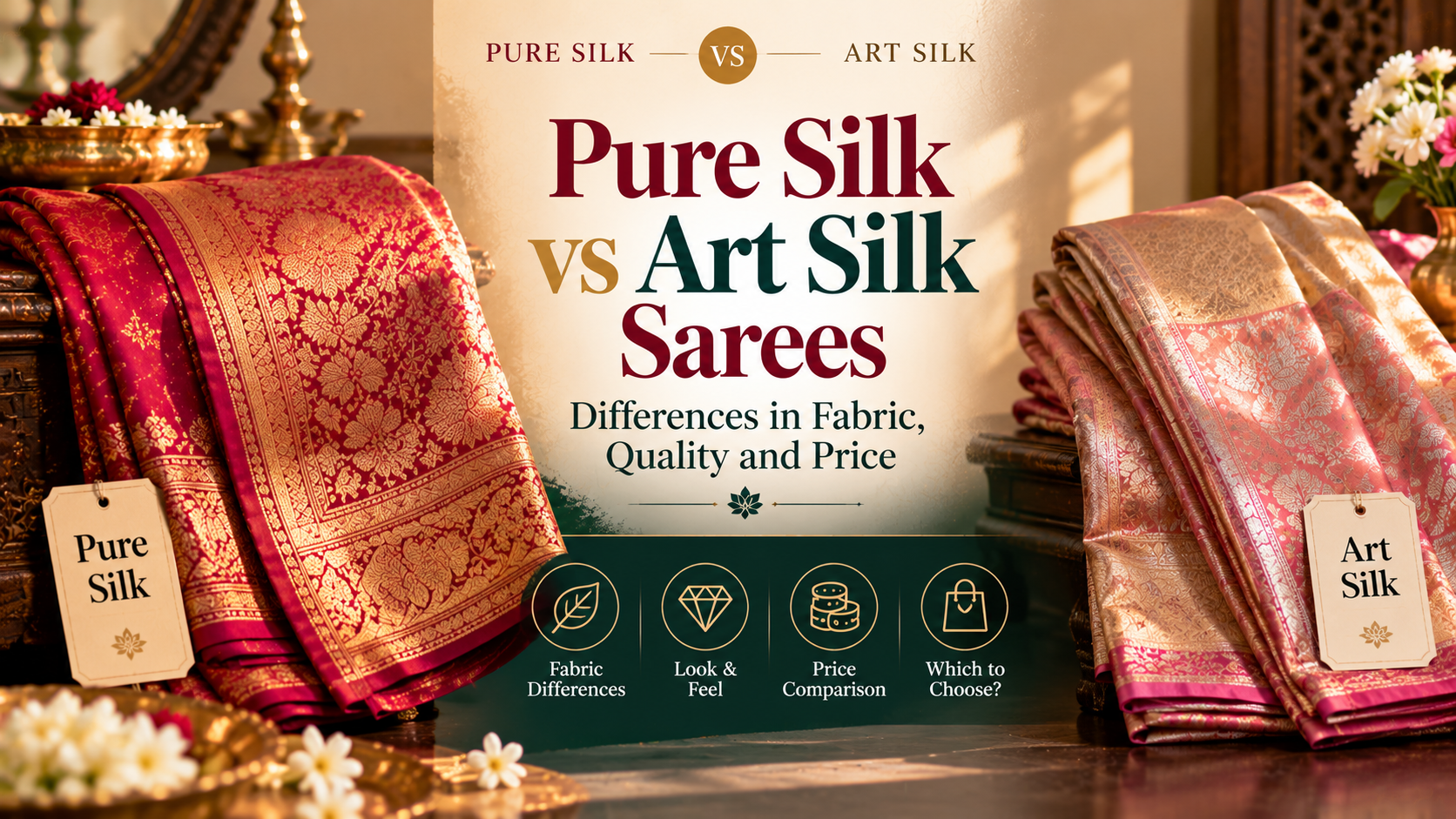
Two sarees sit side by side on a shelf. Both have a glossy sheen, a rich zari border and a similar pallu. One is labelled “pure silk”, the other “art silk”, and there is a noticeable difference in price. For many buyers, this is the moment of confusion. Is the expensive one worth it? Is the more affordable one a compromise? And how can you be sure the label is accurate?
Choosing a women silk saree becomes much easier once you understand what these two terms usually mean, how the fabrics differ in look and feel, and which situations suit each. This guide focuses on that decision. It does not argue that one is always better. Pure silk and art silk each have a place, depending on the occasion, budget and how you plan to care for the saree.
What is a pure silk saree?
A pure silk saree is woven from natural silk, a protein fibre produced by silkworms. Several kinds of natural silk are used in Indian sarees, including mulberry silk and non-mulberry varieties such as tussar, eri and muga. Each has its own texture, sheen and colour range, and the finished saree also depends on the weave, the yarn quality and the skill of the weaver.
Characteristics commonly associated with pure silk:
- A soft, natural lustre rather than a uniform, mirror-like shine.
- A smooth but slightly dry hand-feel, which can vary by silk type and weave.
- Body and structure, especially in heavier weaves, so the saree holds pleats and borders well.
- Breathability, as with many natural fibres.
- Careful maintenance needs, often including dry cleaning and mindful storage.
“Pure silk” on a label usually means the main fabric is natural silk, but borders, zari, linings and blouse pieces may use other materials. Some sarees described as silk are actually blends. Reading the full description matters.
What is an art silk saree?
“Art silk” is short for artificial silk. The term is generally used for sarees made from manufactured fibres designed to resemble silk in appearance. Depending on the product, these may include regenerated fibres such as viscose (rayon) or synthetic fibres such as polyester, or blends of these with other yarns.
Because the term covers many materials, art silk sarees vary considerably. Some are light and soft; others are crisp and heavy. Some have a high gloss; others have a more muted sheen.
Characteristics commonly associated with art silk:
- A silk-like shine that can be brighter or more uniform than natural silk, depending on the fibre.
- Often lighter or more affordable than comparable pure silk designs.
- Wide range of colours and designs, including reproductions of traditional weaves.
- Care needs that vary by fibre; some art silks are easier to maintain, while others still need gentle handling.
- Breathability that varies; some synthetic blends may feel warmer than natural silk.
An art silk saree is not automatically low quality. Weave, finishing and design matter as much as the fibre. A well-made art silk saree can look and wear better than a poorly made saree in any fabric.
Pure silk vs art silk: comparison table
These are general tendencies. Individual sarees vary by fibre, weave and finishing.
| Feature | Pure silk | Art silk |
| Material | Natural protein fibre from silkworms | Manufactured fibres such as viscose, polyester or blends; varies by product |
| Texture | Smooth, slightly dry, can feel soft or crisp depending on weave | Can be smooth, slippery, soft or crisp depending on fibre |
| Shine | Soft, natural lustre that shifts with light | Often brighter or more uniform sheen |
| Drape | Holds structure; heavier weaves fall in defined folds | Varies; often lighter and more fluid, some quite stiff |
| Weight | Varies from light to heavy depending on silk and weave | Often lighter, though heavy art silks exist |
| Maintenance | Usually dry clean; careful storage | Varies by fibre; some easier to care for |
| Durability | Long-lasting with good care; sensitive to moisture, sunlight and pests | Varies; can resist some wear but may pill, snag or lose sheen depending on fibre |
| Relative cost | Generally higher | Generally lower |
How to read fabric claims and product labels
Labels and descriptions are the most practical starting point, but they are not proof on their own. Here is how to read them more carefully.
Look for specific fabric terms
Descriptions such as “pure mulberry silk”, “tussar silk”, “silk blend”, “art silk”, “viscose” or “polyester” tell you more than vague phrases such as “silk feel”, “soft silk”, “silk touch” or “silky finish”. These looser phrases often describe appearance rather than fibre content.
Check the whole saree, not just the body
Ask whether the border, pallu and blouse piece use the same fibre. Zari, for example, may be real, tested or metallic, which affects price and feel.
Ask about certification
In India, the Silk Mark label is a quality-assurance scheme for natural silk products run under the Central Silk Board. A Silk Mark label, where present, is a useful indicator, but buyers should check the label details and buy from sellers they trust. Not every genuine silk saree carries one.
Use physical checks with caution
You may hear about home tests such as burn tests or rubbing the fabric. These can damage a saree and are not reliable proof on their own, especially for blends. Treat them as rough indicators at best, and never test a saree you have not bought. For a broader explanation of fabric checks, see our guide to identifying pure cotton and silk.
Ask the seller directly
A reliable seller should be able to tell you the fibre content, weave type and care instructions. Clear, specific answers are more useful than general reassurance.
Which option suits which occasion?
Weddings
Many families choose pure silk for weddings, especially for the bride and close relatives, because of its richness, traditional association and value as a keepsake. Art silk can also be a sensible choice for guests, for multiple functions, or when comfort and budget are priorities.
Festivals
Both work well. Pure silk suits major celebrations and pujas where a traditional look matters. Art silk offers colour and shine for frequent festive wear without the same care commitment.
Gifting
Pure silk is often chosen for significant gifts and occasions. Art silk is a practical option for larger gifting lists or when the recipient prefers easier care. Whichever you choose, describe the saree accurately to the recipient.
Regular use
For frequent wear, office functions or travel, an art silk or silk blend saree may be more practical, depending on the fibre’s care needs. Lightweight pure silks can also work for regular use if you are comfortable with their care.
If you are still deciding between silk and other fabrics altogether, our comparison of cotton vs silk sarees covers that choice.
Budget and value considerations
Price differences between pure silk and art silk come from several factors: the cost of the fibre, the weaving method, design complexity, the type of zari and the seller. A higher price does not automatically mean better quality, and a lower price does not automatically mean poor quality.
Think about value in terms of:
- How often you will wear it. A saree worn many times can justify a higher cost.
- Its role in your wardrobe. A wedding or heirloom saree may be worth investing in; a saree for occasional parties may not need to be.
- Care costs. Dry cleaning and storage add to the long-term cost of pure silk.
- Longevity. With good care, quality pure silk can last for years. For care guidance, see our article on how to wash and store silk sarees.
For a wider look at fabrics, price factors and how to plan a saree budget, read our complete guide to buying sarees for women.
Common buying mistakes
- Relying only on shine. A bright gloss does not confirm pure silk; natural silk often has a softer lustre.
- Trusting vague descriptions. “Silk feel” is not a fibre content.
- Assuming art silk is always poor quality. Weave and finishing matter.
- Assuming a high price guarantees pure silk. Check the details and the seller.
- Ignoring care requirements. A pure silk saree may not suit daily, rough use.
- Not checking the blouse piece and border. These may use different materials.
- Testing a saree destructively. Avoid burn tests on sarees you have not bought.
- Skipping the return policy. Especially important for higher-value purchases.
Frequently asked questions
1. What is the main difference between pure silk and art silk? Pure silk is made from natural silk fibre produced by silkworms. Art silk generally refers to manufactured fibres such as viscose or polyester made to resemble silk, and composition varies by product.
2. Is art silk the same as polyester? Not always. Art silk can be polyester, viscose or a blend. Check the fabric description for the specific fibre.
3. Is a pure silk saree always better? Not necessarily. Pure silk suits many occasions, but art silk can be more practical for frequent wear, budgets or easier care. Quality depends on the specific saree.
4. How can I tell whether a saree is pure silk? Read the fabric description, check for labels such as Silk Mark where available, and ask the seller. Home tests are not reliable proof on their own.
5. Which is better for a wedding? Pure silk is a popular choice for brides and close family. Art silk can work well for guests and multiple functions.
6. Does art silk need dry cleaning? It depends on the fibre and finish. Always follow the care label.
7. Why does pure silk cost more? Natural silk fibre, weaving method, design complexity and zari type all affect cost.
Conclusion
The choice between pure silk and art silk is not about one being right and the other wrong. A pure silk women silk saree offers natural lustre, structure and traditional value, and suits weddings, major festivals and heirloom purchases. An art silk saree offers silk-like shine, a wide range of designs and, often, easier budgeting, which can make it a practical saree for women who wear festive sarees often. Read labels carefully, ask clear questions, and choose based on the occasion, your care preferences and the value you expect from the saree.
Explore silk and festive sarees at Mahavir Cloth Center and use this guide to compare fabric details before you buy.
