
Blog
How to Choose the Right Saree Petticoat: Fabric, Fit, Length and Shape

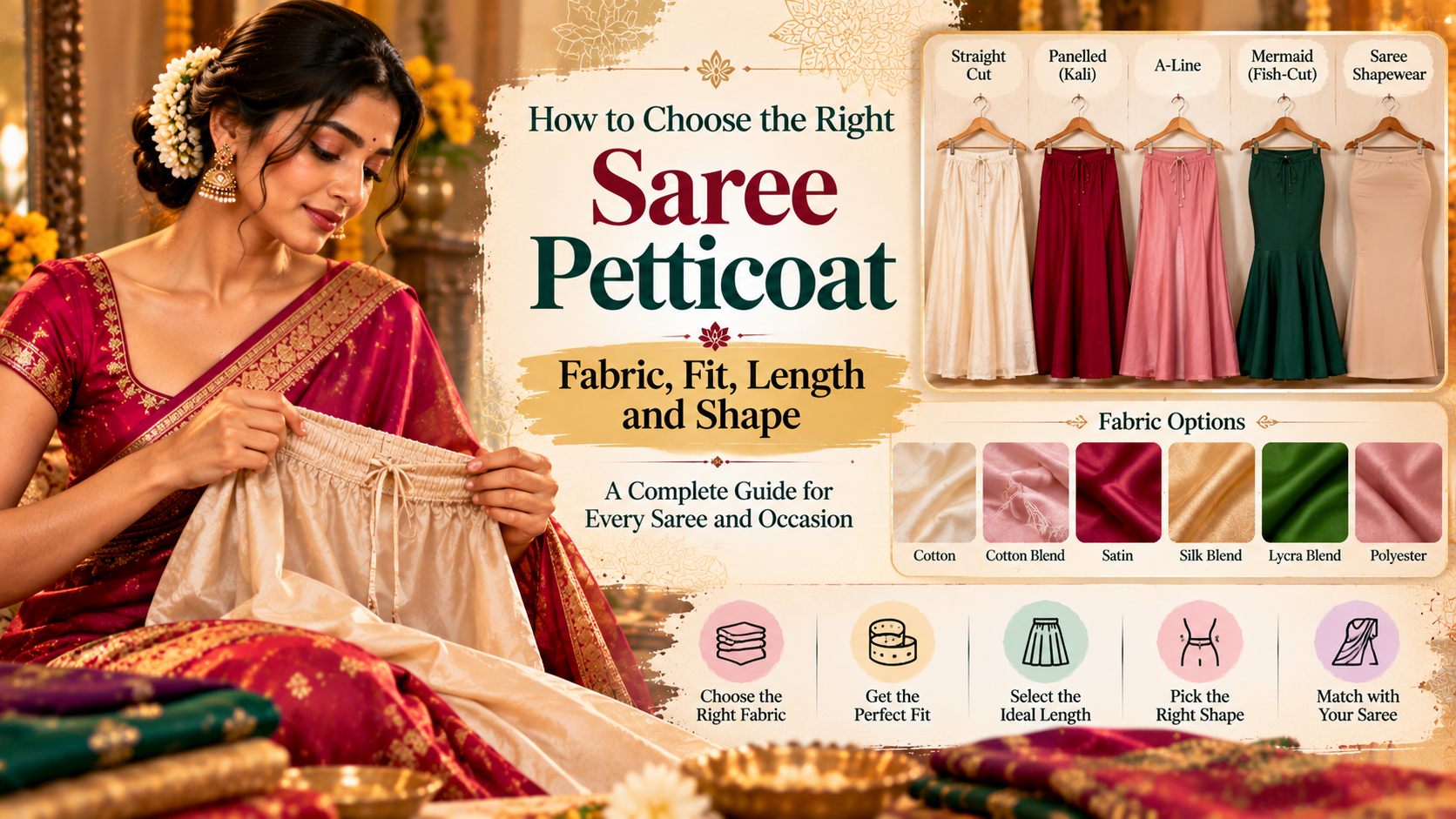
The petticoat, also called an underskirt or inskirt, is the foundation of a saree drape. It is the layer you tuck the saree into, so it holds the pleats and the rest of the drape in place. It also affects how the saree falls, how much light passes through sheer fabrics and how comfortable you feel during a long day.
A poorly chosen petticoat can cause problems that are easy to blame on the saree:
- Pleats that slip out because the waist is loose.
- A drape that bunches at the hips because the petticoat is too bulky.
- A sheer saree that shows the outline of your legs because the petticoat is too thin or the wrong colour.
- A hem that peeks out below the saree or trips you up.
- Discomfort from a drawstring digging in or fabric that feels too warm.
Learning how to choose a saree petticoat is mostly about matching four things: fabric, fit, length and shape. The right combination depends on the saree you are wearing, the drape you want, the weather and your personal comfort. There is no single petticoat that suits every saree or every person, which is why many saree wearers keep two or three types.
Common petticoat types
Straight-cut petticoat
A simple skirt with straight or slightly flared panels and a drawstring waist. It is the most widely available type and suits everyday sarees. It gives a relaxed, traditional drape.
Panelled or kali petticoat
Made from several triangular or tapered panels (kalis) stitched together. This creates more flare at the hem and a closer fit at the hips. It is often used for regular wear and gives a little more room for walking.
A-line petticoat
Fitted at the waist and gradually widening towards the hem. It balances a neat fit at the top with comfortable movement at the bottom.
Mermaid or fish-cut petticoat
Fitted through the hips and thighs and flaring near the knees or ankles. This creates a sleek, contoured drape and is popular for party wear and lightweight sarees. It can limit stride length, so walk-test it before buying.
Saree shapewear
A stretchy, fitted underskirt usually made from a cotton-lycra or similar blend, often with an elastic waistband. It gives a smooth, contoured drape and is discussed in more detail later.
Elastic-waist and side-zip petticoats
Some petticoats replace or combine the drawstring with an elastic waistband or a side zip with hooks. These can be quicker to wear and may feel more comfortable for some people, though they are less adjustable than a drawstring.
Saree petticoat fabric options
Saree petticoat fabric affects breathability, drape, opacity and how well the saree stays tucked.
Cotton
Pros: breathable, absorbent, comfortable in warm weather, holds pleats well because it has some grip, easy to wash. Cons: can shrink if not pre-shrunk, may wrinkle, and can feel bulky under very fine sarees.
A cotton saree petticoat is a common choice for daily wear and for cotton, linen and handloom sarees.
Cotton blends and cambric
Pros: smoother than some plain cottons, often less prone to wrinkling, still fairly breathable. Cons: varies a lot by blend; check the fabric content.
Satin
Pros: smooth and glossy, lets light sarees glide over it, adds a little sheen under sheer fabrics. Cons: often slippery, so pleats may not stay tucked as firmly; usually less breathable than cotton.
Silk or silk blends
Pros: smooth and luxurious, suits silk sarees. Cons: may need more careful washing, can be slippery and is usually more expensive.
Lycra and stretch blends
Pros: stretchy, fitted and smooth; the basis of most saree shapewear. Cons: less breathable than cotton for some people; fit depends heavily on accurate sizing.
Polyester and synthetics
Pros: often affordable, resist wrinkling, dry quickly. Cons: may feel warm and less breathable; can build static under some sarees.
Choosing a petticoat for different saree fabrics
These suggestions are starting points; your comfort and the drape you prefer matter most. For more on how cotton and silk sarees differ, see our guide to cotton vs silk sarees.
Petticoat for silk sarees
Silk sarees, especially heavy weaves, are often worn with a cotton or cotton-blend petticoat because it grips the pleats and supports the weight. A panelled or A-line petticoat gives the heavy fabric room to fall. Some people prefer a smoother satin or silk-blend petticoat under lighter silks so the saree does not cling.
Cotton and handloom sarees
Cotton sarees usually pair well with cotton petticoats. The two fabrics grip each other, making pleats easy to tuck. Choose a breathable fabric for daytime and summer. Our guide to cotton sarees for daily wear has more on everyday saree choices.
Petticoat for chiffon sarees
Chiffon is light and sheer, so the petticoat affects how the saree looks. A smooth, lightweight petticoat in a matching colour helps the chiffon fall softly. A shaped or shapewear-style petticoat can give a sleek drape. Very thick cotton can make a chiffon saree look bulky.
Georgette sarees
Georgette has a little more body than chiffon. Satin, cotton-blend or shapewear petticoats all work. Choose based on whether you want a soft fall or a sleeker contour.
Net, organza and tissue sarees
These sheer or semi-sheer sarees show the petticoat. Choose a smooth, opaque petticoat in a closely matched colour, or a shimmer satin petticoat if you want a subtle glow under the saree.
Crepe and synthetic party sarees
Fitted, smooth petticoats such as mermaid cuts or shapewear often suit these sarees, which are usually worn with a sleek drape.
How to measure waist and length
A saree petticoat size guide starts with two measurements: waist and length.
Waist
- Decide where you wear your saree. Many people tie it slightly below the natural waist, at or just above the navel, but this varies.
- Wrap a measuring tape around that point, snug but not tight.
- Note the measurement.
For drawstring petticoats, the waist is usually adjustable, but a petticoat that is much larger than your waist creates bulky gathers. For elastic and shapewear styles, compare your measurement carefully with the size chart, since stretch fabrics have less room for error. Many shapewear sizes also list a hip measurement; measure around the fullest part of your hips if required.
Length
- Wear the footwear you plan to use with the saree.
- Measure from the point where you tie the saree down to the floor.
- Subtract a little, typically enough that the petticoat sits just above the floor. The saree itself should cover the petticoat.
Some brands list petticoat length in inches or centimetres; others use standard sizes. Check the product description.
Choosing the right length for your saree and footwear
Saree underskirt length affects both how the saree looks and how safely you can walk.
- Too long: the petticoat may peek below the saree or catch under your feet.
- Too short: the saree hem may fall unevenly, and some sarees may need to be tied lower than you prefer.
- Footwear: heels raise you, so the petticoat may look shorter. Flats lower you. Measure with the footwear you will wear most.
- Saree length and drape: some regional drapes, such as the Nauvari, may not need a petticoat at all or use different garments. Pre-stitched sarees may have different requirements; see our comparison of pre-stitched sarees vs traditional draping.
If you wear both heels and flats, some people keep two petticoats of slightly different lengths, or have the hem adjusted by a tailor.
Straight-cut vs shaped petticoats
Straight-cut and panelled petticoats
- Give a relaxed, traditional fall.
- Allow comfortable walking, sitting and climbing stairs.
- Hold more fabric, which helps heavy sarees drape evenly.
- May look fuller at the hips under very light sarees.
Shaped petticoats (A-line, mermaid, fish-cut)
- Follow the body more closely through the hips and thighs.
- Give a sleek, contoured drape.
- Suit light sarees, party wear and contemporary styling.
- May restrict long strides, depending on the cut.
Choosing between them: consider the saree fabric, how much you will move and the look you want. Many wardrobes include both.
Choosing a colour
The petticoat colour matters most under thin or sheer sarees.
- Match the saree’s base colour as closely as possible, especially for chiffon, georgette and net.
- Match the darker or dominant colour if the saree is multicoloured or has a heavy border.
- Skin-tone or neutral petticoats can work under some light-coloured or pastel sarees, but test them in daylight.
- Avoid strong contrast under sheer sarees, unless it is a deliberate styling choice.
- Shimmer petticoats can add a subtle glow under net or tissue sarees.
Keeping a few versatile colours, such as black, white, beige, maroon and a dark green or blue, covers many sarees.
Saree shapewear vs petticoat
Saree shapewear vs petticoat is a common question. Both have their place.
Saree shapewear
What it is: a fitted, stretchy underskirt, often with a mermaid or fish-cut flare at the bottom, usually with an elastic waistband.
Possible advantages:
- Smooth, contoured drape.
- No drawstring bulk at the waist.
- Quick to put on.
- Often has a slit or flare for walking.
Considerations:
- Accurate sizing is important; too tight can feel uncomfortable, too loose may not hold pleats well.
- Some stretch fabrics feel warmer than cotton.
- Pleats may slip if the fabric is smooth; some people add a safety pin or a few tucks into the waistband.
- Less adjustable than a drawstring.
Traditional petticoat
Possible advantages:
- Adjustable drawstring waist.
- Breathable fabric options like cotton.
- Good grip for pleats.
- Works with a wide range of sarees and drapes.
Considerations:
- Drawstring knot can add bulk under fitted sarees.
- May give a fuller look under very light sarees.
The choice depends on the saree, the look you want and what feels comfortable. Some people wear shapewear for party sarees and a cotton petticoat for daily wear.
Comparison table
| Petticoat type | Common fabrics | Suitable use cases | Important considerations |
| Straight-cut | Cotton, cotton blends | Daily wear, cotton and handloom sarees | Relaxed drape; may look full under light sarees |
| Panelled (kali) | Cotton, cambric | Silk and heavy sarees, everyday wear | More flare; easy walking |
| A-line | Cotton, cotton blends, satin | Silk, georgette, most occasions | Balanced fit and movement |
| Mermaid or fish-cut | Satin, cotton-lycra, blends | Chiffon, georgette, party sarees | Sleek drape; may limit stride |
| Saree shapewear | Lycra and stretch blends | Light sarees, contemporary drapes, events | Needs accurate sizing; check breathability |
| Satin petticoat | Satin | Sheer sarees, chiffon, net | Smooth; pleats may slip |
| Elastic or zip waist | Varies | Quick dressing, those who prefer no drawstring | Less adjustable than drawstring |
Common mistakes
- Buying too big at the waist: creates bulky gathers. Choose a size close to your measurement.
- Ignoring length: a petticoat that peeks out or trips you is distracting. Measure with your footwear.
- Wrong colour under sheer sarees: contrasting colours show through. Match carefully.
- Slippery fabric with heavy pleats: pleats may fall out. Consider cotton or add safety pins.
- Thick petticoats under light sarees: can look bulky. Choose a lighter or shaped option.
- Shapewear too tight: uncomfortable over a long day. Check the size chart and fabric stretch.
- Not pre-washing cotton: some cotton petticoats shrink. Check the label or wash before adjusting length.
- Tying the drawstring too tight: can be uncomfortable. Secure firmly but comfortably.
Washing, drying and storing petticoats
This section covers basic care for petticoats only. For saree care, see our guide on how to wash and store silk sarees.
- Follow the label. Cotton petticoats can usually be machine or hand washed; satin and shapewear may need gentler care.
- Wash dark colours separately, especially the first few times, in case of colour bleeding.
- Avoid high heat for stretch fabrics, as it may affect elasticity.
- Dry in shade to reduce fading.
- Iron cotton petticoats if needed, which helps pleats sit neatly.
- Check drawstrings and elastic regularly and replace them when worn.
- Store folded with similar colours together so you can find the right match quickly.
Step-by-step buying checklist
- List the sarees you will wear the petticoat with.
- Decide on fabric: breathable cotton, smooth satin or stretch shapewear.
- Choose a type: straight, panelled, A-line, mermaid or shapewear.
- Measure your waist where you tie the saree.
- Measure length with your usual footwear.
- Check hip measurements for shaped or shapewear styles.
- Pick a colour that matches the saree base or dominant colour.
- Check the waistband: drawstring, elastic or zip.
- Inspect stitching and hem finishing.
- Check the care label.
- Check return or exchange policies, especially for shapewear.
- Try it with your saree before an important event.
Frequently asked questions
1. How do I choose a saree petticoat for daily wear? Many people choose a cotton petticoat in a straight or panelled cut for daily wear, as it is breathable and holds pleats well.
2. Which petticoat is best for a silk saree? A cotton or cotton-blend panelled or A-line petticoat is a common choice because it supports the weight and grips pleats. The ideal option depends on the saree and your preference.
3. What petticoat suits a chiffon saree? A smooth, lightweight petticoat in a matching colour, or a shaped petticoat or shapewear for a sleek drape.
4. Is saree shapewear better than a petticoat? Neither is better for everyone. Shapewear gives a sleek, contoured drape; a traditional petticoat is adjustable, breathable and works with many sarees.
5. How long should a saree petticoat be? It should end just above the floor when you wear your usual footwear, so the saree covers it fully.
6. What colour petticoat should I wear? Match the saree’s base or dominant colour, especially for sheer fabrics.
7. Can I wear one petticoat with many sarees? Yes, if the colour and fabric suit them. A few versatile colours cover a large wardrobe.
8. Why do my pleats keep slipping? The petticoat may be loose at the waist or made of slippery fabric. Tighten the drawstring, choose cotton or add a safety pin.
Conclusion
Choosing a saree petticoat is about matching fabric, fit, length and shape to the saree and the occasion. A cotton petticoat in a straight or panelled cut is a practical, breathable base for everyday sarees. Shaped petticoats and shapewear give a sleeker drape for light and party sarees. Accurate waist and length measurements, a matching colour and comfortable fabric make a noticeable difference to how the saree looks and feels.
If you are starting out, a sensible approach is to begin with one or two cotton petticoats in versatile colours and add a shaped option or shapewear later if you wear lighter sarees often.
Find sarees and essentials for every occasion at Mahavir Cloth Center.
