Blog
How to style an embroidered kurta suit for festivals in India

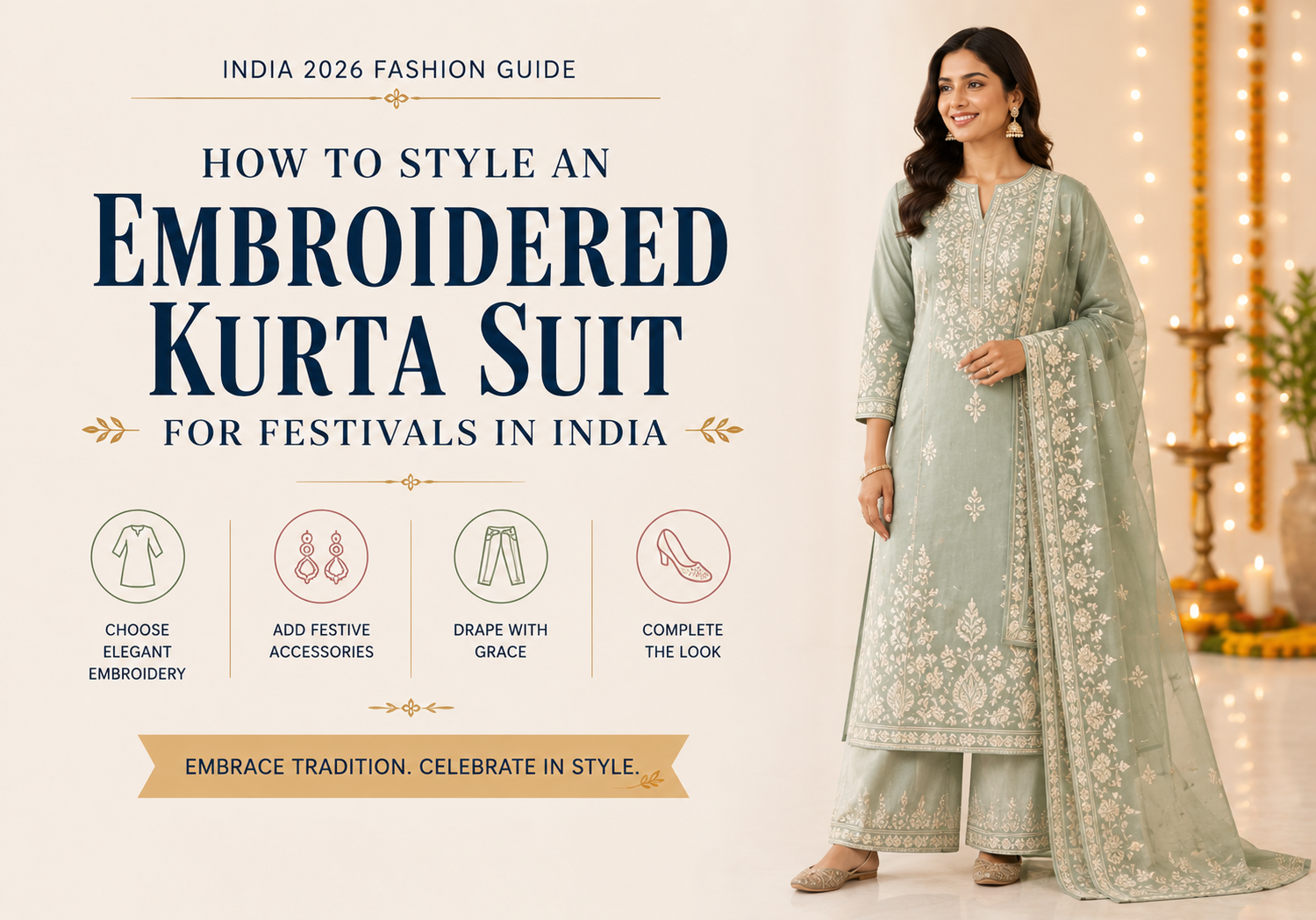
India celebrates more festivals than almost any country in the world — and each one comes with its own unwritten dress code. The colours of Navratri are different from the pastels of Holi. The grandeur expected at Diwali is different from the earthy elegance of Teej. And the joy of Eid calls for an entirely different kind of embroidered richness.
The embroidered kurta suit sits at the very heart of Indian festive fashion. It is traditional enough for the most religious of occasions, versatile enough to be styled a dozen different ways, and beautiful enough to make every woman in the room notice. But wearing one well requires more than simply putting it on. It requires intention — the right choices in fabric, embroidery, accessories, and styling that together create a look that feels completely effortless.
This guide tells you exactly how to do that.
First: Know Your Embroidery — Not All Embroidery Is the Same
Before you can style an embroidered kurta suit, you need to understand what kind of embroidery it carries — because the type of embroidery determines everything from which festival it suits best to how formally or casually it reads.
| Embroidery Type | Origin | Key Look | Best Festival | Formality |
|---|---|---|---|---|
| Chikankari | Lucknow, UP | Delicate white thread work on pastel fabric | Eid, Teej, Holi | Semi-formal to formal |
| Phulkari | Punjab | Bright geometric floral embroidery | Lohri, Baisakhi, Teej | Casual to semi-formal |
| Zardozi | Mughal-era, North India | Heavy gold and silver metallic thread work | Diwali, Eid, weddings | Formal to grand formal |
| Mirror Work (Shisha) | Rajasthan, Gujarat | Small mirrors stitched into colourful fabric | Navratri, Diwali, Holi | Casual to semi-formal |
| Kantha | West Bengal | Simple running stitch in colourful threads | Durga Puja, Poila Boishakh | Casual to semi-formal |
| Kashmiri Embroidery | Kashmir | Dense, multicolour floral chain stitch | Diwali, winter festivals | Semi-formal to formal |
| Gota Patti | Rajasthan | Gold ribbon appliqué work | Teej, Navratri, Diwali | Semi-formal to formal |
| Aari / Crewel | Kashmir, South India | Intricate hook-needle embroidery | Onam, Diwali, Eid | Formal |
Festival-by-Festival Styling Guide
Diwali — The Festival of Lights
- Deep jewel tones — burgundy, emerald, royal blue, gold
- Silk or velvet fabric for the kurta
- Palazzo or sharara bottoms in matching silk
- Heavy gold jewellery — chandbali earrings, layered necklaces
- Heavily embroidered dupatta with gold border
- Heeled juttis or embellished sandals
- Statement potli bag or gold clutch
- Very pale, washed-out colours
- Lightweight casual fabrics like cotton or rayon
- Minimal or no embroidery
- Very simple, everyday jewellery
- Flat footwear with a grand outfit
Navratri — Nine Nights of Colour
| Navratri Day | Colour | Embroidery Style to Match |
|---|---|---|
| Day 1 | Royal Blue | Silver mirror work or blue thread embroidery |
| Day 2 | Yellow | Colourful phulkari or gota patti on yellow fabric |
| Day 3 | Green | Mirror work or white chikankari on green base |
| Day 4 | Grey | Silver zardozi or subtle embroidery on grey silk |
| Day 5 | Orange | Gold gota patti or mirror work on orange cotton |
| Day 6 | White | Chikankari or subtle gold embroidery on white |
| Day 7 | Red | Gold zardozi or heavy gota patti on red silk |
| Day 8 | Sky Blue | White thread embroidery or light mirror work |
| Day 9 | Pink | Gota patti or sequin work on pink georgette |
- Flared or circular skirt bottom (lehenga-style) for garba
- Palazzo or sharara in matching or contrast colour
- Oxidised silver jewellery — tribal, chunky, festive
- Ghungroo-style earrings or jhumkas
- Comfortable wedge heels or flat kolhapuris for dancing
- Potli bag with mirror work to match the outfit
- Very heavy, stiff fabrics that restrict movement
- Very high stiletto heels — you will be dancing
- Elaborate dupatta that can tangle during garba
- Dark, funeral-appropriate colours like black or very dark navy
Eid — A Celebration of Grace and Elegance
- Pastel and soft tones — ivory, mint, powder blue, blush pink, lilac
- Chikankari kurta in georgette or mul fabric
- Straight-cut pants or sharara in matching white or cream
- Sheer dupatta with delicate embroidered border
- Pearl jewellery or delicate gold sets
- Embroidered khussa or juttis in nude or gold
- Light attar or subtle perfume to complete the look
- Very heavy, loud embroidery like dense mirror work
- Dark, dramatic colours like black, maroon, or deep purple
- Very casual fabrics like cotton or denim
- Oversized, chunky statement jewellery
Teej — The Festival of Green and Red
- Green, red, yellow, and orange colour palette
- Gota patti or phulkari embroidered kurta suit
- Sharara or flared palazzo for a traditional silhouette
- Heavy dupatta with gota border draped over the head
- Traditional jewellery — bangles, maang tikka, jhumkas, nath
- Mehndi on hands to complete the festival look
- Embellished juttis in gold or green
- White or black — not auspicious colours for Teej
- Western-style embroidery or very modern cuts
- Minimal jewellery — Teej is a festival that celebrates adornment
- Very casual or everyday fabrics
Holi — The Festival of Colours
- White or light-coloured cotton kurta suit — colours show beautifully
- Simple phulkari or block-print embroidery
- Comfortable palazzo or churidar bottoms
- Minimal jewellery — colours damage metal and stones
- Flat footwear or barefoot — comfortable for playing
- Apply coconut oil on skin and hair before wearing
- Expensive embroidered silk or velvet — will be ruined
- Heavy or delicate jewellery — gets damaged by colour
- Very tight clothing that restricts movement
- Suede or fabric shoes that will absorb colour permanently
Choosing the Right Bottom for Your Embroidered Kurta Suit
The bottom you pair with your embroidered kurta dramatically changes the silhouette, formality, and overall feel of the outfit. Here is how to choose correctly for each occasion.
| Bottom Type | Best Kurta Length | Best Occasion | Formality |
|---|---|---|---|
| Sharara | Long kurta (knee length or below) | Weddings, Eid, grand festivals | Formal to grand formal |
| Palazzo | Short to mid-length kurti | Diwali, Navratri, casual festivals | Casual to semi-formal |
| Straight Churidar | Long or short kurta | Religious ceremonies, Eid, Teej | Semi-formal to formal |
| Patiala Salwar | Short to mid-length kurti | Lohri, Baisakhi, casual Navratri | Casual to semi-formal |
| Flared Skirt | Short kurti or blouse-style top | Navratri garba, sangeet | Semi-formal to festive |
| Dhoti Pants | Short fitted kurti | Contemporary festival styling | Semi-formal, fashion-forward |
| Straight Pants | Long tunic or short kurti | Office ethnic, daytime festivals | Casual to semi-formal |
The Dupatta: How to Drape It for Each Festival
The dupatta is not just an accessory — it is a styling tool that can completely transform the look and formality of your embroidered kurta suit. Here are the most common drape styles and when to use each one.
| Dupatta Drape Style | How to Do It | Best For | Formality |
|---|---|---|---|
| One-shoulder pin drape | Over left shoulder, pinned at kurta near chest, end falls freely in front | Diwali, receptions, semi-formal festivals | Semi-formal to formal |
| Both-shoulder symmetrical | Equal length on both sides, falling in front symmetrically | Eid, religious ceremonies, formal events | Formal to grand formal |
| Head drape | Draped over the head, falling on both sides | Teej puja, religious ceremonies, Navratri | Traditional and religious |
| Loose carry style | Held loosely in the hand or draped casually over one arm | Navratri garba, Holi Milan, casual festivals | Casual to semi-formal |
| Front tuck style | Tucked into the waistband at the front, fanned out slightly | Contemporary styling, Navratri, Diwali parties | Modern festive |
| Back drape | Pinned at both shoulders, falls behind like a cape | Receptions, Diwali parties, sangeet | Fashion-forward formal |
Jewellery Guide for Every Festival Look
| Festival | Best Jewellery | Metal Tone | What to Avoid |
|---|---|---|---|
| Diwali | Chandbali earrings, layered necklace, kadas, maang tikka | Gold | Very minimal or everyday silver |
| Navratri | Oxidised jhumkas, tribal necklace, ghungroo earrings, chunky bangles | Oxidised silver | Heavy gold sets — too formal for dancing |
| Eid | Pearl drops, delicate gold set, thin bangles, subtle maang tikka | Gold or pearl | Loud, chunky statement pieces |
| Teej | Jhumkas, nath (nose ring), maang tikka, glass bangles, haath phool | Gold | Western minimalist jewellery |
| Holi | Minimal — simple studs or small jhumkas only | Any | Expensive or delicate pieces — colours damage them |
| Durga Puja | Red and white bangles, conch bangles, gold earrings, simple necklace | Gold | Black jewellery — not auspicious during the festival |
| Onam | Kerala-style gold Kasavu jewellery, temple jewellery sets | Gold | Non-traditional styles — Onam has a specific aesthetic |
Colour Guide: What to Wear for Which Festival
| Festival | Most Auspicious Colours | Also Appropriate | Avoid |
|---|---|---|---|
| Diwali | Gold, deep red, emerald | Royal blue, magenta, purple | Black, plain white |
| Navratri | Colour of each day (see table above) | Any festive, bright hue | Black |
| Eid | White, ivory, pastel green, blush | Mint, powder blue, lilac | Very dark tones, black |
| Teej | Green, red, yellow | Orange, pink, turquoise | White, black |
| Holi | White (shows colours best) | Any bright, cheerful colour | Dark colours (hide the colour effect) |
| Durga Puja | Red, white, saffron | Yellow, orange, gold | Black, white only |
| Onam | White with gold (Kasavu) | Cream, off-white, pale yellow | Dark, bold colours — Onam has a specific aesthetic |
| Lohri / Baisakhi | Mustard, orange, red | Bright phulkari colours | Muted, dull tones |
5 Universal Rules for Styling an Embroidered Kurta Suit
Regardless of which festival you are dressing for, these five principles will always make your embroidered kurta suit look better.
Frequently Asked Questions
Which embroidered kurta suit is best for multiple festivals?
A chikankari kurta suit in a versatile colour like ivory, sage green, or dusty rose is the most multi-occasion embroidered suit you can own. It works beautifully for Eid, Teej, Diwali (styled up), and daytime festivals. Change the dupatta, jewellery, and footwear and it transforms completely for each occasion.
Can I wear a heavily embroidered kurta suit to an outdoor daytime festival?
Yes, but choose the fabric wisely. Avoid heavy silk, velvet, or very dense zardozi work for outdoor summer festivals — they are warm and uncomfortable in heat. Instead, opt for a georgette or cotton kurta with gota patti or light mirror work embroidery. It gives you the festive look without the discomfort of a heavy fabric under the sun.
What is the most versatile embroidered kurta suit colour to invest in?
Deep teal, rich burgundy, and emerald green are the three most versatile colours for an embroidered kurta suit. They work across Diwali, Eid, family weddings, and festivals. They photograph beautifully, suit most skin tones, and can be styled with both gold and silver jewellery. If you are investing in one good embroidered kurta suit, choose one of these three colours.
How do I care for an embroidered kurta suit after a festival?
Never machine wash embroidered kurta suits — the agitation damages the embroidery threads and can cause mirror work or zardozi to come loose. Dry clean suits with heavy embroidery like zardozi, kashmiri, or gota patti. Lightly embroidered cotton suits like phulkari or simple thread work can be gently hand-washed in cold water and laid flat to dry in shade. Store folded in soft cotton muslin — never in plastic — and air them out before storage.
Is it appropriate to wear Western jewellery with an embroidered kurta suit?
For casual and contemporary festival styling — absolutely yes. A minimal gold chain or geometric earrings can give an embroidered kurta suit a fresh, modern edge. However, for traditional festivals like Teej, Navratri puja, or Eid, traditional Indian jewellery — jhumkas, maang tikka, bangles — is always more appropriate and creates a more cohesive, culturally resonant look.
Final Thoughts
It connects you to a tradition, a story, and a craft
that has been passed down through generations of Indian artisans.
Every embroidery style you wear — whether it is the delicate whitework of a Lucknowi chikankari or the blazing gold of a Rajasthani gota patti — carries with it the skill of hands that spent years learning to create it. Wearing it with the right intention, the right occasion knowledge, and the right styling is a form of respect for that craft.
Choose your festival outfit with care. Know your embroidery. Understand your occasion. Dress for the celebration — and celebrate beautifully.
At Mahavir Cloth Center, we curate embroidered kurta suits across every style, fabric, embroidery type, and festival occasion — because every woman deserves to look and feel extraordinary at every celebration.
Visit Us & Explore the Collection →Explore our full range of Sarees, Kurta Suit Sets, Sharara Sets, and Kids Ethnic Wear at mahavirclothcenter.com.