Blog
Chanderi vs Banarasi vs Kanjivaram, Which Saree Fabric Should You Buy?

You have a wedding to attend. A festival. A family function where you want to look your absolute best. You open your wardrobe or a browser tab and immediately face the same question that has confused saree shoppers for generations: Chanderi, Banarasi, or Kanjivaram — which one do I actually buy?
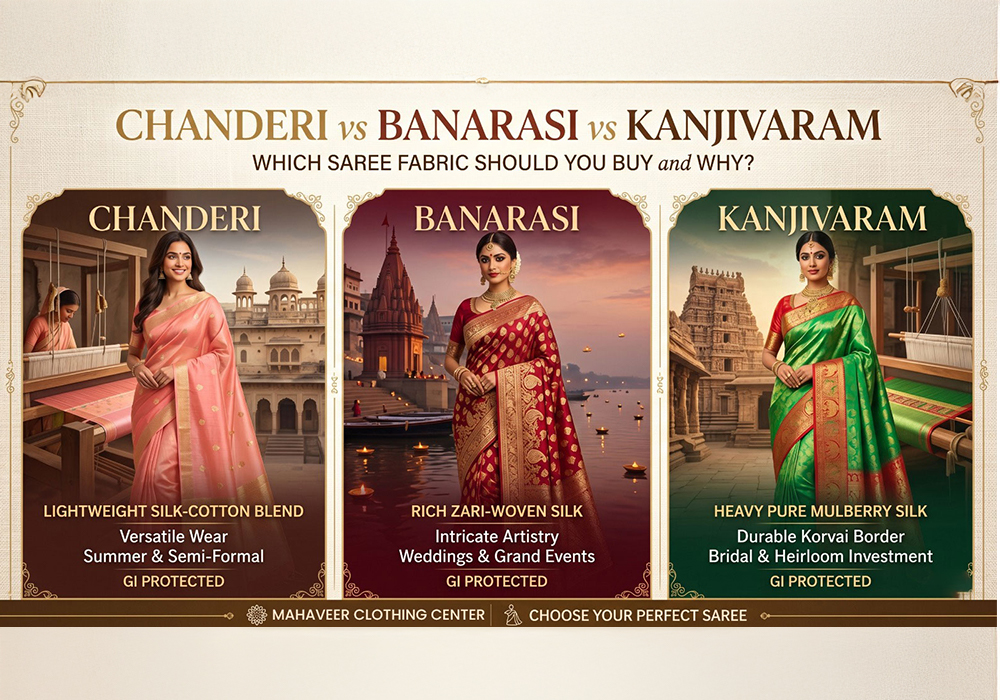
Each of these three sarees is legendary in its own right. Each comes from a different part of India and carries centuries of craft tradition within its folds. But they are dramatically different from each other in fabric, weight, occasion suitability, price, and care.
The Three Sarees Compared
| Feature | Chanderi | Banarasi | Kanjivaram |
|---|---|---|---|
| Origin | Chanderi, Madhya Pradesh | Varanasi, Uttar Pradesh | Kanchipuram, Tamil Nadu |
| Fabric | Silk-cotton blend | Pure silk / Georgette | Pure mulberry silk |
| Weight | Very light | Medium to heavy | Heavy |
| Key Feature | Woven bootis, delicate drape | Intricate zari, Mughal motifs | Korvai border, temple motifs |
| Best Season | Summer and all year | Winter, indoor events | Winter, short-duration events |
| Price Range | ₹800 – ₹25,000 | ₹1,500 – ₹2,00,000+ | ₹8,000 – several lakhs |
| GI Protected | Yes, since 2005 | Yes, since 2009 | Yes, since 2005 |
| Best For | Versatile wear, first-time buyers | Weddings, grand occasions | Bridal wear, heirloom investment |
The Fabric and Weaving Process
Chanderi
Chanderi is woven on traditional pit looms in Chanderi, Madhya Pradesh, a craft practised for over five hundred years. The most popular variety combines silk warp threads with cotton weft threads, giving the fabric its signature dual character: the subtle sheen of silk with the breathability of cotton.
The result is a fabric that feels feather-light and almost translucent, yet sturdy enough for regular wear. Traditional Chanderi features small woven motifs called bootis — coin shapes, florals, or geometric designs created during weaving, not printed or embroidered afterward.
| Chanderi Variety | Composition | Best For |
|---|---|---|
| Silk-Cotton (most common) | Silk warp + cotton weft | All occasions, summer wear |
| Pure Silk Chanderi | 100% silk | Festive and formal events |
| Pure Cotton Chanderi | 100% cotton | Daily wear, casual use |
Banarasi
Banarasi sarees are woven in Varanasi using techniques so intricate that a single high-quality piece can take fifteen days to six months to complete. The defining feature is the zari work — gold or silver metallic threads woven into elaborate Mughal-inspired patterns including florals, paisleys, vines, and kalga mango motifs.
| Banarasi Variety | Weight | Price Level | Best For |
|---|---|---|---|
| Katan Pure Silk | Heavy | Premium | Bridal, grand weddings |
| Georgette Banarasi | Light-medium | Mid-range | Wedding guests, functions |
| Organza Banarasi | Very light | Mid-range | Contemporary styling |
Kanjivaram
Kanjivaram sarees are woven exclusively from pure mulberry silk, the strongest and most lustrous natural silk available. Their defining construction technique is the korvai method, where the border is woven completely separately and then interlocked with the body of the saree. This creates the characteristic distinct border and gives the saree its exceptional durability.
Motifs draw from South Indian temple architecture — elephants, peacocks, temple gopurams, and traditional geometric patterns — making Kanjivaram instantly recognisable in style and spirit.
Occasion Guide: When to Wear Which Saree
| Occasion | Chanderi | Banarasi | Kanjivaram |
|---|---|---|---|
| Casual family gathering | Perfect | Too formal | Too formal |
| Office ethnic wear | Ideal | Heavy | Too formal |
| Daytime festival | Ideal | Good | Heavy for all-day |
| Small family wedding | Good | Ideal | Good |
| Grand wedding as guest | May feel light | Perfect | Perfect |
| Bridal outfit | Too casual | Very good | Definitive choice |
| Summer outdoor event | Best choice | Too warm | Too warm |
| First saree purchase | Best choice | Complex to drape | Very heavy |
Chanderi is your everyday festive saree — comfortable, versatile, and easy to wear for a full day. It is ideal for daytime festivals, office ethnic days, religious functions, and semi-formal family occasions. Its lightweight cotton content keeps you cool even above 35°C, making it the best of the three for warm weather. If you are buying your first saree, start with Chanderi.
Banarasi is made for grand occasions — weddings, engagement ceremonies, major festivals, and formal cultural events. Its richness can feel out of place at casual gatherings, but at the events it was designed for, nothing matches its visual impact.
Kanjivaram sits at the very top of saree prestige. It is the traditional bridal saree for South Indian weddings but is treasured by women across India. Because of its weight and formality, it is best reserved for the most significant occasions in your life.
How to Identify a Genuine Saree?
| Authenticity Test | Genuine Chanderi | Genuine Banarasi | Genuine Kanjivaram | Synthetic Imitation |
|---|---|---|---|---|
| Weight | Feather-light | Medium to heavy | 700g – 1kg+ | Unusually light |
| Burn smell | Papery + slight hair smell | Hair or feather smell | Hair or feather smell | Sharp chemical / plastic |
| Burn residue | Soft grey ash, crumbles | Fine black powder | Fine black powder | Hard plastic bead |
| Self-extinguishes | Partially | Yes | Yes | No — melts and drips |
| Reverse side | Motifs visible both sides | Floating zari threads | Interlocked korvai border | Clean, uniform |
| GI Certification | Available since 2005 | Available since 2009 | Available since 2005 | Not available |
Price Guide
| Quality Level | Chanderi | Banarasi | Kanjivaram |
|---|---|---|---|
| Entry level | ₹800 – ₹2,500 | ₹1,500 – ₹4,000 | ₹8,000 – ₹15,000 |
| Mid range | ₹2,500 – ₹8,000 | ₹8,000 – ₹25,000 | ₹15,000 – ₹50,000 |
| Premium | ₹8,000 – ₹25,000 | ₹25,000 – ₹2,00,000+ | ₹50,000 – several lakhs |
| Best value range | ₹2,500 – ₹6,000 | ₹8,000 – ₹20,000 | ₹12,000 – ₹30,000 |
| Be suspicious if below | ₹500 for handloom | ₹1,200 for silk claim | ₹5,000 for any claim |
Genuine handloom Chanderi cannot be produced below approximately ₹800 because of raw material and skilled labour costs. A real Banarasi in pure silk with genuine zari work requires weeks of artisan time — the price reflects that. And Kanjivaram uses the most expensive raw material of the three — thick pure mulberry silk — combined with real zari and weeks of handloom work. Any price dramatically below these floors should raise an immediate red flag.
Care and Maintenance
| Care Factor | Chanderi | Banarasi | Kanjivaram |
|---|---|---|---|
| Washing method | Gentle hand wash or dry clean | Dry clean recommended | Dry clean strongly recommended |
| Water temperature | Cold water only | Cold water if hand washing | Cold water only |
| Wringing | Never — press gently | Never | Never |
| Drying method | Flat in shade | Flat in shade | Flat in shade, full length supported |
| Storage | Folded in cotton muslin | Cotton muslin with tissue paper | Cotton muslin, dried neem leaves |
| Re-folding | Every 3 months | Every 3 to 6 months | Every 3 to 6 months |
| Longevity | Years with proper care | Decades with proper care | Generations — heirloom quality |
So Which One Should You Buy?
| Your Situation | Our Recommendation |
|---|---|
| First-time saree buyer | Chanderi: lightweight, easy to drape, forgiving |
| Summer event or outdoor occasion | Chanderi — breathable and cool |
| Wedding guest at a grand function | Banarasi: richness and visual impact |
| Bride or attending a South Indian wedding | Kanjivaram: the definitive choice |
| Budget-conscious but want quality | Chanderi mid-range (₹2,500 – ₹6,000) |
| Long-term investment / heirloom piece | Kanjivaram: lasts generations |
| Office ethnic wear | Chanderi: comfortable for a full work day |
| Festival with a full day of events | Chanderi: light enough for all-day wear |
| Grand reception or cultural event | Banarasi or Kanjivaram |
Buy Chanderi if you want a versatile, comfortable saree that works across multiple occasions throughout the year. It is the most accessible of the three and the best starting point for any saree wardrobe.
Buy Banarasi if you have a significant occasion coming up where visual grandeur matters. Few things in Indian fashion match the impression a genuine Banarasi makes at a wedding or formal celebration.
Buy Kanjivaram if you are investing in a saree that will outlast you — a piece that can be worn at your most important life occasions and then passed down to the next generation. It is the peak of Indian textile craftsmanship.
Ideally, own all three. Each fills a different role, and together they give you the perfect outfit for every occasion life brings.
Frequently Asked Questions
Which is more expensive, Banarasi or Kanjivaram?
Entry-level Banarasi sarees in georgette start lower than genuine Kanjivaram, which is always pure silk. At the premium end, top-tier Kanjivaram bridal pieces with heavy zari tend to be among the most expensive Indian sarees available.
Can Chanderi be worn at a wedding?
Yes. A well-chosen Chanderi in a rich jewel tone with zari border work is entirely appropriate as a wedding guest or family member. It carries elegance and sophistication, even if it does not carry the same visual weight as Banarasi or Kanjivaram.
Which saree is best for a first-time buyer?
Chanderi without question. Its lightweight nature makes it far easier to drape and move in. It is forgiving, comfortable, and versatile — everything a first-time saree wearer needs to build confidence.
Can I machine wash any of these sarees?
No. Machine washing is not recommended for any of the three. Chanderi can be gently hand-washed in cold water. Banarasi and Kanjivaram should always be dry-cleaned to protect the zari work and silk fibres.
Final Thoughts
Banarasi announces grandeur.
Kanjivaram commands reverence.
All three are extraordinary expressions of India's handloom heritage — and all three reward the woman who wears them with a feeling that no synthetic fabric can ever truly replicate. The right choice depends on your occasion, your comfort, your budget, and what you want your saree to say about you.
At Mahavir Cloth Center, our saree collection is curated with this understanding. We stock sarees across fabric types, occasions, and price points — because every woman deserves a saree that makes her feel exactly the way she wants to feel.
Visit Us & Explore the Collection →Explore our full range of Sarees, Kurta Suit Sets, Sharara Sets, and Kids Ethnic Wear at mahavirclothcenter.com.