
Blog
How to Wash and Store Silk Sarees at Home Safely

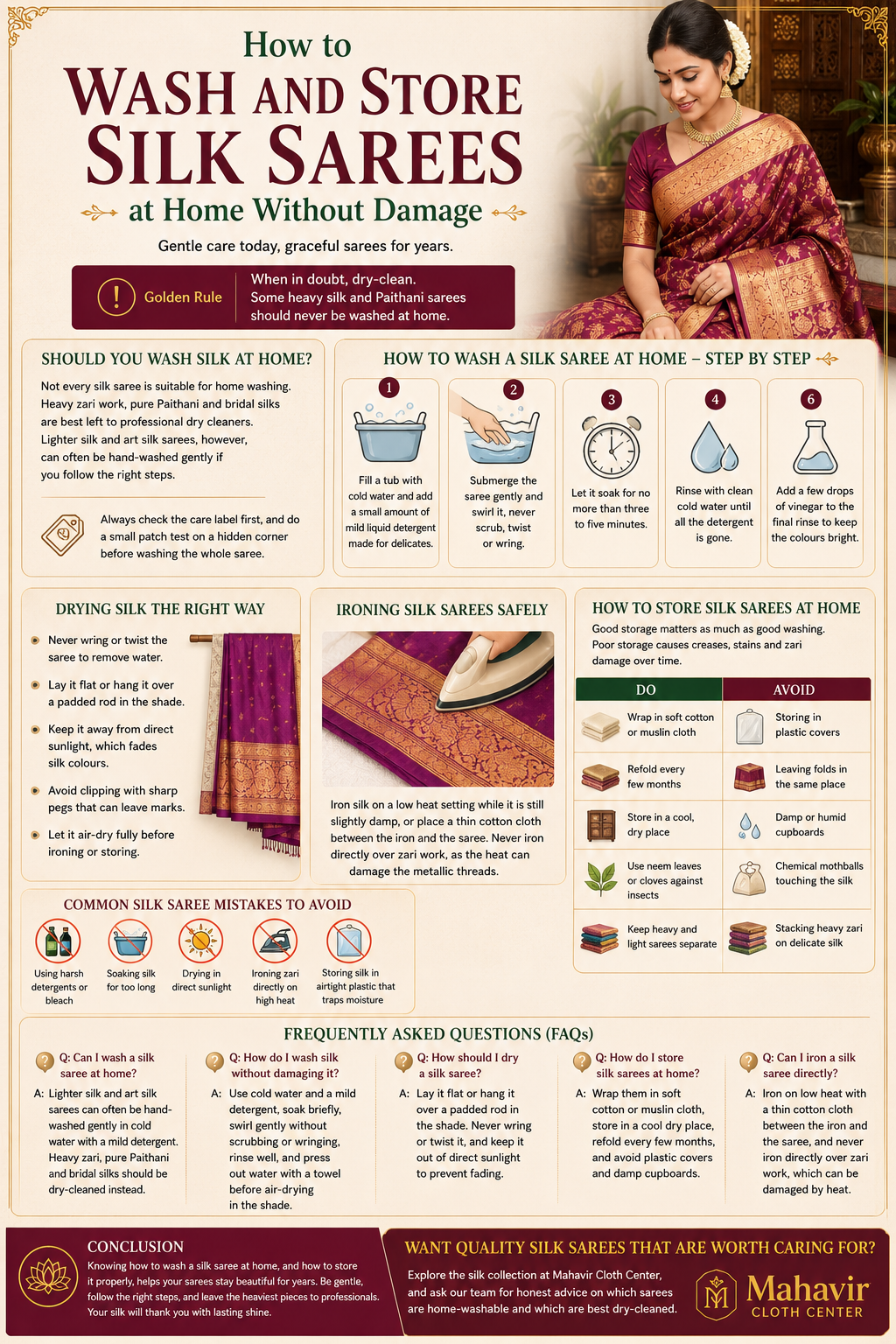
Should You Wash Silk at Home At All?
Not every silk saree is suitable for home washing. Heavy zari work, pure Paithani and bridal silks are best left to professional dry cleaners. Lighter silk and art silk sarees, however, can often be hand-washed gently if you follow the right steps.
How to Wash a Silk Saree at Home Step by Step
Take your time with each step. Rushing the process is the most common cause of damage to silk at home.
Drying Silk the Right Way
Wringing silk causes irreversible damage to the delicate fibres and distorts the shape.
Lay the saree flat or hang it over a padded rod away from direct sunlight.
Direct sun exposure fades silk colours quickly and weakens the fabric over time.
Avoid sharp clips or pegs that can leave permanent marks on the delicate silk fabric.
Let the saree dry completely in the air before ironing or folding for storage.
Ironing Silk Sarees Safely
Iron silk on a low heat setting while it is still slightly damp, or place a thin cotton cloth between the iron and the saree. Never iron directly over zari work, as the heat can damage the metallic threads.
How to Store Silk Sarees at Home
Good storage matters as much as good washing. Poor storage causes creases, stains and zari damage over time.
| Do | Avoid |
|---|---|
| Wrap in soft cotton or muslin cloth | Storing in plastic covers |
| Refold every few months | Leaving folds in the same place |
| Store in a cool, dry place | Damp or humid cupboards |
| Use neem leaves or cloves against insects | Chemical mothballs touching the silk |
| Keep heavy and light sarees separate | Stacking heavy zari on delicate silk |
Common Silk Saree Mistakes to Avoid
These strip the natural sheen from silk and can cause permanent colour damage.
Leaving silk submerged for too long weakens the fibres and causes the colours to bleed.
Direct sunlight fades the colour and degrades the silk fabric far faster than expected.
High heat damages metallic zari threads and can ruin even a beautifully maintained saree.
Plastic traps moisture against the fabric and leads to mildew, yellowing and fabric damage.
Frequently Asked Questions (FAQs)
Can I wash a silk saree at home?
Lighter silk and art silk sarees can often be hand-washed gently in cold water with a mild detergent. Heavy zari, pure Paithani and bridal silks should be dry-cleaned instead.
How do I wash silk without damaging it?
Use cold water and a mild detergent, soak briefly, swirl gently without scrubbing or wringing, rinse well, and press out water with a towel before air-drying in the shade.
How should I dry a silk saree?
Lay it flat or hang it over a padded rod in the shade. Never wring or twist it, and keep it out of direct sunlight to prevent fading.
How do I store silk sarees at home?
Wrap them in soft cotton or muslin cloth, store in a cool dry place, refold every few months, and avoid plastic covers and damp cupboards.
Can I iron a silk saree directly?
Iron on low heat with a thin cotton cloth between the iron and the saree, and never iron directly over zari work, which can be damaged by heat.
Conclusion
and how to store it properly,
helps your sarees stay beautiful for years.
Be gentle, follow the right steps,
and leave the heaviest pieces to professionals.
Your silk will thank you with lasting shine.
Want quality silk sarees that are worth caring for? Explore the silk collection at Mahavir Cloth Center, and ask our team for honest advice on which sarees are home-washable and which are best dry-cleaned.
Visit Us & Explore the Collection →Explore our full range of Sarees, Kurta Suit Sets, Sharara Sets, and Kids Ethnic Wear at mahavirclothcenter.com.